K-shaped housing market: Luxury sales rise as starter homes sit
Zillow found luxury sales increased while starter-home sales fell, even as lower-priced listings and price cuts grew.
By Maya Okafor · Markets Writer
· 3 min read
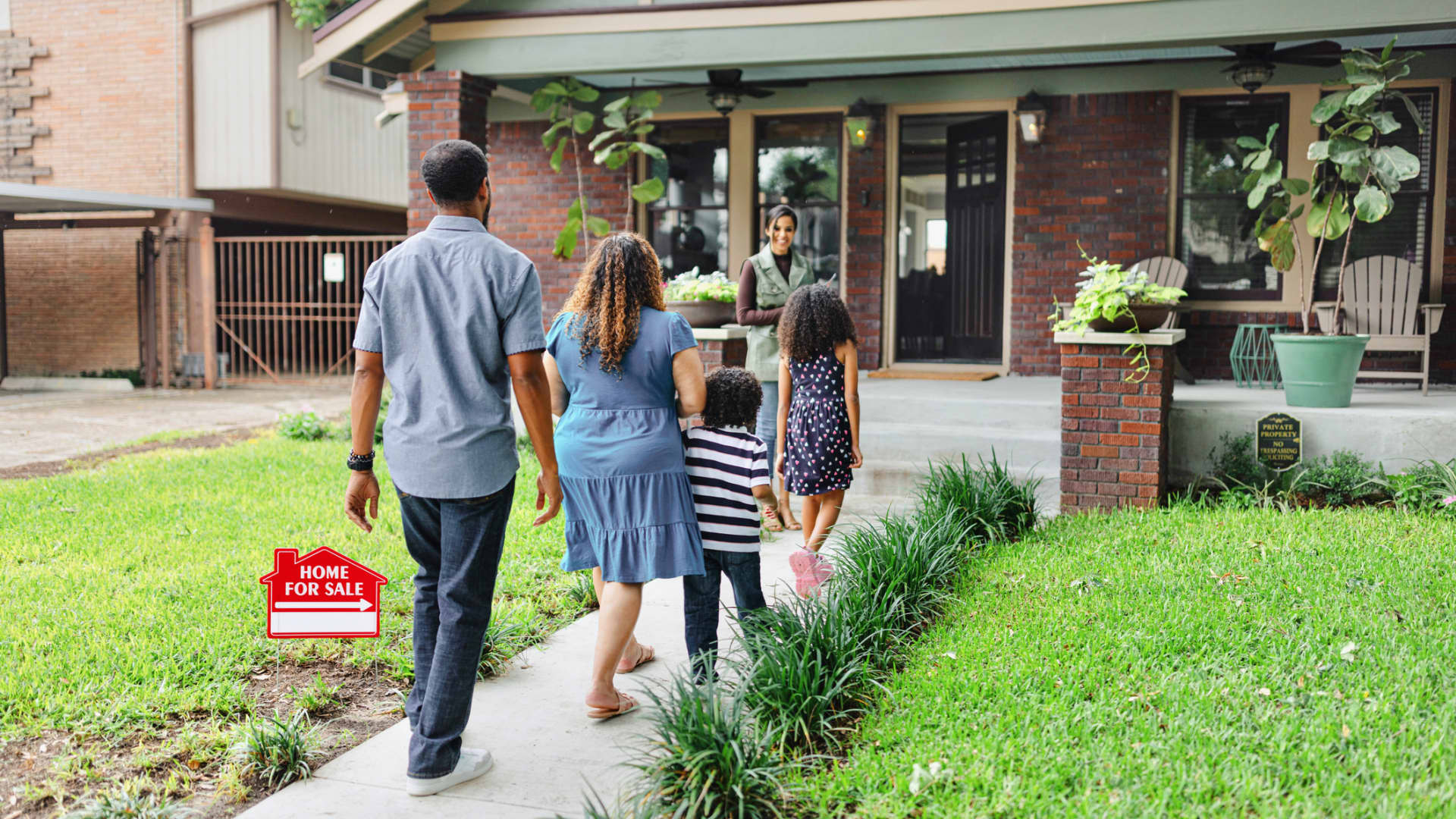
The K-shaped housing market is showing up in sales data: luxury-home sales rose while starter-home sales fell, according to Zillow's July analysis. For buyers, the gap means more listings and more room to negotiate at the entry level have not translated into more completed purchases.
Zillow reported that starter-home sales declined 5.4% from a year earlier in May, its latest month with complete sales data. Luxury sales increased 6.2% over the same period. The figures are Zillow's analysis, not an industrywide measure independently confirmed by another dataset.
What is a K-shaped housing market?
A K-shaped economy describes groups moving in different financial directions. In housing, Zillow uses the term as an interpretation of diverging conditions: buyers at the lower-priced end face affordability pressures, while demand has held up at the high end.
Zillow defines starter homes as properties in the 5th through 35th percentiles of value within a region. Luxury homes are the top 5% of local values. That means the categories are relative to each market, rather than fixed national price brackets.
Nationally, the typical starter home was worth about $202,000, up 2.3% from a year earlier, Zillow said. The typical luxury property was valued at roughly $1.9 million, up 3.1%.
More starter-home supply has not lifted sales
- Starter-home inventory was up 4.5% year over year in June, while luxury inventory was down 5.2%.
- Price cuts appeared on 25.0% of starter listings in June, compared with 20.6% of luxury listings.
- Starter sales fell 5.4% in May, while luxury sales rose 6.2%.
The differing months matter: Zillow's sales comparison uses May data, while the supply and price-cut figures are for June. Still, together they describe lower-priced homes remaining more available and more frequently discounted even as sales lag, while the luxury segment had tighter inventory and higher sales.
Zillow said slower hiring, elevated inflation and weak consumer sentiment may cause households to postpone a large commitment such as buying a home. It separately pointed to stock-market gains as support for purchasing power among higher-income households, its explanation for continued luxury demand.
Mortgage costs remain another pressure on affordability. CNBC reported that the average 30-year fixed mortgage rate was 6.75% as of its publication, citing Mortgage News Daily. Redfin chief economist Daryl Fairweather told CNBC that affluent buyers may be less sensitive to high rates because some can sell assets or buy without a mortgage. That is an economist's explanation, not a conclusion measured in Zillow's tier data.
The pattern varies by city
San Francisco was Zillow's clearest example: luxury sales climbed 21.6% year over year in May, while starter-home sales slipped 1.2%. In June, 22.2% of starter listings there cut prices, versus 9.4% of luxury listings.
The national split is not universal. Zillow reported that New York saw both starter and luxury sales fall, down 22.3% and 14.2%, respectively. In Austin, both segments grew, with starter sales up 3.3% and luxury sales up 27.7%.
This story draws on original reporting from CNBC.