Kevin Warsh rate hike risk rises after markets hear dovish Fed message
Markets read Kevin Warsh as soft on inflation, but his Fed remarks kept a September rate hike on the table if price data stays hot.
By Dev Ramirez · Crypto Correspondent
· 4 min read
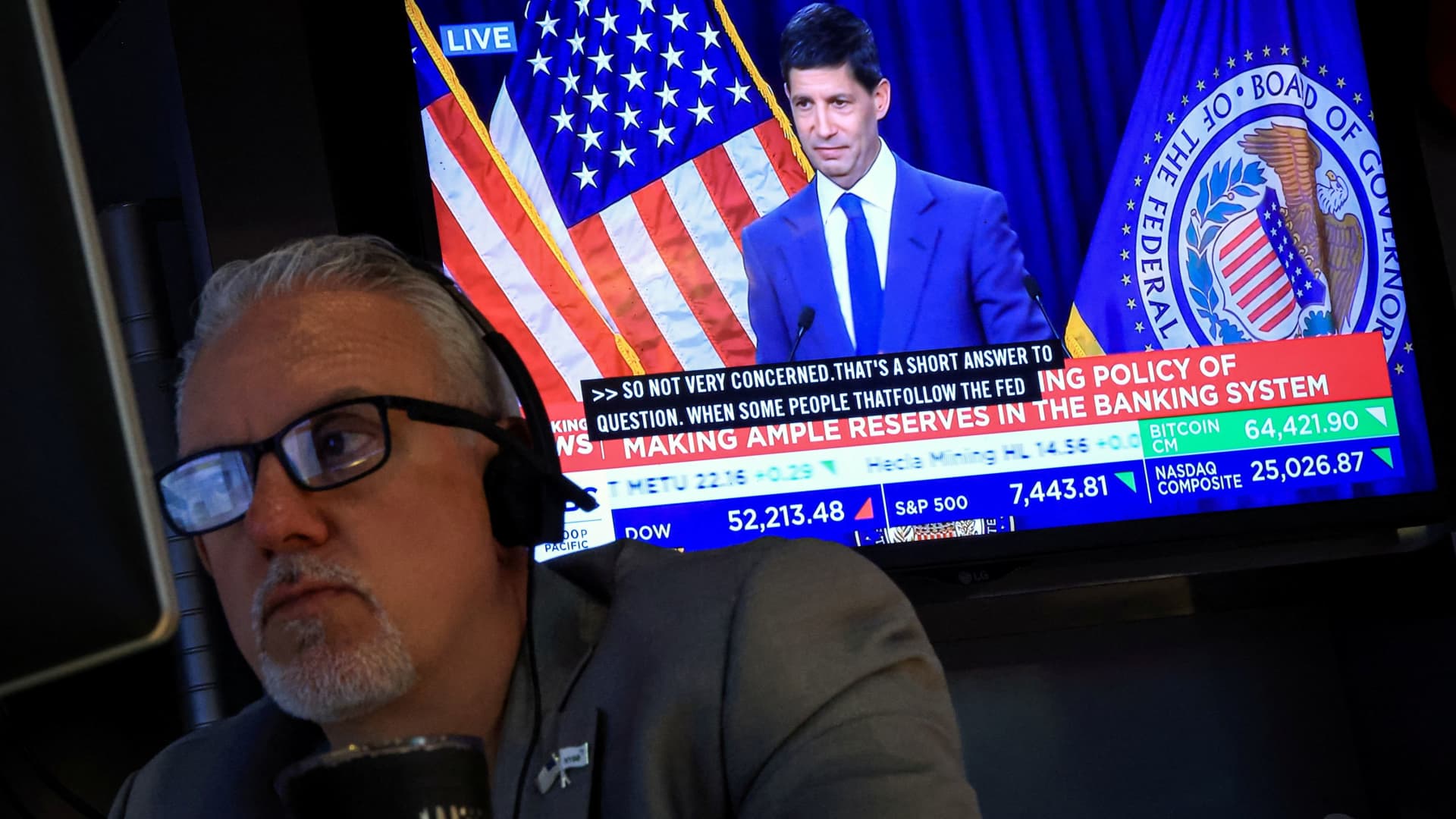
A Kevin Warsh rate hike may be closer than markets assumed after the Federal Reserve chairman’s latest press conference, according to CNBC analysis of his remarks. For everyday investors, the risk is that bonds, stocks, the dollar and gold may be reacting to a softer Fed message than Warsh meant to send.
CNBC reported that investors largely heard Warsh as dovish, meaning more tolerant of inflation and less eager to tighten policy. Long-term Treasury yields rose after the press conference, while the dollar declined and gold gained, as analysts questioned whether Warsh had weakened his inflation-fighting credibility.
The market reaction followed Warsh’s second press conference as Fed chair. CNBC said his answers to reporters were vague and left investors unsure how seriously he would push back against inflation, especially as President Donald Trump continues to call for lower interest rates. The Fed is statutorily independent, and CNBC noted that both Trump and Warsh have said that independence remains in place.
Will Kevin Warsh raise rates?
Warsh did not announce a rate increase, but CNBC’s analysis said his prepared remarks sounded more hawkish than his press conference performance. Hawkish means more focused on fighting inflation, often through higher interest rates or tighter financial conditions.
Warsh did not treat the latest soft inflation number as a turning point. The consumer price index fell 0.4% in June from the prior month, CNBC reported, but Warsh said Wednesday that more than five years of above-target inflation could not be fixed in nine weeks or by one month of modest price declines.
He also told reporters, in prepared remarks on behalf of the Federal Open Market Committee, “Where necessary and appropriate, we will not hesitate to act.” CNBC compared that language with past Fed signals: Ben Bernanke used similar phrasing before launching another round of asset purchases in 2012, and Jerome Powell said in May 2022 that the Fed would not hesitate to raise rates if needed before a three-quarter-point increase in June.
What did Warsh say about the 2% inflation target?
The Fed’s official inflation goal is 2% annual inflation over the long run, measured by the personal consumption expenditures index, or PCE. PCE is a government inflation gauge that tracks prices paid by consumers and is the Fed’s preferred measure.
CNBC reported that Warsh created confusion when asked about PCE, saying the Fed was sticking with it for now while leaving open what it might say about strategy after next January. In his prepared remarks, however, Warsh was direct: “There is no soft inflation target, there is no soft implicit target — not on this Committee’s watch. There is only a target, and it is 2 percent.”
That distinction matters for markets because a firm 2% target can mean the Fed responds more aggressively if inflation reports remain above goal. CNBC said two inflation reports are due before the FOMC’s next meeting in September, giving Warsh more data before any decision.
How could the Fed tighten policy besides rates?
Warsh also pointed to the Fed’s balance sheet, according to CNBC. The balance sheet is the Fed’s portfolio of assets, and shrinking it can pull support from financial markets in a way that tightens conditions, similar in effect to higher interest rates.
Warsh said the FOMC discussed “monetary policy tools and strategies for achieving stable prices” and asked how much accommodation was coming from the balance sheet. CNBC said that language fits Warsh’s long-running interest in reducing the balance sheet, although the committee was not described as ready to act on it immediately.
CNBC reported that Warsh has also pushed task forces focused on the balance sheet, alternative inflation measures and an economy affected by artificial intelligence. Those groups are not expected to report before year-end at the earliest, according to CNBC, leaving interest rates as the more immediate tool if inflation stays hot.
The takeaway from Warsh’s own words is narrower than the market reaction suggested. CNBC’s analysis said investors may have heard a dovish chair, but his prepared message kept the door open to tighter policy at the September meeting if incoming inflation data fails to improve.
This story draws on original reporting from CNBC.


