Kospi Nasdaq correlation rises as AI chip trade links Korea and Wall Street
Rayliant data show the Kospi and Nasdaq 100 moving more closely as Samsung and SK Hynix tie Korea’s market to AI spending.
By Maya Okafor · Markets Writer
· 3 min read
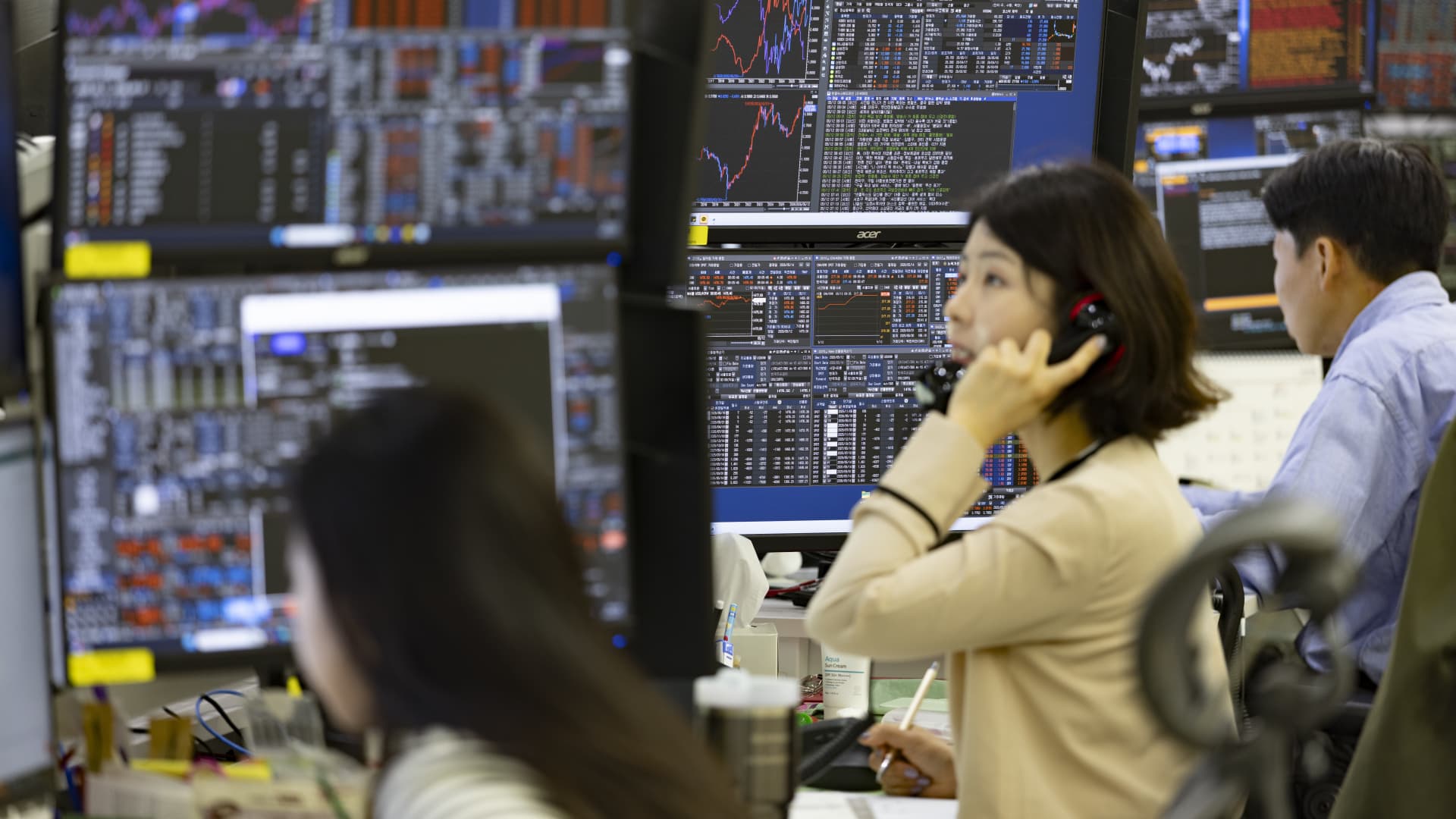
The Kospi Nasdaq correlation has climbed as AI spending connects South Korea’s biggest chip stocks with Wall Street’s largest technology names. For retail investors, that means Korean equities may now behave less like a separate overseas bet and more like another way to express the same AI hardware trade.
The 60-day correlation between South Korea’s Kospi and the Nasdaq 100 recently reached about 0.50, the highest since 2021, according to Rayliant data cited by CNBC. Correlation measures how closely two assets move together: 1 means they move in lockstep, 0 means no clear relationship, and negative readings mean they tend to move in opposite directions.
The link has strengthened because Samsung Electronics and SK Hynix now make up more than half of the Kospi index, according to CNBC. Both companies are central suppliers of memory chips used in artificial intelligence servers, tying their earnings outlook to the same data-center buildout driving U.S. technology and semiconductor stocks.
Why are the Kospi and Nasdaq moving together?
Rolf Bulk, an analyst at Futurum Group, told CNBC that the Kospi has increasingly become a semiconductor-driven index. He said data-center demand accounted for about 40% of global DRAM demand last year and has risen to more than half this year, with further growth expected.
DRAM, short for dynamic random-access memory, is a type of chip that stores data temporarily while computers process tasks. AI servers need large amounts of memory because training and running AI models requires fast access to enormous data sets.
That puts Samsung and SK Hynix in the same economic stream as U.S. hyperscalers, the large cloud and internet companies that spend heavily on data centers. When those companies raise or slow spending, the impact can spread from U.S. tech shares to Korean memory producers.
Jung In Yun, founder of Fibonacci Asset Management, told CNBC that Samsung and SK Hynix can offer an early liquid market reaction to overnight developments affecting AI demand. He said SK Hynix has become especially relevant because of its exposure to high-bandwidth memory, a key component in AI systems.
Recent trading showed how fast the connection can appear. On July 13, the Kospi dropped more than 8% as SK Hynix fell 15%, according to CNBC. The Nasdaq 100 later closed down 1.88% that day, while Micron Technology fell 4%, Sandisk lost 12%, and Intel declined 6%.
Peter Kim, head of global investment strategy at KB Financial Group, told CNBC the Korean memory rally started later than the Nasdaq’s move because U.S. investors first focused more on hyperscalers. He said the size and volatility of the move have since led global investors to treat Korea as a signal for broader AI-related trades.
What does this mean for diversification?
The tighter relationship cuts into one traditional reason investors hold both U.S. and Korean stocks: geographic diversification. Diversification means spreading exposure across assets that do not all move the same way, so one weak area may be offset by another.
Phillip Wool, head of research at Rayliant Global Advisors, told CNBC that U.S. and Korean technology shares are being driven more by a shared factor: sentiment toward AI hardware. Bulk warned that Korea no longer offers the same diversification against U.S. tech, because half the index is tied to a cyclical theme and could be hit hard if hyperscaler capital spending slows.
Kim also pointed to possible future differences among Micron, Samsung and SK Hynix, citing capital expenditure, product mix and U.S. support for domestic chip production. He also flagged China’s memory-chip push as a developing risk, after shares of Changxin Technology Group rose 466% in their Shanghai STAR Market debut, according to CNBC.
This story draws on original reporting from CNBC.