Kospi rally puts South Korea’s AI trade back in focus
South Korea’s Kospi surged about 14% Friday as chip shares rebounded after U.S. tech earnings lifted AI demand hopes.
By Dev Ramirez · Crypto Correspondent
· 3 min read
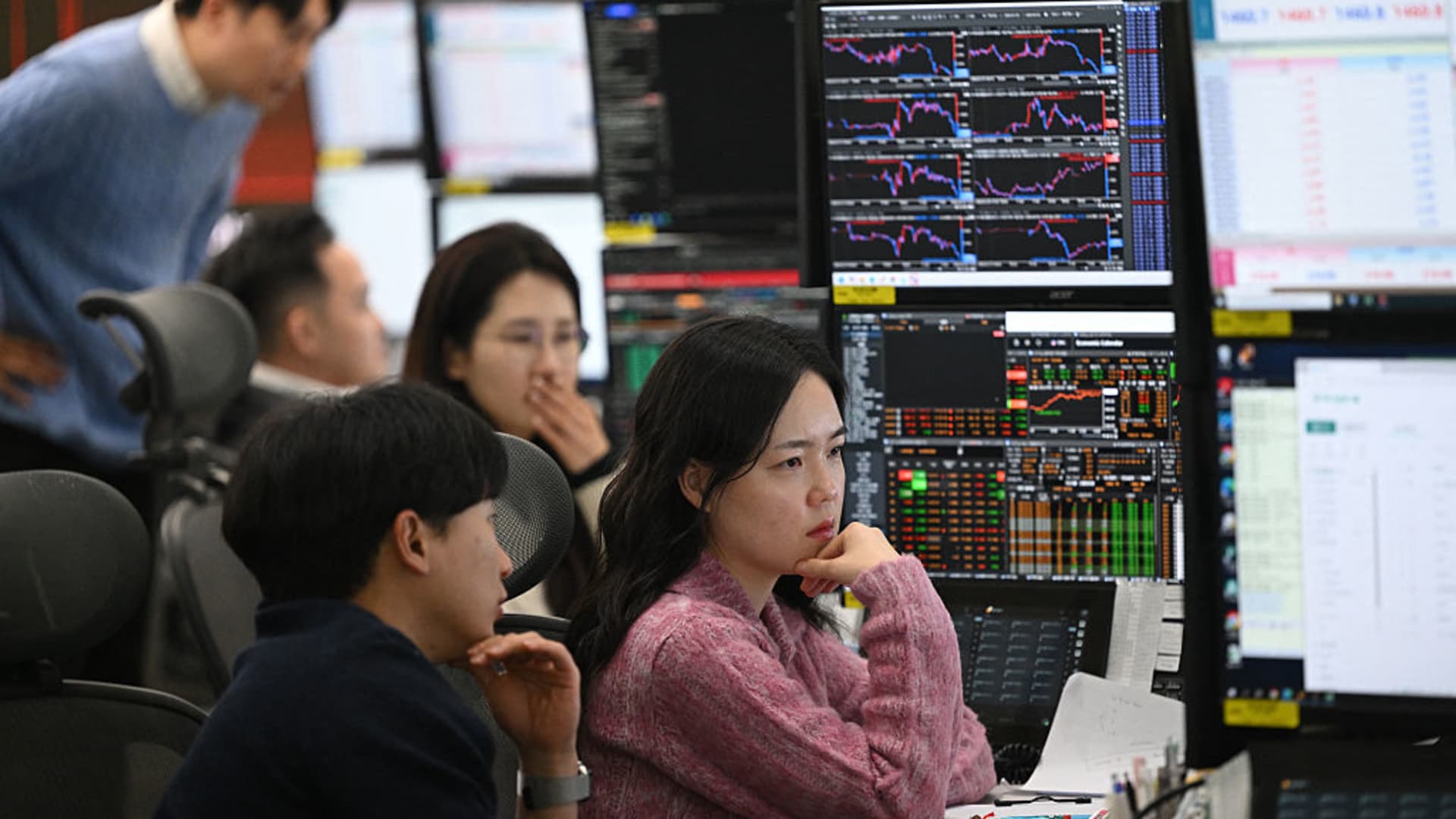
Friday’s Kospi rally gave South Korean stocks their sharpest reversal on record, according to CNBC, after a brutal stretch tied to worries about artificial intelligence valuations and leveraged trading. For everyday investors, the move is a reminder that the AI trade is now moving markets far beyond U.S. megacap tech.
The benchmark Kospi jumped about 14% and was on pace for its biggest one-day gain, CNBC reported, citing LSEG data. Chip names led the rebound, with SK Hynix posting a record comeback and Samsung Electronics also climbing sharply.
The surge came after U.S. technology shares rallied overnight. CNBC said earnings from Microsoft, Amazon and Meta helped reinforce investor expectations that spending on AI infrastructure remains strong, which matters for South Korea because its market is heavily exposed to memory chips used in AI servers and data centers.
Why did the Kospi rally so sharply?
Jung In Yun of Fibonacci Asset Management told CNBC that the Korean market had swung from fear to optimism in a short period, calling Friday’s move a violent reversal of a crowded selloff. He said foreign investors appeared to be the main buyers, while short-covering and leveraged fund rebalancing likely magnified the move.
Short-covering happens when investors who had bet on falling prices buy shares back to close those trades. That buying can push prices higher, especially when many investors are positioned the same way.
CNBC also reported that new cash-deposit requirements for investors using leveraged exchange-traded funds took effect July 31 and may have contributed to repositioning. A leveraged ETF uses borrowed exposure or derivatives to amplify the daily move of an index or asset, while a standard ETF lets investors buy a basket of investments in one trade.
SK Hynix also got a confidence boost after SK Group Chairman Chey Tae-won disclosed purchases of the company’s shares, CNBC reported. SK Hynix is the world’s second-largest memory chipmaker, according to CNBC, and has been closely watched because of investor focus on AI-related memory demand.
Analysts are split on what comes next
Jung told CNBC by email that he did not expect gains of this size to continue. Still, he said the rebound could have more room because market positioning had become extremely bearish and SK Hynix’s AI-memory fundamentals remained strong.
He added that the key test will be whether foreign buying continues after short-covering fades. If overseas investors keep buying, he said, the rebound could turn into a more durable recovery.
Rolf Bulk, a semiconductor analyst at Futurum Group, told CNBC that the rally reflected stronger confidence that the AI investment cycle remains intact, rather than a broad change in company fundamentals. He said recent forced selling appeared to have mostly run its course and that he saw no signs of the AI infrastructure build-out slowing.
Paul Gambles, co-founder of MBMG Family Office Group, took a more cautious view. He told CNBC that investors should expect more days like Friday and said asset prices were disconnected, pointing to heavy leverage in the market.
Gambles said Friday’s gain could become either a short relief rally or something that lasts longer, but warned that it should not be read as proof that risks around the AI boom have disappeared. For now, CNBC reported, investors are watching whether foreign funds keep buying once short-covering eases.
This story draws on original reporting from CNBC.


