Lilly deal puts psychedelic drug developers back in market focus
Eli Lilly’s planned AtaiBeckley acquisition signals rising pharma interest in psychedelic-based mental health drugs, despite regulatory and access hurdles.
By Jordan Bell · Startups & Deals Reporter
· 4 min read
Eli Lilly’s plan to buy AtaiBeckley for up to $3.8 billion has put psychedelic drug developers back on investors’ radar. For everyday investors, the deal matters because it shows a major drugmaker is willing to pay for a field that still faces tough clinical, regulatory and insurance tests.
AtaiBeckley is a clinical-stage company, meaning its products are still being tested and are not yet approved for sale. Its lead drug, BPL-003, is a synthetic version of 5-MeO-DMT, a compound associated with the venom of Sonoran Desert toads. The company is testing it as a nasal spray for treatment-resistant depression, a severe form of depression that does not improve after standard care and affects about 4 million Americans.
Atai said a Phase 2b trial last year showed fast and lasting reductions in symptoms. Phase 2 studies test safety and early effectiveness, while Phase 3 trials are larger late-stage studies often used to support an approval application. BPL-003 has received Breakthrough Therapy Designation from the Food and Drug Administration, a status meant to speed development and review of drugs for serious conditions.
Jefferies analysts wrote that a successful Phase 3 outcome by early 2029 could create a $1 billion to $2 billion opportunity in treatment-resistant depression. The analysts also said their key opinion leaders see psychedelics as a possible major shift in psychiatry, with patient demand already appearing strong.
Why pharma is paying attention
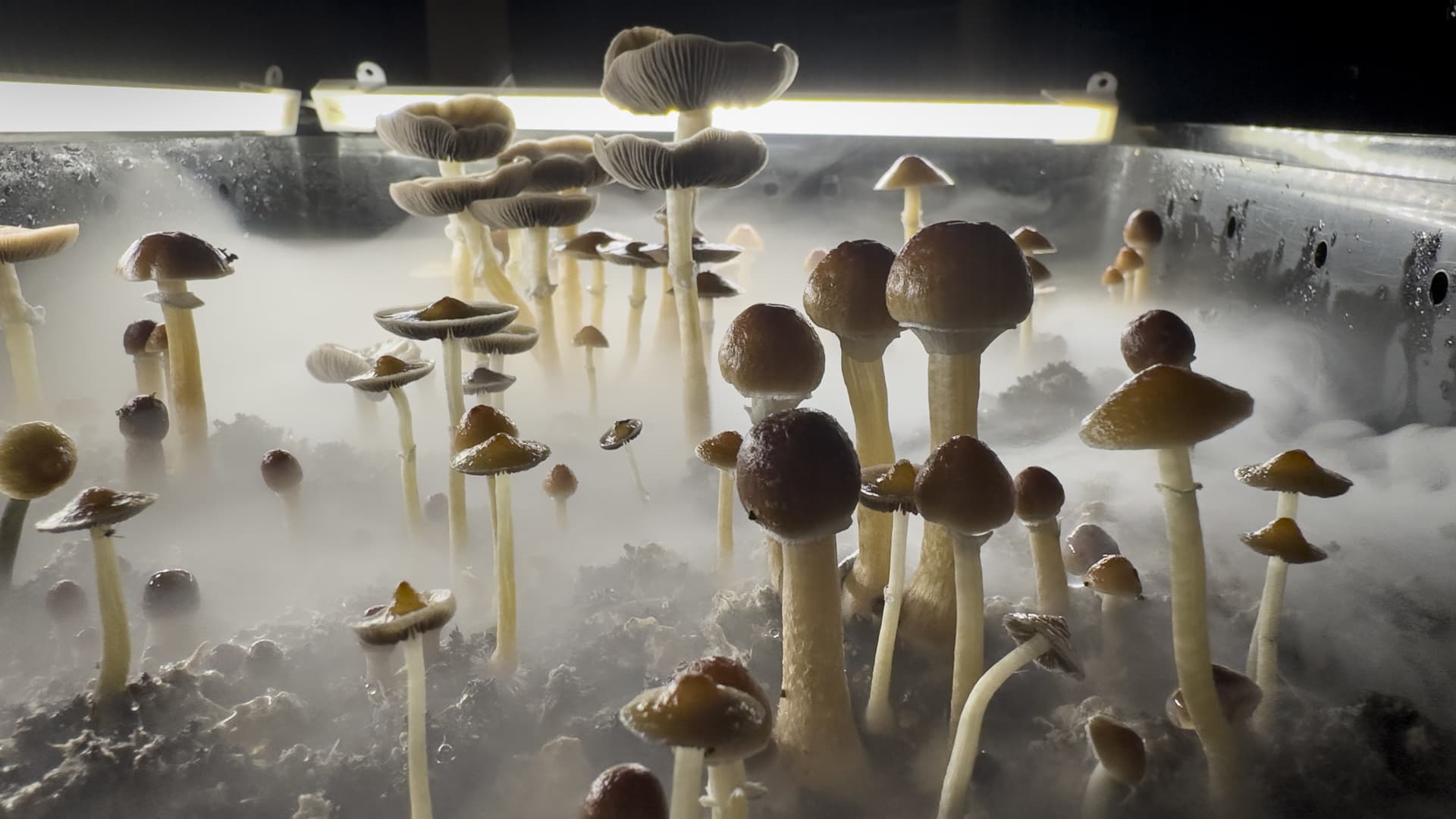
Several substances linked to psychedelics, including LSD, psilocybin, MDMA, ayahuasca and ibogaine, are being studied by drug developers for depression, post-traumatic stress disorder, anxiety, eating disorders and substance-use disorders.
The basic idea, according to experts cited in the report, is that some psychedelics may temporarily make brain communication patterns more flexible. Paired with therapy, that state may help patients revisit trauma, depression or addiction and form different mental pathways. Researchers sometimes describe that as “rewiring” the brain.
Ami Fadia, a biotech analyst at Needham, said available data suggest this drug class could offer something more meaningful than widely used oral antidepressants such as SSRIs and SNRIs. Those are common medicines used for psychiatric conditions, including depression and anxiety. Fadia said investors who once avoided psychedelics are now less resistant to the area.
The field has also had setbacks. In August 2024, the FDA rejected an MDMA-assisted therapy for PTSD from Lykos Therapeutics, the first time the agency reviewed a Schedule I drug for medical use. Schedule I drugs are federally classified as having no accepted medical use and high abuse potential.
Trials, rules and reimbursement
Recent trial data have given the sector fresh momentum. Definium Therapeutics reported positive Phase 3 results for its LSD-based drug DT120 in major depressive disorder, and its shares rose 50%. Jefferies analyst Andrew Tsai said the effect size was the largest he had seen. Definium CEO Robert Barrow said the company could file a New Drug Application with the FDA within six to nine months if additional anxiety studies are strong.
Because LSD remains a Schedule I drug, Definium would also need the Drug Enforcement Administration to reclassify it, and states would need to make their own changes. Insurance coverage is another hurdle. Fadia said coverage will be needed for patients to receive treatment, and each company must negotiate drug costs with payers.
Johnson & Johnson’s Spravato, a ketamine-derived nasal spray for adults with hard-to-treat major depressive disorder, is the clearest commercial example so far. J&J said Spravato sales rose 40% year over year to $584 million in its latest quarter, and analysts estimate sales will top $2 billion this year.
Other large drugmakers have moved into the field. Otsuka Pharmaceuticals bought Transcend for $1.2 billion in June, and AbbVie purchased a next-generation psychedelic compound from Gilgamesh Pharmaceuticals last year for $1.2 billion. Mordor Intelligence valued the psychedelic drugs market at $4.08 billion in 2025 and estimates it will reach $8.75 billion by 2031.
Compass Pathways, another public biotech, reported strong Phase 3 results this month for COMP360, its synthetic psilocybin treatment for treatment-resistant depression. CEO Kabir Nath said the company expects to be commercially prepared by year-end, including provider education and a sales and marketing team of about 250 to 300 people. Nath said that if all goes well, the product could reach the market in the first part of 2027.
This story draws on original reporting from CNBC.