Linde earnings beat estimates, but shares fall on Lincare pressure
Linde topped second-quarter sales and profit estimates, while Lincare costs and cautious guidance weighed on shares Friday.
By Dev Ramirez · Crypto Correspondent
· 4 min read
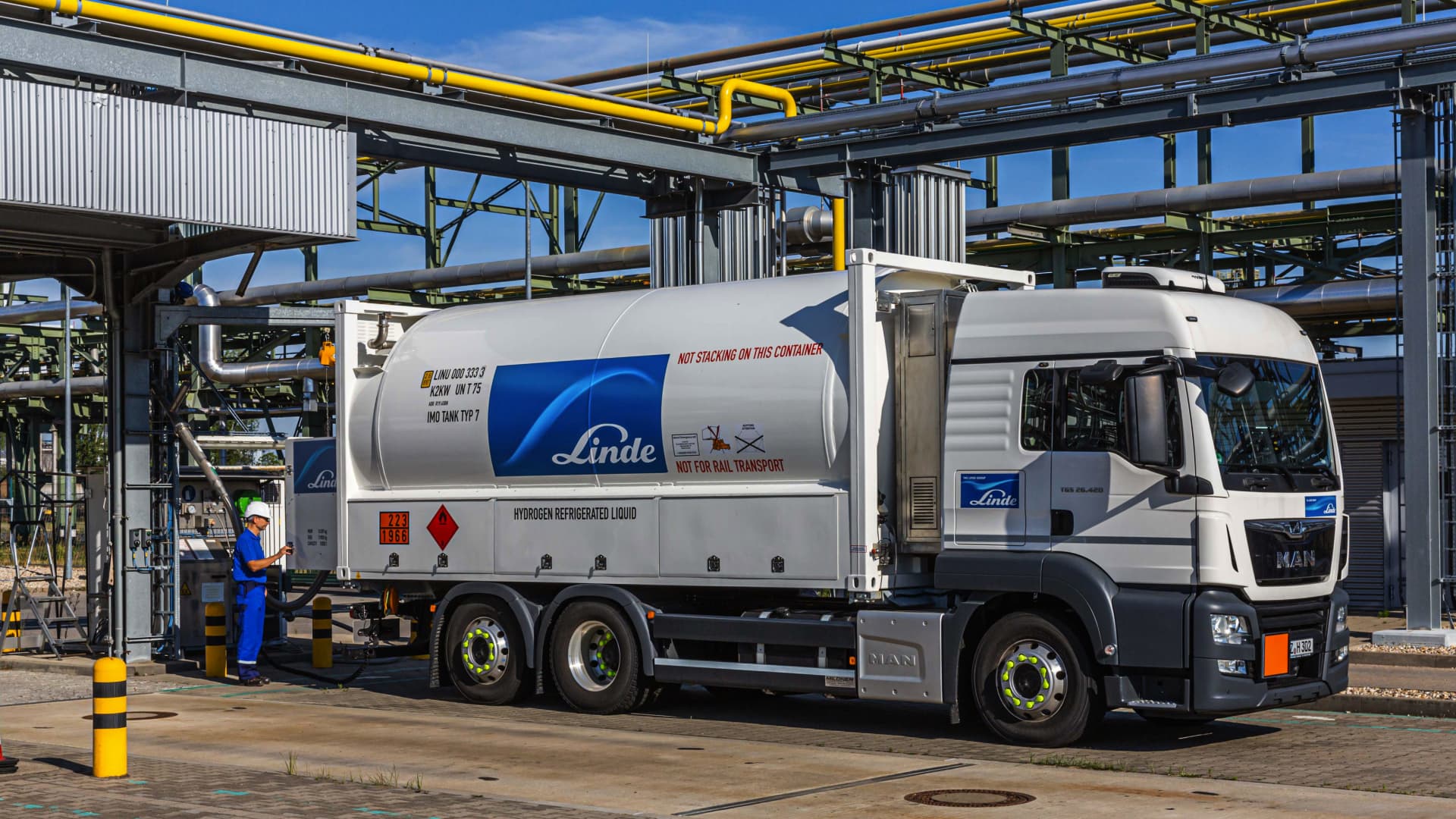
Linde earnings beat estimates for the second quarter, but shares fell more than 5.5% Friday as investors focused on margin pressure in its U.S. home health business and lighter-than-expected guidance. For retail investors, the report showed two very different stories inside one company: strong demand tied to AI and semiconductors, and a healthcare unit hurting profitability.
Revenue for the quarter ended June 30 rose 9.3% to $9.29 billion, above the $8.99 billion consensus estimate compiled by LSEG, CNBC reported. Adjusted earnings per share, a profit measure that excludes certain items, reached $4.50, 2 cents above the LSEG estimate and up 10% from a year earlier.
The stock entered Friday down about 7% from its record closing price of $546.64 on July 2, according to CNBC. Even after the pullback, Linde remained up 19% year to date, ahead of the S&P 500’s 8.7% gain and the materials sector’s 14% advance.
Why did Linde stock fall after earnings?
The main pressure point was Lincare, Linde’s home health business, which provides home oxygen, sleep apnea and nebulizer therapies, along with services such as blood-clot testing. CNBC reported that labor cost inflation and insurance reimbursement changes weighed on the unit and contributed to adjusted operating margins of 29.5%, below expectations and down from a year earlier.
Chief Financial Officer Matthew White said on the earnings call that margins would have increased without the homecare drag, according to CNBC. Chief Executive Sanjiv Lamba said Linde was “not satisfied” with the quarter’s margin performance and cited higher cost inflation and policy changes at Lincare.
Lamba said the company has actions underway and expects sequential improvement in the third quarter. He also said Linde continues to assess whether the U.S. homecare business fits within the portfolio, either in part or as a whole, while working to improve its performance.
Where Linde is still growing
Linde’s electronics end market was a bright spot. Sales there rose 18% from a year earlier, which CNBC said was the unit’s fastest growth since the fourth quarter of 2022. Semiconductor manufacturing uses gases such as nitrogen and argon, and Linde often builds plants near chip fabrication sites so it can supply customers by pipeline rather than truck.
Linde said Friday it plans to spend $1 billion to expand an on-site supply complex in Phoenix for a semiconductor customer’s manufacturing expansion. The customer was not named in the release, though CNBC noted Linde is known to supply Taiwan Semiconductor Manufacturing Co.’s Arizona fab site. Linde also said its Taiwanese joint venture will invest $800 million to support new chip fabs and packaging facilities for “the same customer” in Taiwan.
Lamba said on the call that he expects electronics to remain Linde’s largest backlog contributor and one of its fastest-growing markets for the foreseeable future. Backlog means contracted business the company has not yet converted into revenue. Linde’s gas supply backlog ended the quarter at $8.1 billion, up $1 billion from the first quarter, and its engineering backlog stood at $3 billion.
Manufacturing also contributed to growth, including demand from commercial space customers such as SpaceX and from NASA, CNBC reported. Lamba said the U.S. remained the main driver, helped by aerospace and data center-related construction activity. Aerospace accounted for more than one-third of manufacturing growth in the quarter.
What Linde told investors about guidance
For the third quarter, Linde guided for adjusted earnings per share of $4.45 to $4.55, implying 6% to 8% growth. The midpoint of $4.50 was slightly below the $4.54 consensus estimate, according to CNBC.
Linde raised the low end of its full-year adjusted EPS outlook to $17.70 while keeping the high end at $17.90. That puts the midpoint at $17.80, up 5 cents from its May 1 guidance but below Wall Street’s $17.91 consensus entering Friday, CNBC reported.
The company also lifted its 2026 capital spending outlook to a range of $5.5 billion to $6 billion, with the low end up $500 million. CNBC said new backlog projects and the space business are driving the increase.
Jim Cramer said on CNBC Friday that investors should buy the stock on the decline. His charitable trust owns Linde shares, according to CNBC. That view sits alongside the company’s mixed quarter: strong AI-linked industrial demand, offset by a homecare business that management says it is still working to fix.
This story draws on original reporting from CNBC.


