Lindsey Graham dies at 71, narrowing Senate GOP’s voting margin
The South Carolina Republican’s death leaves his party down a key Senate vote as President Trump pushes major legislation before the midterms.
By Dev Ramirez · Crypto Correspondent
· 3 min read
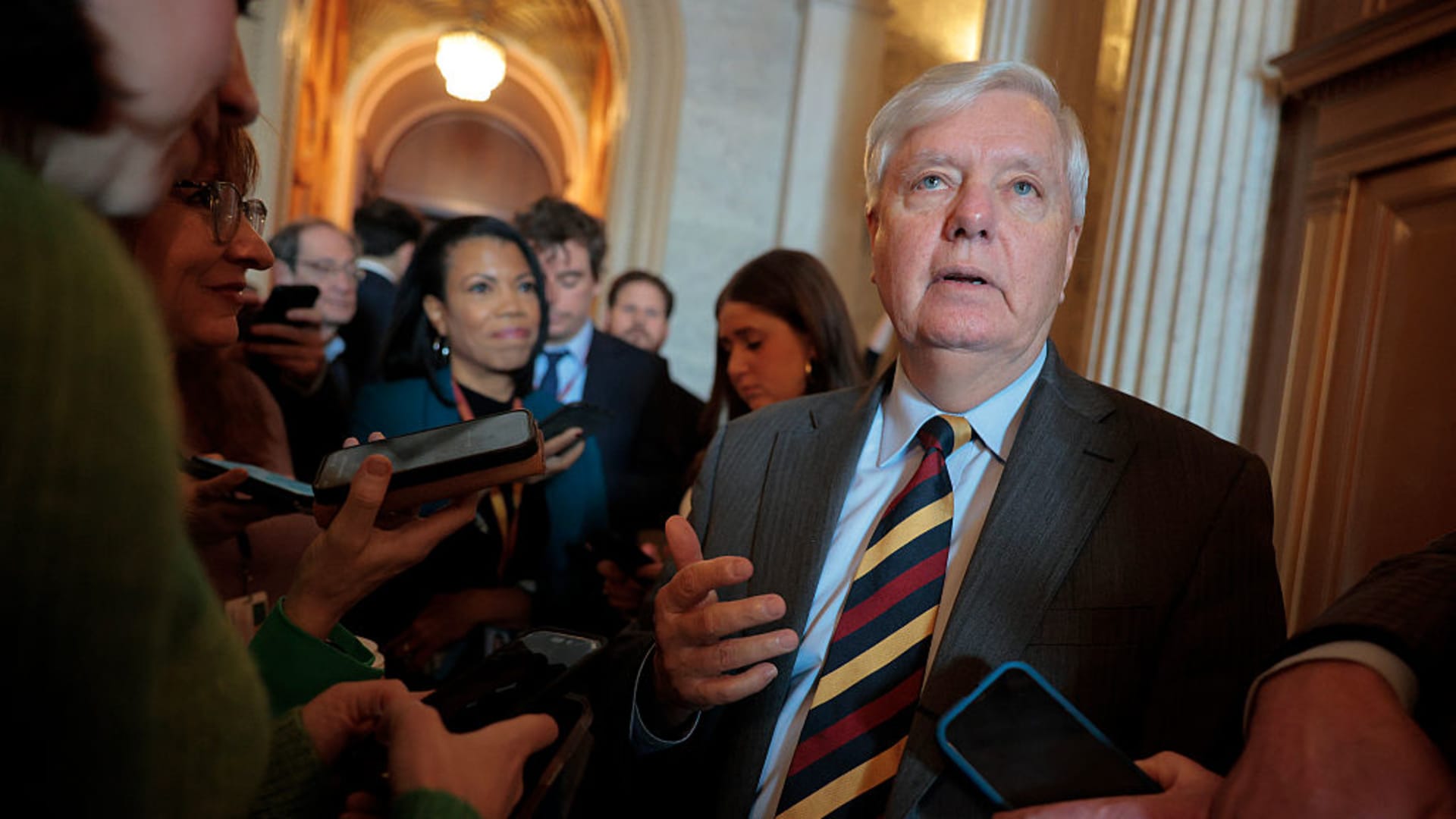
Sen. Lindsey Graham, R-S.C., died Saturday evening at 71 after what his office described as a brief and sudden illness. For investors tracking Washington, the immediate consequence is a thinner Republican margin in the Senate, where one missing vote can slow legislation that shapes taxes, spending, regulation and election rules.
Graham’s office announced his death Sunday in a statement on X and said his family was asking for privacy. A spokeswoman for Graham told MS NOW that he had recently returned from Ukraine and that no additional details about the circumstances of his death were available yet.
Republicans held a 53-47 Senate majority before Graham’s death. His absence comes as Sen. Mitch McConnell, R-Ky., remains away from the chamber because of an extended medical absence, according to CNBC. That combination could make it harder for President Donald Trump’s agenda to advance in the months before the 2026 midterm elections.
A key Senate seat opens in South Carolina
Graham was first elected to the Senate in 2002 and had been seeking a fifth six-year term from a reliably Republican seat. South Carolina Gov. Henry McMaster has until Jan. 3, 2027, under state law to fill the vacancy, according to CNBC.
Graham chaired the Senate Budget Committee and served on the Appropriations, Judiciary, and Environment and Public Works committees. Those assignments gave him a role in federal spending, court nominations and environmental policy, all areas that can affect companies and investors through government contracts, regulation and fiscal policy.
One immediate policy question is the SAVE America Act, an election bill backed by Trump. CNBC reported that the measure would require voters to show photo identification to cast a ballot and proof of citizenship to register. The bill passed the House earlier this year but had stalled in the Senate. Graham was a co-sponsor and a leading supporter.
From Trump critic to close ally
Graham’s relationship with Trump shifted sharply over the past decade. During the 2016 Republican presidential primary, Graham criticized Trump and wrote on social media that Republicans would be “destroyed” if they nominated him. Trump attacked Graham in return.
The two later rebuilt their relationship during Trump’s first term. Graham became one of Trump’s most visible Senate allies and rarely broke with him in recent years, according to CNBC.
Graham did criticize Trump after the Jan. 6, 2021, attack on the U.S. Capitol. In a Senate floor speech that day, Graham said Joe Biden had been lawfully elected. He later voted against convicting Trump after the House impeached him on a charge of inciting an insurrection.
Trump called Graham “one of the greatest people and Senators I have ever known” in a post on Truth Social, adding that Graham was “always working” and “a true American Patriot.”
Ukraine, Israel and military service shaped his profile
Graham had been in Kyiv on Friday, where he spoke with reporters about U.S. sanctions on Russia and Ukraine’s air defenses after meeting Ukrainian President Volodymyr Zelenskyy, Reuters reported. Zelenskyy said on X that he was “deeply saddened” and noted that Graham had visited Ukraine ten times during Russia’s full-scale invasion.
Israeli Prime Minister Benjamin Netanyahu said on X that he and his wife, Sara, were grieving with Americans over the death of their “dear friend.” Netanyahu said Graham believed the security of Israel and the United States were connected.
Senate Majority Leader John Thune, R-S.D., said Graham was “a strong advocate for the United States” and for “freedom-loving countries across the globe.” McMaster called him a fierce fighter for South Carolina and America, while Sen. Tim Scott, R-S.C., said he had “lost a friend.”
Before Congress, Graham served in the U.S. Air Force as a lawyer, according to his Senate biography. He spent six-and-a-half years on active duty, was called up during the first Gulf War, and retired from the Air Force Reserve in 2015 as a colonel after 33 years in uniform.
This story draws on original reporting from CNBC.