Meta lifts Louisiana AI data center plan above $50 billion
Meta says its Hyperion data center in Richland Parish will expand to 5 gigawatts as Louisiana offers tax breaks to attract AI infrastructure.
By Maya Okafor · Markets Writer
· 3 min read
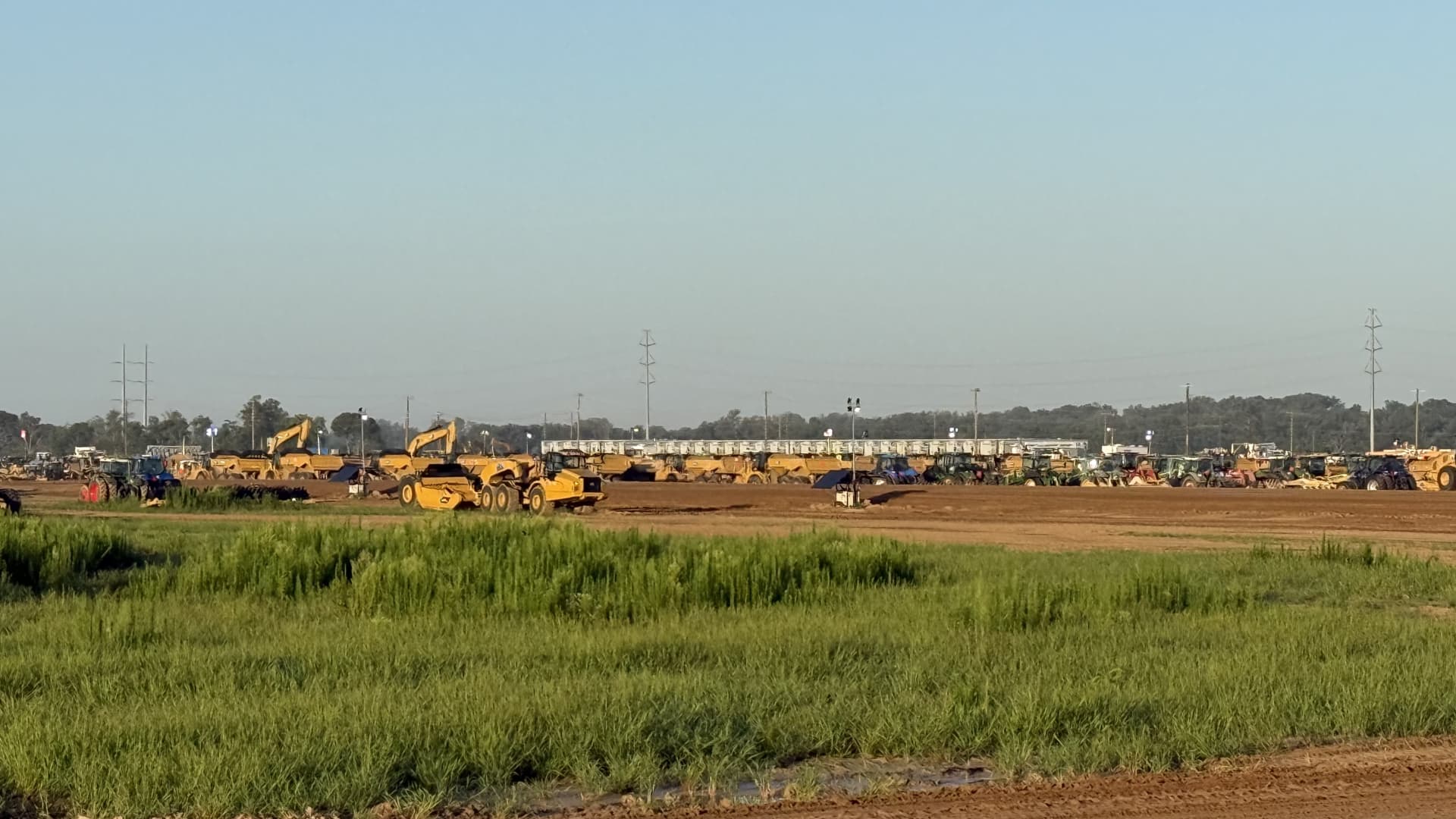
Meta said Monday that its planned Hyperion data center in Richland Parish, Louisiana, will cost more than $50 billion and grow into a 5-gigawatt facility, according to a company blog post cited by CNBC. For everyday investors, the higher price tag shows how much cash the biggest tech companies are putting behind artificial intelligence, where computing power has become a core part of the race.
The new figure is well above the $27 billion estimate disclosed in October, when Meta and Blue Owl Capital formed a joint venture tied to building and operating the site, CNBC reported. At that time, the project was planned as a 2-gigawatt data center. When the project was first announced, the expected cost was $10 billion, according to the Associated Press.
A gigawatt is a measure of power capacity. In data centers, higher capacity can support more servers and more specialized chips. Meta has described Hyperion as a “supercluster,” a term used for large groups of computing systems built to train and run AI models. CNBC reported that such facilities use graphics processing units, or GPUs, and other high-end hardware suited for AI workloads.
Louisiana incentives helped draw the project
The expansion is tied to a broader contest among states to attract data centers as Microsoft, Alphabet, Amazon and Meta spend heavily on AI infrastructure, CNBC reported. Those projects can bring construction work and local contracts, but they also need large amounts of power, water and public infrastructure.
Louisiana Gov. Jeff Landry signed a law in late 2024 creating a 20-year sales tax exemption for data centers built before 2029, CNBC previously reported. The incentive was part of the state’s effort to bring Meta’s project to Louisiana. Landry, a Republican, is scheduled to host a press event Monday in Baton Rouge, according to CNBC.
In an interview with CNBC last year, Landry defended the package by saying he viewed the overall deal as positive for state and local governments. “I’m a business guy,” Landry told CNBC. “What we know is when you look at the overall comprehensive package here, it’s in the black. For local government, and the state, and how you get to the bottom line is irrespective to me.”
Meta says it will cover infrastructure costs
Meta said in its Monday post that it pays the full cost of the energy, water and related infrastructure used by the data center, so consumers are not charged for those costs. The company also said local businesses have received more than $1.6 billion in contracts since construction began in December 2024.
Meta said the expansion includes more than $1 billion for local infrastructure upgrades, including roads, water systems and wastewater systems. CNBC reported that Meta did not name a financial partner for the expanded plan.
The project is part of Meta’s broader AI spending push. CNBC reported that the announcement follows Meta’s strongest stock-market week since early 2024, after the company released two major AI models under Alexandr Wang, the head of Meta Superintelligence Labs.
CEO Mark Zuckerberg wrote in a Facebook post about six months after the project began that Hyperion would be able to scale to 5 gigawatts over several years. “Meta Superintelligence Labs will have industry-leading levels of compute and by far the greatest compute per researcher,” Zuckerberg wrote.
A Meta spokesperson told CNBC that Hyperion is expected to reach 2 gigawatts by 2030. The company has not provided a timeline for when the full 5-gigawatt buildout will be finished, CNBC reported.
This story draws on original reporting from CNBC.