Michigan Democratic Senate primary pits Abdul El-Sayed against Haley Stevens
Michigan Democrats vote for a Senate nominee as Abdul El-Sayed and Haley Stevens offer competing views on Israel, data centers and party strategy.
By Maya Okafor · Markets Writer
· 3 min read
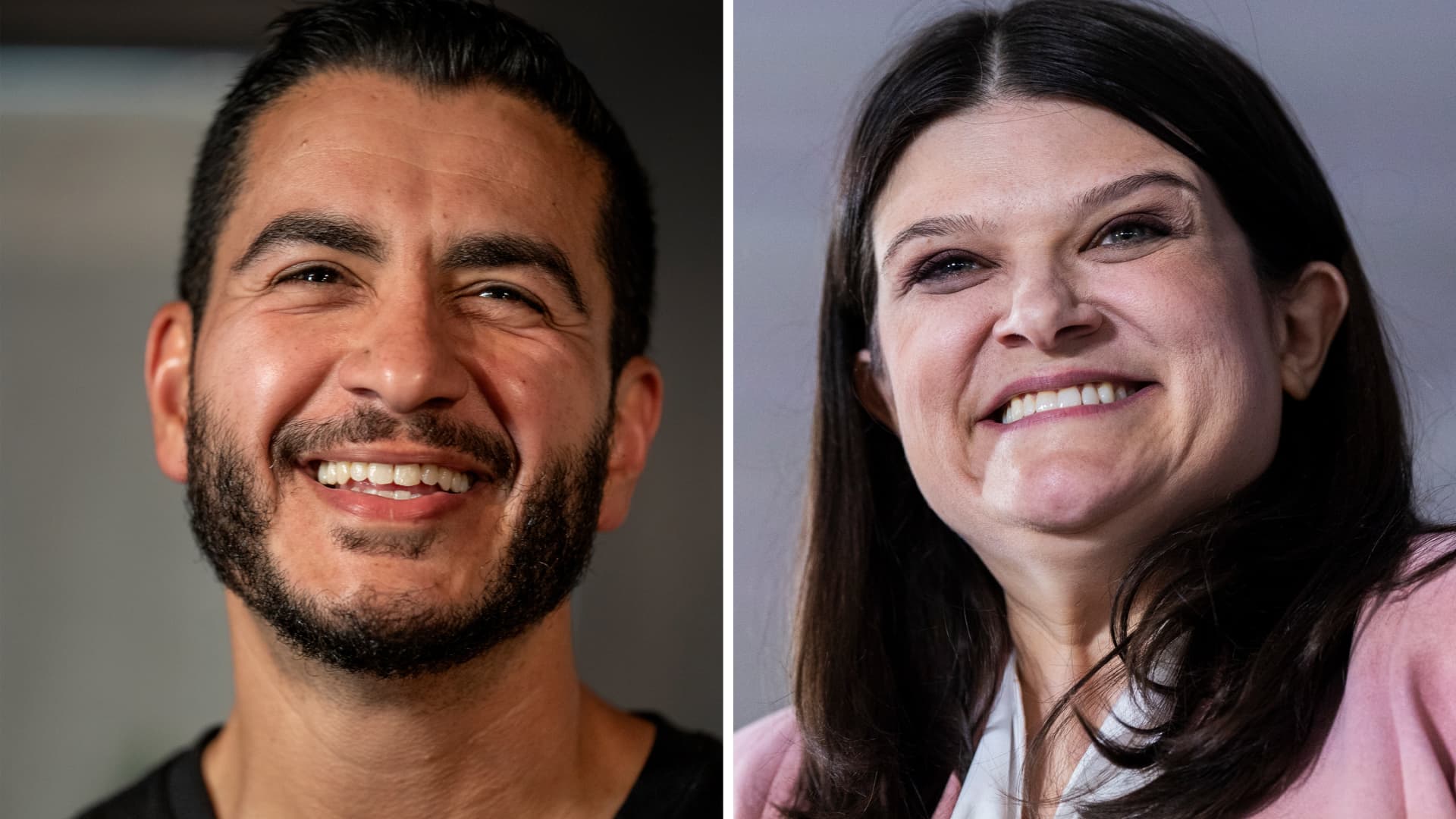
Michigan Democrats are voting Tuesday in the Michigan Democratic Senate primary, choosing between former public health official Abdul El-Sayed and U.S. Rep. Haley Stevens for an open seat with national stakes. The winner is expected to face former Rep. Mike Rogers, who was running unopposed in the Republican primary, in November, according to CNBC and UPI.
The seat is open because Democratic Sen. Gary Peters is not seeking reelection. The general-election contest matters to both parties because Michigan is viewed as an important Senate battleground, though the primary itself will not determine control of the chamber.
Who is running in the Michigan Democratic Senate primary?
El-Sayed has run as a progressive outsider, while Stevens is a center-left or more moderate Democrat, according to CNBC, PBS NewsHour and UPI. Recent polls gave El-Sayed an advantage, including an Emerson College survey reported by E&E News that put him at 57% to Stevens’ 41%. Those were pre-election surveys, not results.
El-Sayed’s prominent backers include Sen. Bernie Sanders of Vermont and Rep. Alexandria Ocasio-Cortez of New York. Stevens has support from Peters, Michigan Gov. Gretchen Whitmer and Senate Minority Leader Chuck Schumer, according to PBS NewsHour. State Sen. Mallory McMorrow left the race in July, leaving a two-candidate contest, CNBC reported.
Where the candidates differ
U.S. policy toward Israel has been one of the clearest divides. PBS NewsHour reported that El-Sayed has called the Gaza war a genocide and wants the U.S. to end military aid to Israel. Stevens has said Israel has a right to exist, backs a two-state solution and has criticized Israeli Prime Minister Benjamin Netanyahu.
The candidates also disagree over AI data centers. El-Sayed has proposed conditions for facilities that include union labor, no utility-rate increases, improved grid reliability, water protections and a community-benefits agreement. He has also said authorities should be able to close facilities that fail to comply, according to E&E News.
Stevens supports having data centers in Michigan while pressing companies to pay their share of taxes, utility bills and water bills, E&E News reported. She has said utility rates should not rise as a result of the facilities.
What should voters make of the campaign claims?
Outside spending has been a major part of the race. PBS NewsHour, citing Associated Press reporting, said AIPAC and affiliated groups had spent close to $30 million on advertising supporting Stevens and opposing El-Sayed. Other outlets cited higher estimates for total outside spending favoring Stevens, but the reported figures use different scopes and are not directly comparable.
PolitiFact, in reporting published by PBS NewsHour, found no evidence connecting AIPAC to a Tavern Research poll that El-Sayed said appeared to be AIPAC-funded, rating that assertion false. It also rated Stevens’ denial that she took utility-company donations for her Senate campaign mostly false: PACs affiliated with DTE Energy and Consumers Energy gave to her House committee before her Senate run, and those funds were later transferred to the Senate campaign.
Rogers, who lost Michigan’s 2024 Senate race to Democrat Elissa Slotkin, has President Donald Trump’s endorsement, according to UPI. Tuesday’s Democratic winner will carry the party’s debate over its direction into that November matchup.
This story draws on original reporting from CNBC.


