Micron added to CNBC Investing Club’s Bullpen watchlist
CNBC Investing Club placed Micron on its Bullpen watchlist, citing AI memory demand and multiyear customer agreements.
By Dev Ramirez · Crypto Correspondent
· 3 min read
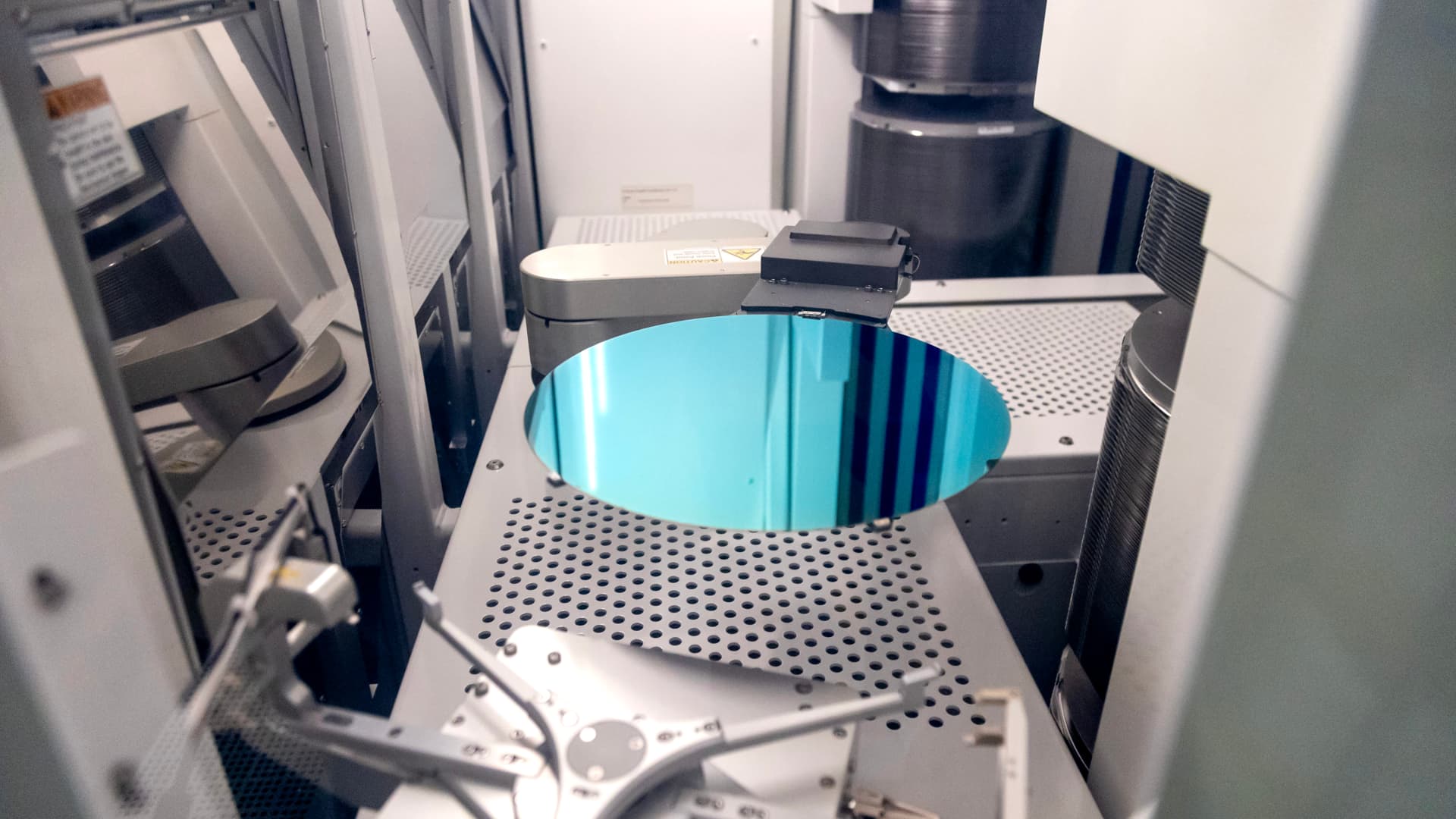
Micron Bullpen watchlist is the latest AI-infrastructure item investors may be tracking: CNBC Investing Club said Thursday it added memory-chip maker Micron Technology to its watchlist. The move is not a reported purchase or portfolio addition, but it puts attention on a company supplying a less visible, essential part of AI systems.
What happened
CNBC Investing Club said it was adding Micron after recent portfolio adjustments. Its case centers on demand for memory chips as companies build AI data centers, alongside Micron’s efforts to secure longer-term arrangements with customers.
The broader memory semiconductor market is led by Samsung Electronics, SK Hynix and Idaho-based Micron, CNBC said. Micron makes both DRAM and NAND memory products, which perform different jobs inside computing systems.
Why is Micron on the Bullpen watchlist?
DRAM is a computer’s working memory, holding data that a system needs quickly. NAND is longer-term storage, similar in function to flash storage. High-bandwidth memory, or HBM, is a specialized type of DRAM that stores and feeds data to AI accelerators, including the graphics processing units used for AI computing, CNBC said.
That connection puts memory suppliers alongside the companies making processors, servers and networking gear for data centers. Micron CEO Sanjay Mehrotra said in the company’s fiscal third-quarter 2026 earnings remarks that DRAM and NAND demand continued to exceed industry supply. He said Micron expects tight conditions to last beyond calendar 2027, an outlook based on AI demand and constraints on new supply.
Micron cited the long lead times and complexity involved in building new fabrication plants, as well as skilled-labor shortages, permitting and energy-infrastructure needs. Those are company expectations and descriptions of current conditions, rather than guarantees about future memory pricing or demand.
What Micron says is changing
Micron said it had signed 16 strategic customer agreements, or SCAs, across data-center, consumer and automotive markets. The typical agreements run from 2026 through the end of 2030, while automotive agreements generally last three years. The signed deals cover roughly 20% of Micron’s DRAM volume and about one-third of its NAND volume over the relevant period, according to the company.
The company described the SCAs as take-or-pay arrangements with binding commitments to buy specified volumes. Its largest agreements generally set a ceiling price for existing products at the calendar second-quarter market price and a floor price through the term. Micron also said some agreements have fixed prices or no price bands, so the structure is not uniform across every contract.
CNBC Investing Club said the price ceilings can cap additional margin expansion, while the arrangements could add durability and help keep margins elevated for longer. Micron said the floors in agreements with price bands are designed to support robust gross margins.
What could go wrong
The central caution is familiar to semiconductor investors. CNBC Investing Club said memory has historically been a boom-and-bust business. Multiyear customer agreements may change part of Micron’s sales mix, but they do not remove cyclical, execution, supply-expansion or demand risks.
For investors, the key distinction is between Micron’s stated outlook and an established outcome. The Bullpen addition highlights the AI-memory thesis, while the eventual results will depend on how demand, supply and the company’s customer agreements develop.
This story draws on original reporting from CNBC.


