ETF Action’s Mike Akins sees catch-up potential beyond AI leaders
Mike Akins told CNBC that software, cloud, smaller tech names and the Magnificent Seven may rebound after lagging AI-led market winners.
By Dev Ramirez · Crypto Correspondent
· 3 min read
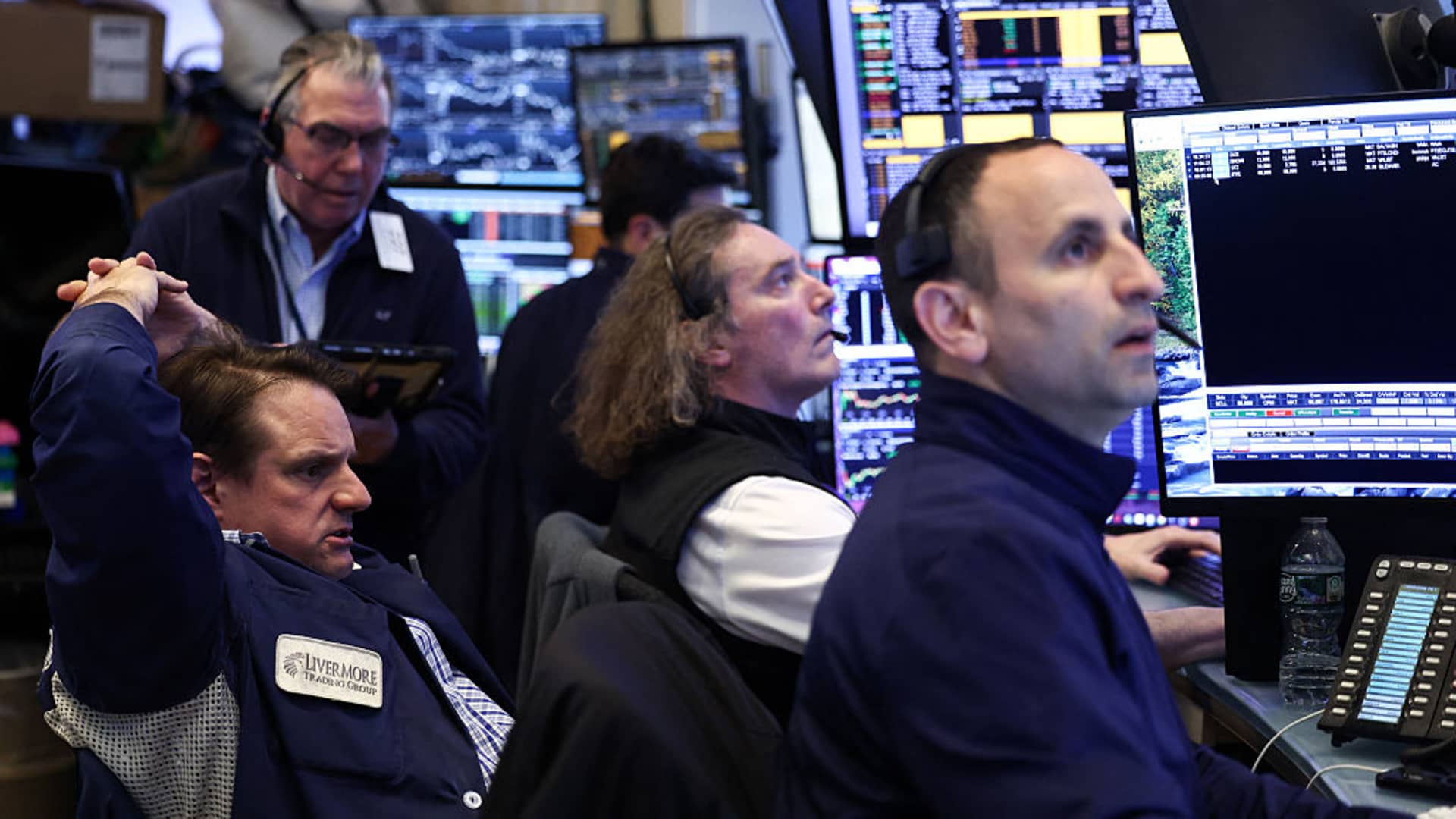
ETF Action co-founder Mike Akins says investors should pay closer attention to market groups that missed out on the first-half rally led by artificial intelligence and semiconductors. For everyday investors, the point is straightforward: a portfolio that has relied on a narrow group of AI-linked winners may behave differently if gains spread to software, cloud stocks and smaller companies.
Akins told CNBC’s “ETF Edge” that software and cloud computing companies stand out after a period of weak performance compared with major AI names. He said many of those stocks have come down from very high valuations, while still carrying strong growth cases.
“These companies prove that ‘yes,’ we still do need software to do our day-to-day jobs,” Akins said on the program.
Software and cloud come back into focus
Akins argued that the second half of the year may favor areas that were overshadowed by mega-cap technology stocks and chipmakers. Mega-cap means companies with very large market values, the kind that can dominate major indexes and investor attention.
He also pointed to disruptive technology as an area he views favorably over the next six months. Akins described it as a thematic strategy, meaning an investment approach built around a broad idea or trend rather than a single sector classification.
According to Akins, that approach reaches further into mid-cap and small-cap companies. Mid-cap and small-cap stocks are companies with smaller market values than the largest public firms, and they often move differently from the biggest index names.
“Those names have been kind of left behind in this mega-cap, semiconductor-led market,” Akins said, adding that analyst earnings growth estimates create what he called “a pretty rosy set up.”
The Magnificent Seven lagged early in the year
Akins also highlighted the Magnificent Seven index as a possible second-half catch-up trade. The group includes Nvidia, Microsoft, Alphabet, Amazon, Meta, Apple and Tesla.
The Magnificent Seven did not keep pace with the Nasdaq-100 in the first half of the year, according to CNBC. The group fell more than 2%, while the Nasdaq-100 rose nearly 20% over the same period.
Akins said he was surprised the group was flat around the midpoint of the year. Early second-half trading showed some reversal: CNBC reported that the Magnificent Seven index was up 5% while the Nasdaq-100 was down 1% as of Friday’s close.
Smaller stocks are also gaining ground
Akins said he sees small and mid-cap companies as favorable areas heading into 2027. He noted that small-cap stocks have already performed well this year.
“All of the down-market names are really starting to catch up,” Akins said. He added that continued gains could come from stronger earnings and revenue, as well as an expansion in valuation multiples.
A valuation multiple is a ratio investors use to judge how expensive a stock is relative to a business measure such as earnings or sales. Akins said those multiples have been extremely depressed over the past several years.
The Russell 2000 index, which tracks small-cap stocks, is up almost 20% this year, according to CNBC. The S&P 500, the broader large-cap benchmark, is up almost 11% over the same period.
Akins previously led exchange-traded funds at ALPS before co-founding ETF Action, an independent financial technology and research firm. An exchange-traded fund, or ETF, is a basket of securities that trades on an exchange like a stock.
This story draws on original reporting from CNBC.