Nike China sales fall 30% as local sneaker rivals gain ground
Nike’s China revenue has dropped from its 2021 peak as younger shoppers favor local brands and the company resets distribution.
By Dev Ramirez · Crypto Correspondent
· 3 min read
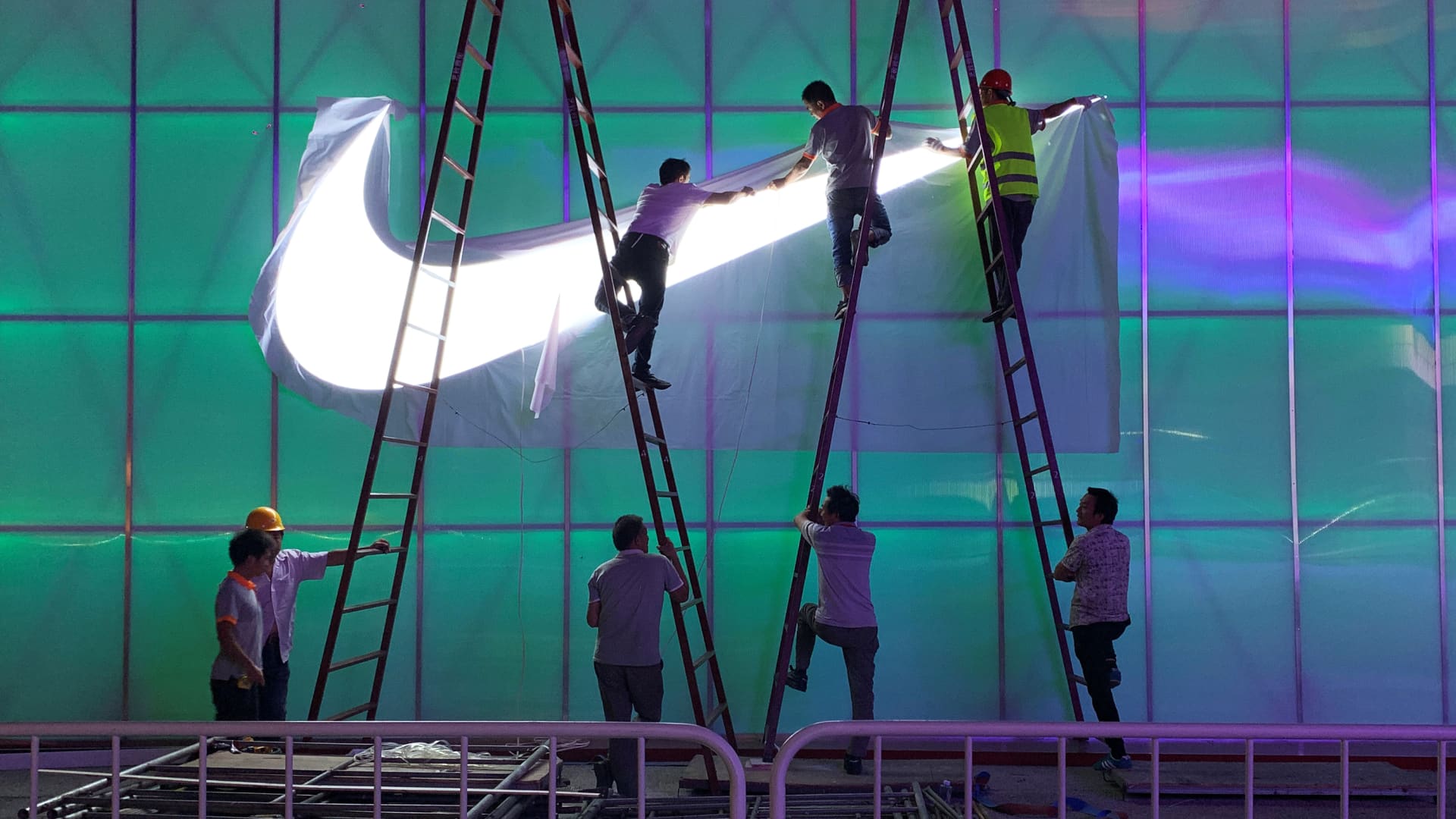
Nike China sales have dropped 30% since 2021, turning what was once the company’s fastest-growing region into a tougher piece of its turnaround story. For everyday investors, the issue is bigger than one weak quarter: Nike is losing ground in a sportswear market that is still expanding.
Company reports cited by CNBC show Nike’s annual revenue in China fell to $5.8 billion in fiscal 2026 from $8.3 billion in fiscal 2021. Revenue in the region has declined from the prior year for eight straight quarters, and annual sales at the end of May reached their lowest level in eight years, according to CNBC.
That slide is happening while China’s broader sportswear market has grown 51% over the past five years, according to GlobalData. Chinese government data cited by CNBC also shows sports-related products are the country’s fastest-growing consumer category and participation in sports and exercise is at its highest level in decades.
Why are Nike China sales falling?
CNBC reported that analysts and consumer experts point to three main pressures: stronger Chinese brands, changing tastes among younger shoppers and Nike’s struggle to offer products that feel local rather than global. “China Chic,” also known as Guochao, refers to a movement that promotes pride in Chinese-made and Chinese-designed products.
Yaling Jiang, founder of consumer research firm ApertureChina, told CNBC that Nike has become less culturally relevant to some young shoppers. Tracy Dai, director of operations at China Skinny, said younger consumers who once defaulted to Nike or Adidas may now name Anta or Li-Ning instead.
The shift accelerated after 2021, when Nike faced calls for a boycott in China after an earlier company statement about concerns over reports of forced labor in Xinjiang resurfaced, CNBC reported. Chinese actor Wang Yibo ended his representative contract with Nike, while domestic competitors including Anta and Li-Ning leaned into their use of Xinjiang cotton, according to CNBC.
Value is another pressure point. Wei Kan, who spent about 15 years at Nike and Converse in China and Taiwan before founding Conduit Asia, told CNBC that Chinese shoppers have become more selective and focused on innovation. He said Nike still looks like a broad global brand while some local rivals are moving faster with technical products aimed at specific sports and fitness activities.
What is Nike doing in China now?
Nike says it is trying to rebuild its connection with Chinese consumers. Cathy Sparks, a 25-year Nike veteran, became vice president and general manager of Greater China in January and reports directly to CEO Elliott Hill, according to CNBC.
Sparks told CNBC that Chinese consumers have “high standards” for product connections and brand engagement, and said Nike can drive full-price revenue by designing footwear and apparel for their specific needs. A Nike spokesperson disputed the idea that the brand has lost relevance in China, saying younger shoppers want more “hyperlocal connections” through events and cultural moments.
Nike has hired its first Greater China vice president of local product creation, CNBC reported. The company plans to begin with two lifestyle capsules, one for Nike sportswear and one for Jordan streetwear, in time for the holidays, followed later by performance apparel and footwear.
Distribution is also changing. During the Covid-19 pandemic, Nike allowed physical-store distributors in China to sell online even though their agreements did not include digital sales, Sparks told CNBC. She said that left the market fragmented and made it harder for Nike to tell clear product stories.
BNP Paribas equity analyst Laurent Vasilescu estimates Nike’s move to shut down those online storefronts could reduce annual revenue by as much as $1 billion, or about 17% of regional sales, CNBC reported. Sparks said some distribution will disappear, but Nike believes it can replace that value with more full-price sales and a more premium shopping experience.
This story draws on original reporting from CNBC.


