Nvidia OpenAI backstop talks put AI spending risk in focus
The Wall Street Journal reported Nvidia may back OpenAI on a $250 billion Ohio data center lease, adding pressure to AI stocks.
By Jordan Bell · Startups & Deals Reporter
· 4 min read
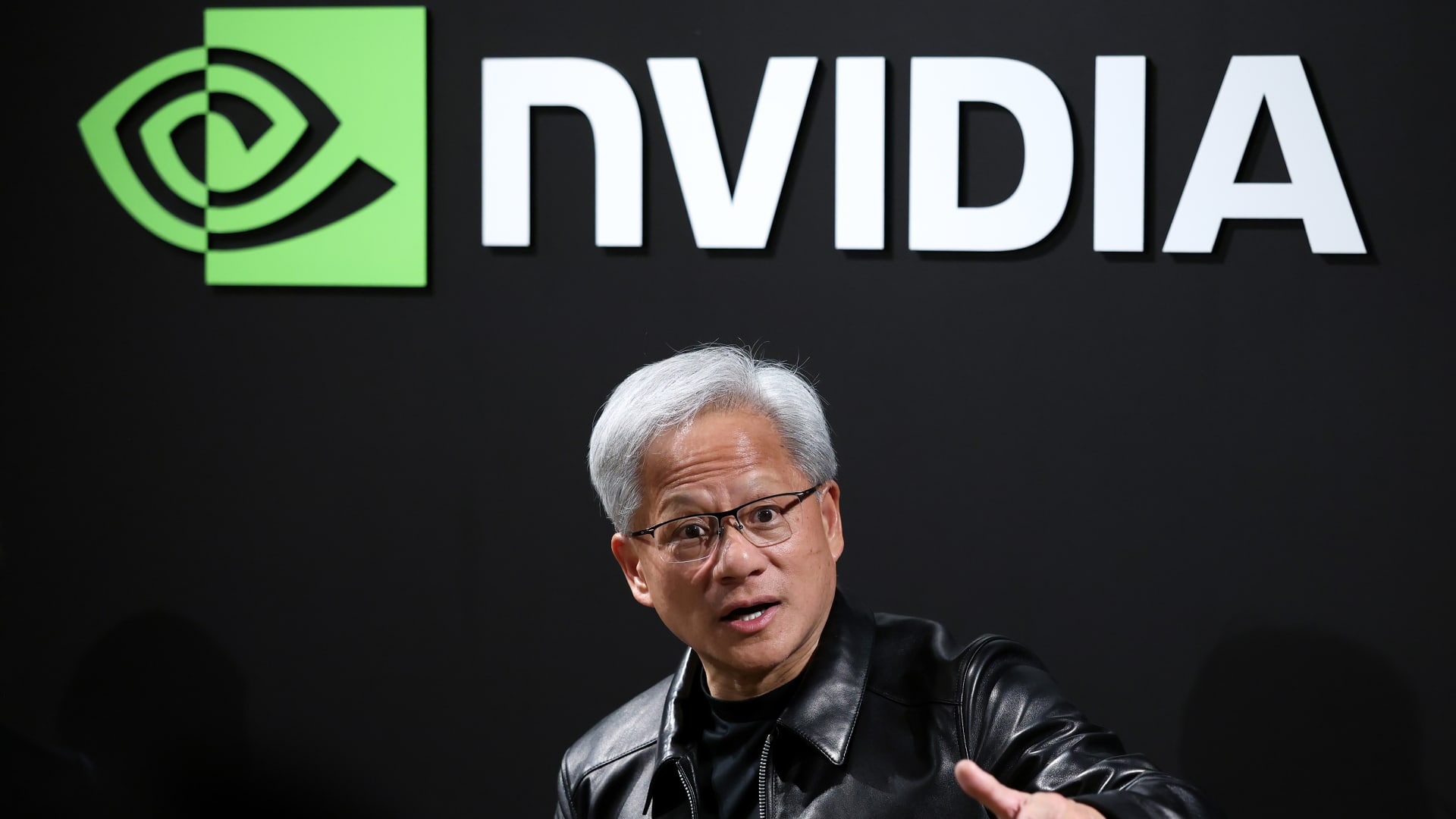
Nvidia OpenAI backstop talks are putting a new spotlight on one of the market’s biggest AI questions: who is really funding the buildout. The Wall Street Journal reported late Sunday that Nvidia is discussing a roughly $250 billion financial backstop for OpenAI as the ChatGPT maker seeks to lease a proposed 10-gigawatt data center in southern Ohio.
The planned facility is being developed by SB Energy, a subsidiary of SoftBank, according to the Journal. The report said Nvidia’s support could help the developer borrow on better terms because Nvidia has a stronger financial profile than OpenAI, which the Journal described as unprofitable.
Nvidia shares fell more than 4% Monday, while CNBC reported weakness across many semiconductor and artificial intelligence infrastructure names. CNBC said other factors may have weighed on the group, including AI developments in China, but the reported OpenAI financing discussions drew heavy attention from investors.
What is the Nvidia OpenAI backstop?
A backstop is a financial commitment meant to reassure lenders or business partners that obligations can be met if another party struggles. In this case, the Journal described potential Nvidia support tied to OpenAI’s lease and debt for the Ohio data center, rather than the AI server racks that would go inside it.
The Journal also reported that Nvidia is in talks to finance OpenAI’s chip purchases, which would be separate from the roughly $250 billion backstop figure. That detail matters because Nvidia is both the dominant seller of advanced AI chips and, increasingly, a financial supporter of companies that need those chips.
Why investors are watching circular AI deals
The concern is that some AI demand may be tied to financial links among the same companies building and supplying the infrastructure. CNBC’s Investing Club described the potential Nvidia-OpenAI arrangement as another example of circular deals in the AI buildout.
CNBC noted that Nvidia invested $30 billion in OpenAI earlier this year. It also said Nvidia invested last year in Anthropic, the company behind Claude, and has backed several so-called neoclouds, which are companies that rent Nvidia-powered computing capacity to customers.
Nvidia has said its investments are meant to support the development of the AI ecosystem and can offer attractive returns, according to CNBC. For investors, the issue is how those investments change the risk profile: if a chip supplier helps finance customers that buy its products, reported demand can look strong while raising questions about dependency between buyer and seller.
If one major participant fails to meet its financial obligations, investors may worry about knock-on effects across chipmakers, AI labs, data center developers, lenders and equipment suppliers. That is why a potential arrangement between Nvidia and OpenAI carries weight beyond one Ohio project.
Why the AI trade is under pressure
CNBC’s Investing Club said the market is becoming less satisfied with signs of compute demand alone. Compute means the processing power used to train and run AI models. Investors are increasingly looking for proof that heavy spending on chips, data centers and power equipment is producing higher earnings.
Alphabet showed that tension last week, according to CNBC. The company reported strong second-quarter results Wednesday night, but its shares fell Thursday as investors focused on higher expected capital expenditures in 2026 and management’s indication that spending would rise again next year. Capital expenditures are long-term investments in assets such as data centers, chips and related infrastructure.
Meta, Microsoft and Amazon report this week, CNBC said, putting the same spending question in front of three more hyperscalers. Hyperscalers are large cloud and internet companies that operate data centers at enormous scale.
The supportive read is that OpenAI’s push for more capacity points to ongoing demand for AI infrastructure. CNBC said that could help suppliers such as Corning and Eaton, both tied to data center equipment and components.
Still, the reported Nvidia-OpenAI talks add to investor concern that AI capital spending has entered a more demanding phase. The market is no longer rewarding every AI buildout headline the same way; companies now face pressure to show how that spending turns into profit.
This story draws on original reporting from CNBC.


