Oil and rates put markets on alert as U.S.-Iran fighting escalates
Stocks have held near highs, but rising crude, gasoline and bond yields could pressure consumers, earnings and Fed expectations.
By Dev Ramirez · Crypto Correspondent
· 4 min read
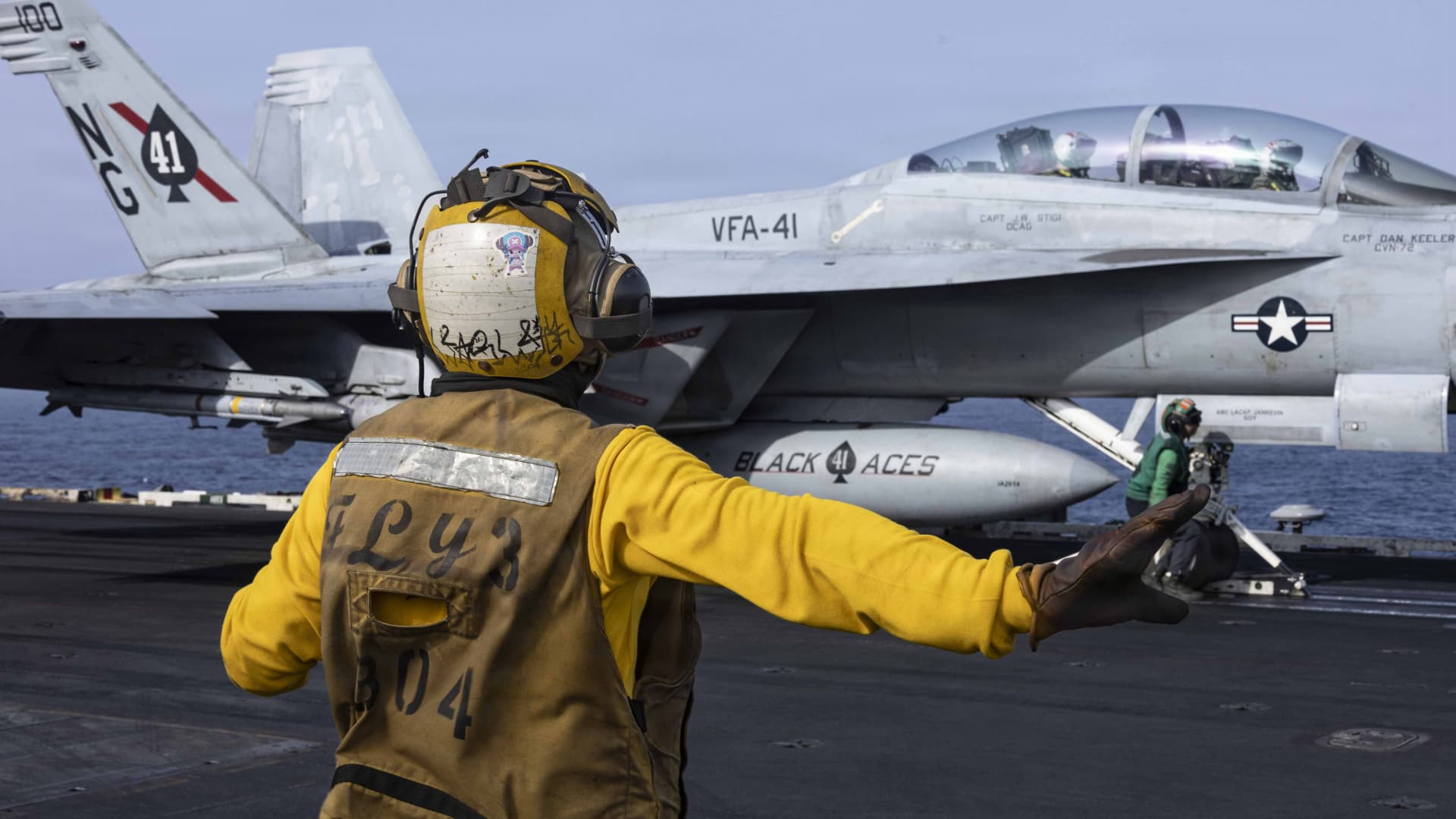
A fresh escalation in the U.S.-Iran war is forcing investors to look past the calm in major stock indexes and focus on oil, gasoline and interest rates. For everyday investors, the risk is direct: pricier fuel can squeeze household budgets, lift inflation readings and pressure company profits.
The U.S. carried out its 10th consecutive night of strikes against Iran on Monday, according to CNBC, after Yemen’s Houthis announced a maritime embargo against Saudi Arabia. The fighting has also turned deadlier for U.S. forces, with CNBC reporting that a third service member died in recent hostilities. President Donald Trump said on Truth Social that “they will pay.”
The S&P 500 has not reacted as if markets expect a broad economic shock. CNBC reported that the index slipped only slightly Monday after a down week and remained about 2% below its June record.
That calm rests partly on the view that neither Washington nor Tehran wants a deeper war that could hurt the global economy. Investors have also been paying attention to stronger corporate earnings early in the second-quarter reporting season and softer-than-expected inflation data released last week, CNBC reported.
Oil and Treasury yields are the pressure points
Brent crude briefly moved above $90 a barrel Monday and stayed just under that level Tuesday, according to CNBC. The U.S. 10-year Treasury yield traded above 4.6% Monday and remained near that level Tuesday.
The 10-year Treasury yield is the interest rate investors demand to lend the U.S. government money for a decade. It matters because it influences borrowing costs across the economy, from mortgages to corporate debt. When oil and yields stay high, companies can face higher expenses while consumers have less cash left after essentials.
Art Hogan, chief market strategist at B. Riley Wealth, told CNBC that the length of the oil-price rise is the key issue. “If we’re above $85 or $90 into the end of the year, I suspect that the earnings estimates for this year would have to be trimmed,” Hogan said.
Hogan said the S&P 500 could enter a correction in a worst-case outcome, but added that technology, the index’s largest sector, may help cushion the broader market because it is less exposed to energy costs. S&P Global data cited by CNBC put technology at 38% of the S&P 500 and energy at 3%.
Companies with direct fuel exposure may face more pressure. Ryanair said Monday that weaker first-quarter profits reflected delayed bookings tied to the Middle East crisis, CNBC reported.
Consumers face a tighter fuel bill
Mark Zandi, chief economist at Moody’s Analytics, told CNBC the economic risks are negative for the U.S. and global economies, depending on how the conflict affects oil and other commodity prices.
Zandi estimated that the average U.S. household has lost about $1,100 from the war so far, including higher energy costs and military expenses. He said real disposable income has recently been negative or close to flat on an annual basis, a pattern often associated with recession periods.
Households have used savings to keep spending, Zandi said, but that buffer is thinner. The personal saving rate was 3% in May, nearly 2 percentage points lower than a year earlier, according to the Bureau of Economic Analysis. AAA said gasoline reached $4 a gallon Monday for the first time in more than a month.
Higher gasoline prices can lift the consumer price index, the broad inflation measure tracked by the Bureau of Labor Statistics. Luke Tilley, chief economist at M&T Bank and Wilmington Trust, told CNBC the Federal Reserve will be watching whether fuel-driven inflation spreads into core inflation, which excludes food and energy. CME’s FedWatch tool showed futures markets pricing an above 83% chance that the Fed holds rates steady next week.
Consumer Edge analyst Michael Gunther told CNBC that value-focused or driving-dependent customers may become more selective if oil stays high, affecting businesses such as Dollar General, Tractor Supply and Texas Roadhouse. He said warehouse clubs including Costco and Sam’s Club could gain share as drivers seek cheaper fuel and groceries.
Heather Long, chief economist at Navy Federal Credit Union, told CNBC consumers had support earlier from larger tax refunds under Trump’s tax bill, but may not get the same help later this year. “The cushion is deflating,” Long said. “There’s no other obvious air pump coming.”
This story draws on original reporting from CNBC.


