Oil rises as Hormuz fee plan puts supply risk back in focus
Crude prices climbed after President Trump proposed fees on ships using the Strait of Hormuz and revived a blockade of Iranian ports.
By Theo Nakamura · Staff Writer
· 3 min read
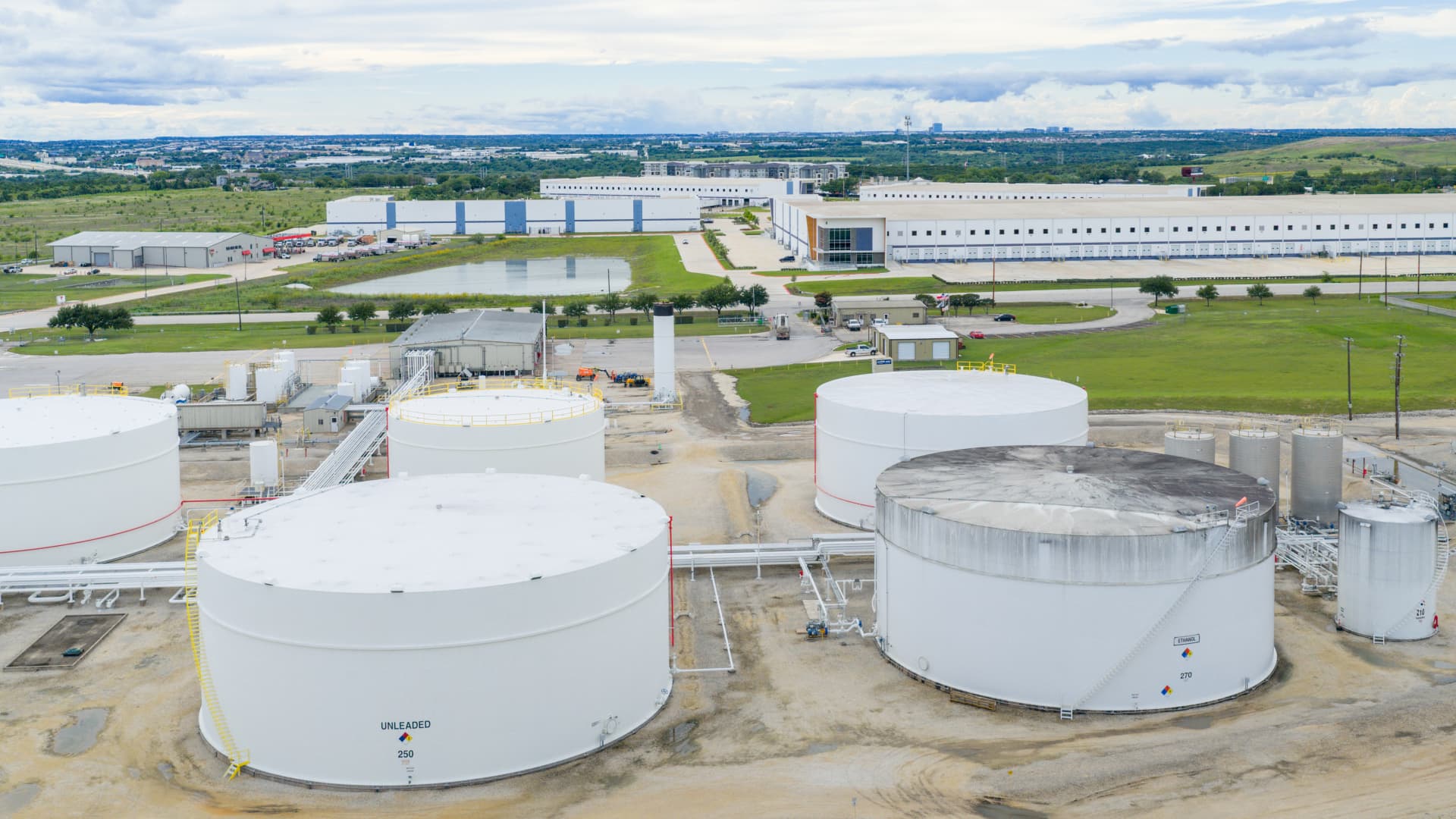
Oil prices climbed Tuesday as traders priced in a higher risk of supply trouble around the Strait of Hormuz, one of the world’s most important crude transit routes. For everyday investors, that kind of move can show up beyond energy stocks, because oil feeds into gasoline, shipping costs and inflation expectations.
U.S. West Texas Intermediate futures for August delivery rose 2.27% to $79.91 a barrel, according to CNBC. Brent crude futures for September delivery, the main international oil benchmark, gained 2.14% to $85.11 after rising 9.6% in the prior session.
Futures are contracts tied to delivery at a later date, so they often move quickly when traders think future supply may be tighter. In this case, the concern is that new U.S. action near Iran could make it more expensive or riskier for ships to move oil through a narrow chokepoint that has long mattered to global energy markets.
What changed around Hormuz
President Donald Trump said Monday that the U.S. plans to charge fees on ships passing through the Strait of Hormuz. He said the levy would be “at the rate of 20% on all cargo shipped,” while describing the United States as the “guardian” of the route, CNBC reported.
Trump also said in a Truth Social post that Washington would restore a blockade of Iranian ports near the strait. U.S. Central Command later said the blockade was set to begin at 4 p.m. ET on Tuesday, according to CNBC.
The Strait of Hormuz matters because it is a narrow passage between the Persian Gulf and the Gulf of Oman. CNBC reported that roughly one-fifth of global oil supplies moved through the route before the U.S. and Israel launched strikes on Iran on Feb. 28.
Traffic through the waterway later dropped after Iran began targeting vessels in early March, CNBC reported. Shipping had started to recover after an interim agreement between Washington and Tehran.
Why the market reacted
Oil prices tend to rise when traders see a greater chance that barrels could be delayed, rerouted or removed from the market. A fee on cargo could raise transport costs, while a blockade could increase the risk that shipping companies avoid the area or that military tensions grow.
Citi said Trump’s proposed Hormuz shipping fees materially increase the risk of further military escalation, according to a report published early Tuesday and cited by CNBC.
“The possibility that the Iranian regime walks away from the MoU until after the mid-term US elections has also risen, a scenario which would most likely see higher for longer oil prices,” Citi wrote. MoU is short for memorandum of understanding, a type of agreement between parties.
For investors, the near-term focus is whether the policy threat becomes an operational disruption. Energy producers can benefit from higher crude prices, while airlines, trucking companies and other fuel-heavy businesses can face pressure when oil costs climb. The broader market also watches oil because sustained increases can complicate the path for inflation.
This story draws on original reporting from CNBC.


