Oil rises as Trump warns Iran over Hormuz shipping attacks
Crude climbed Thursday as U.S.-Iran tensions raised fresh concerns about shipping through the Strait of Hormuz, a key route for global oil flows.
By Maya Okafor · Markets Writer
· 3 min read
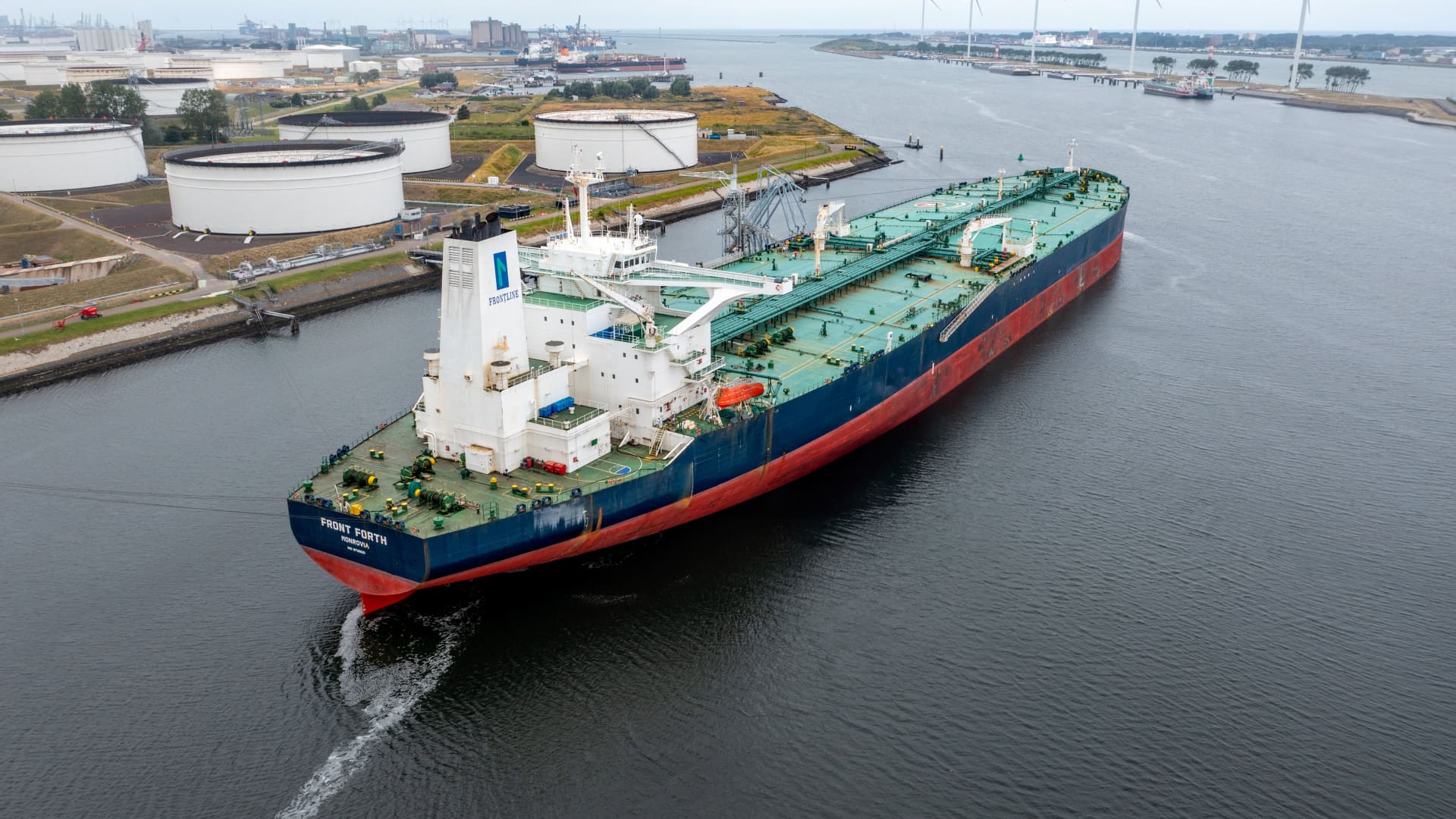
Oil prices moved higher Thursday after President Donald Trump threatened U.S. strikes on Iranian infrastructure if Iran attacks ships in the Strait of Hormuz. For everyday investors, the move matters because crude prices can feed into gasoline, airline costs, inflation expectations and energy stocks.
CNBC reported that Brent crude futures for September delivery rose 2% to $95.99 a barrel. U.S. West Texas Intermediate crude futures gained about 1.7% to $88.27 a barrel. Brent is the main international oil benchmark, while West Texas Intermediate, or WTI, is the primary U.S. benchmark. Futures are contracts tied to delivery at a later date, so their prices often reflect what traders think supply and demand risks will look like next.
The latest jump came after Trump said Wednesday that the U.S. would strike Iranian targets if ships are fired on in the Strait of Hormuz, the narrow waterway between Iran and Oman that links the Persian Gulf with global shipping routes. The strait is closely watched by oil markets because disruptions there can affect crude moving out of the Gulf region.
Trump wrote that “any time the Islamic Republic of Iran shoots at a ship in the Strait of Hormuz,” including by missile, rocket, drone or another weapon, the U.S. would “bomb and destroy ONE BRIDGE OR POWER PLANT.”
Iran answered with its own warning. An unnamed Iranian military source told the state-run Tasnim News Agency that if the U.S. hits a bridge or power plant in Iran, Iran would target infrastructure and bridges in the region, including energy facilities tied to U.S. interests.
That is the kind of exchange oil traders tend to price quickly. When conflict threatens tankers, ports, pipelines or power systems that support energy production, buyers may bid up crude because future supply looks less certain. Even if barrels are still moving, the risk premium, the extra price attached to possible disruption, can rise.
Diplomacy is still in the frame
Secretary of State Marco Rubio said earlier Wednesday that Iran was not being “serious” about reaching a deal with Washington. Rubio also said the U.S. remained “committed to diplomacy” in the Middle East.
HSBC said in a note late Wednesday that oil’s recent climb reflects renewed concern about the Strait of Hormuz after a U.S.-Iran ceasefire broke down. Kim Fustier, the bank’s senior global oil and gas analyst, said that since July 7 to July 8, the ceasefire had weakened as Iranian attacks on vessels moving through the strait prompted U.S. retaliatory strikes.
Fustier said the unresolved question is how passage through the strait is controlled, and by whom. She added that higher traffic through a U.S.-managed Omani lane appeared to become less acceptable to Iran.
For investors, the key point is that oil is reacting less to a change in current demand and more to geopolitical risk around supply routes. If shipping remains uncertain, energy prices can stay sensitive to headlines from Washington, Tehran and the Gulf region.
This story draws on original reporting from CNBC.


