Oil tanker attacks spread from Hormuz to Red Sea and Black Sea
Iran, Houthis and Ukraine-linked strikes are disrupting key oil routes as Brent tops $100 and shipping risks climb.
By Jordan Bell · Startups & Deals Reporter
· 4 min read
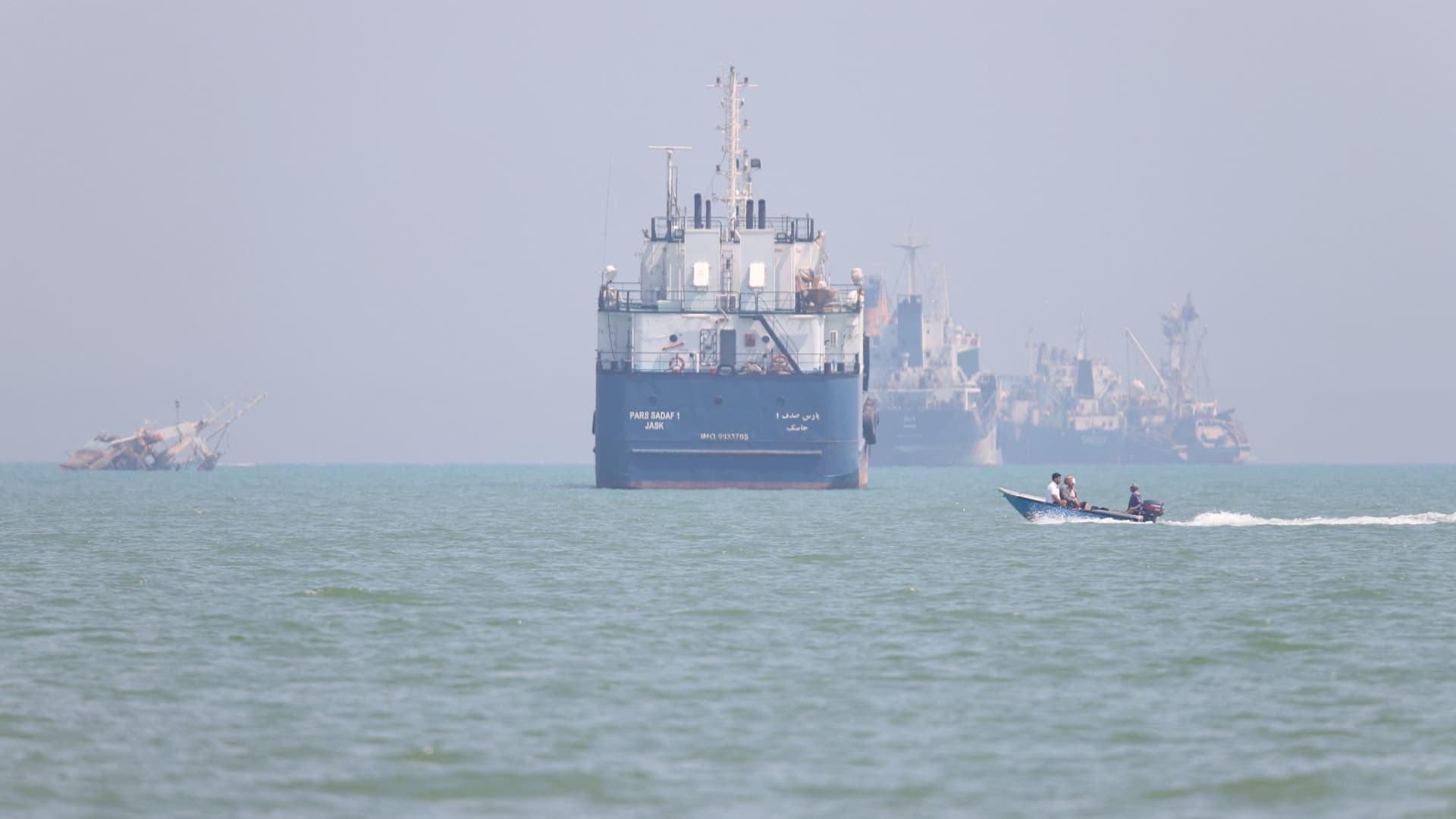
Oil tanker attacks are intensifying across the Strait of Hormuz, the Red Sea and the Black Sea, putting fresh pressure on crude markets that investors already saw push higher in July. Brent crude climbed above $100 a barrel on Thursday for the first time since May, after rising more than 30% this month, according to CNBC.
The strain is coming from two regions at once. In the Middle East, Iran has increased attacks on tankers near the Strait of Hormuz, while Yemen’s Houthis fired on two Saudi tankers in the Red Sea after announcing a maritime embargo against Riyadh. In Europe, Ukraine says it has hit more than 150 tankers, cargo vessels and other ships tied to Russia’s shadow fleet in the Black Sea and Sea of Azov, according to the Kyiv Post.
Helima Croft, head of global commodity strategy at RBC Capital Markets, told CNBC that the oil market is now facing conflict across several fronts. For retail investors, the mechanism is direct: when ships avoid key routes or insurers price in more danger, transport gets harder and more expensive, which can tighten supply and lift crude and fuel prices.
Why are oil tanker attacks raising oil prices?
Oil chokepoints are narrow sea routes that carry large volumes of crude and fuel. If tankers are attacked near those routes, traders worry that barrels will arrive late, take longer paths or fail to move at all, which can push benchmark prices higher.
The Strait of Hormuz and the Bab el-Mandeb Strait are the two key Middle East routes now under threat. Hormuz links Persian Gulf producers with global markets, while Bab el-Mandeb connects the Red Sea with the Gulf of Aden. CNBC reported that ship traffic through Hormuz has fallen after recovering in the weeks following a June 17 memorandum of understanding between the U.S. and Iran to reopen the strait.
Dimitris Maniatis, CEO of Athens-based maritime risk service Marisks, told CNBC that the collapse of that agreement has created the most dangerous phase of the conflict for merchant vessels. He said Iran is seeking more control over activity in the Strait of Hormuz.
The International Maritime Organization, a United Nations agency, says 61 commercial ships have been attacked in the Persian Gulf, Strait of Hormuz and Gulf of Oman since March 1. Those incidents have killed at least 17 seafarers and injured dozens, according to the IMO. At least a dozen tankers have been struck this month in and around Hormuz, killing at least two seafarers, the agency’s data show.
Saudi exports face longer and more complex routes
The Red Sea attacks threaten Saudi oil that had already been redirected by pipeline to the kingdom’s western coast because of risks around Hormuz. Those barrels still need to pass through Bab el-Mandeb to reach many buyers by sea.
Matt Smith, director of commodity research at Kpler, told CNBC that Saudi Arabia can send some oil through a pipeline across Egypt from the Red Sea to the Mediterranean, but the process is difficult. He said fully loaded supertankers cannot pass through the Suez Canal because it is too shallow, so cargo would need to be partly unloaded, piped across Egypt and retrieved after the ship transits the canal.
Smith said a supertanker using that workaround would still face a longer route around Africa to reach Asia and would likely need to return the same way because of Houthi threats near Bab el-Mandeb. He estimated the round trip would take about eight weeks.
Black Sea attacks add another supply risk
In the Black Sea, the Caspian Pipeline Consortium has suspended tanker loadings at Russia’s Novorossiysk port after attacks on vessels, according to Reuters. Croft said in a client note cited by CNBC that Kazakhstan exports about 80% of its crude through that pipeline.
Croft said Kazakhstan has few alternatives, leaving June production of roughly 1.7 million barrels per day at risk of shut-ins. She also said Ukraine has struck Russian refineries hard enough to take more than half of the country’s capacity offline, tightening both crude and refined product markets.
Croft told CNBC that a dangerous escalation in the Middle East could drive Brent above its 2022 high of $128 a barrel. In a worst-case full-scale regional war, she said Brent could move past the 2008 peak of $148.
This story draws on original reporting from CNBC.


