Rheinmetall gunpowder expansion targets Europe’s ammo bottleneck
Rheinmetall plans to more than double gunpowder output in Bavaria by 2028 as Europe races to rebuild ammunition supplies.
By Maya Okafor · Markets Writer
· 3 min read
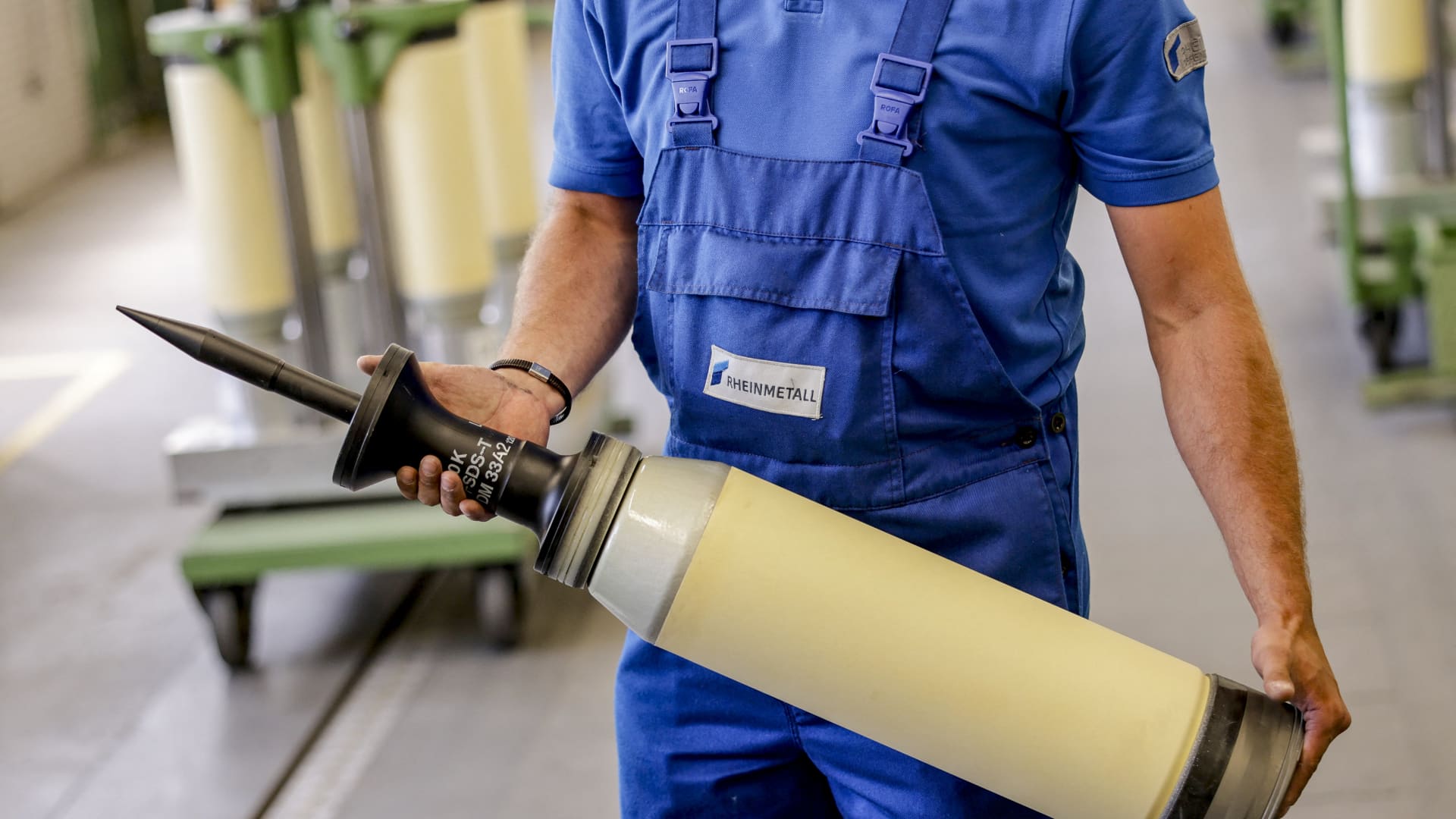
Rheinmetall’s gunpowder expansion in Bavaria is aimed at one of Europe’s biggest defense supply problems: making enough ammunition after the war in Ukraine drained stockpiles. For investors watching Europe’s rearmament trade, the project shows where defense demand is turning into factory spending, not just budget headlines.
The German defense group is expanding its Aschau am Inn site near Munich under a program called “Project Firepower,” CNBC reported. The facility, spread across roughly 90 hectares near the Bavarian Alps, is being built out to become one of Europe’s largest gunpowder plants.
Rheinmetall CEO Armin Papperger told CNBC that gunpowder has become a core constraint for ammunition production. “Without gunpowder, it’s impossible to protect our people because at the end of the day, you need gunpowder for ammunition,” he said in an interview at the site.
Why is Rheinmetall expanding gunpowder production?
Rheinmetall plans to more than double annual gunpowder production at the Bavarian site to 4,200 metric tons by 2028, according to CNBC. The push follows the company’s ammunition plant buildout last year and comes after gunpowder prices rose as the Ukraine war depleted supplies.
Gunpowder is the propellant that creates the force needed to fire a round from a barrel. Without enough propellant, manufacturers cannot turn shells, casings and warheads into usable ammunition at the scale militaries are demanding.
The company also has put millions into gunpowder operations in Spain and Switzerland, CNBC reported. Rheinmetall is one of the world’s largest ammunition makers and is unusual because it covers much of the production chain, from propellant to bullet casing.
What is nitrocellulose and why does it matter?
Nitrocellulose, also called guncotton, is a key ingredient in ammunition propellant. It is commonly made from cotton linters, the short fibers left on cotton seeds after the longer textile fibers are removed.
Europe has relied heavily on China for cotton linters, but exports have slowed in recent years, CNBC reported. Papperger said shortages of nitrocellulose are no longer a problem for Rheinmetall because the company secured its own supply and built reserves. He told CNBC the company currently has enough reserves for the next four years.
The Bavarian site will also include research and development work on advanced gunpowder. Papperger said Rheinmetall is developing high-energy smokeless propellants made with guncotton and is working to qualify cellulose from wood as an alternative to cotton linters.
What it means for Rheinmetall stock and Europe’s defense push
Rheinmetall has been a major beneficiary of Europe’s higher defense spending, especially in ammunition, CNBC reported. European governments have raised defense budgets to their highest levels since the Cold War as Russia is seen as a broader threat and U.S. security commitments appear less certain.
The company’s shares have still fallen 35% year to date, according to CNBC data, as investors weigh whether future wars will rely more on drones, cyber capabilities and AI-powered weapons than on traditional heavy equipment.
Papperger pushed back on the idea that drones would reduce demand for Rheinmetall’s products. He told CNBC that militaries need drones alongside artillery, tank ammunition and other weapons, adding that drones would bring the company more business rather than less.
He also said Europe cannot count on U.S. ammunition production while America is rebuilding its own inventories, estimating U.S. stocks at about 20% to 30%. Papperger told CNBC he expects Rheinmetall’s order book to exceed 100 billion euros by the end of the year.
This story draws on original reporting from CNBC.


