Rivian q2 earnings beat estimates as EV maker cuts 2026 spending plan
Rivian cut 2026 capital spending plans, tightened its loss outlook and beat Q2 estimates while keeping its delivery target intact.
By Maya Okafor · Markets Writer
· 3 min read
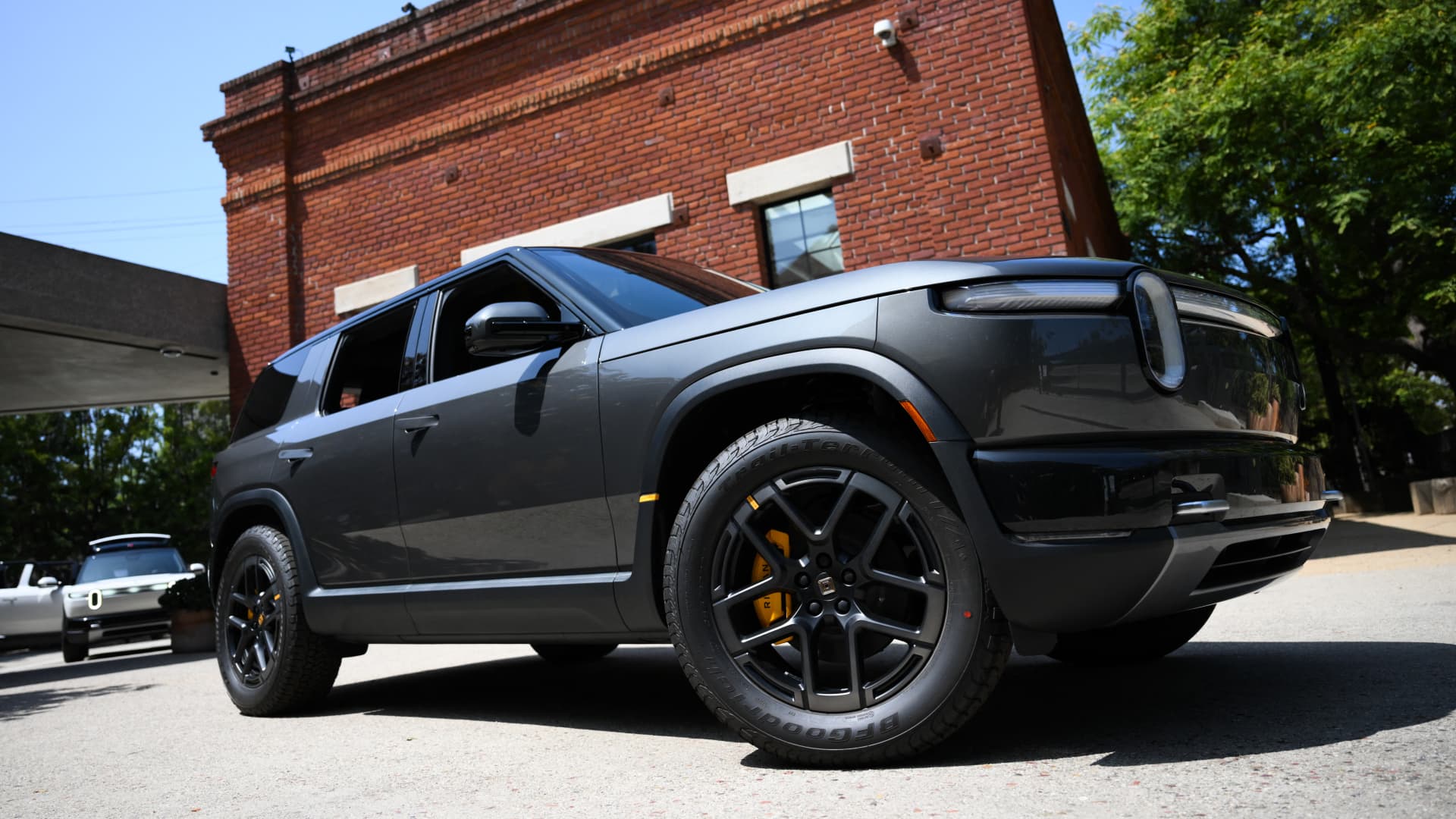
Rivian q2 earnings gave investors a cleaner look at the EV maker’s cash discipline: the company lowered its 2026 capital spending plan and trimmed the high end of its expected adjusted loss for the year. Rivian also kept its vehicle delivery goal unchanged, a key signal for shareholders watching whether demand can support the rollout of its newer models.
CNBC reported that Rivian now expects adjusted losses of $1.8 billion to $2 billion for 2026, compared with its prior range of $1.8 billion to $2.1 billion. The company also cut its capital expenditures forecast, meaning spending on long-term assets such as manufacturing capacity and equipment, to $1.7 billion to $1.8 billion from a previous range of $1.95 billion to $2.05 billion.
Rivian said the $250 million reduction at the midpoint of its capital spending range came from “project efficiencies and timing of spend,” according to CNBC. The company had previously raised that spending plan to support investments in new technologies, including its hands-free driving system.
What were Rivian's Q2 earnings results?
Rivian reported an adjusted loss of 47 cents per share for the second quarter, better than the 63-cent loss analysts expected, based on average estimates compiled by LSEG and reported by CNBC. Revenue came in at $1.66 billion, topping the $1.51 billion expected by analysts.
The company’s gross profit was $179 million, compared with a gross loss of $206 million in the same quarter a year earlier, CNBC reported. Gross profit measures what a company keeps after the direct costs of making and delivering its products, before other expenses such as research, sales and administration.
Rivian’s automotive business still posted a $36 million gross loss in the quarter. Its software and services unit generated $215 million in gross profit, according to CNBC.
Second-quarter revenue included $1.14 billion from automotive operations and $515 million from software and services. CNBC reported that total revenue landed slightly above Rivian’s earlier pre-release range of $1.55 billion to $1.65 billion, which the company had disclosed alongside a public offering of 75 million Class A shares.
Rivian said automotive revenue rose 23% from a year earlier, driven mainly by a 14% increase in vehicle deliveries and a $103 million increase in revenue tied to regulatory credits, according to CNBC. Regulatory credits are credits automakers can earn for meeting emissions rules and sell to other companies that need them.
Rivian keeps its 2026 delivery target
Rivian reaffirmed its target to deliver 65,000 to 70,000 vehicles to customers in 2026. CNBC reported that the company had previously raised that guidance because of stronger second-quarter deliveries of its electric delivery van and flagship R1 products.
The company also began delivering its midsize R2 SUV during the quarter. Rivian is increasing production of the R2 at its only factory, located in Normal, Illinois, which CNBC reported has capacity to produce 160,000 of the vehicles annually.
CEO RJ Scaringe told CNBC’s Phil LeBeau that he was “incredibly excited” to see the R2 reach customers and said early response to the vehicle had been “outstanding.” Scaringe also called the launch “a major step” toward profitability.
CNBC reported that Scaringe has said Rivian expects to reach profitability this year on a per-unit production basis with the R2. He has also said the company needs more scale than the 160,000 units planned at the Normal plant to achieve profitability.
Rivian’s net loss attributable to common stockholders was $837 million, or 63 cents per share, in the second quarter. That marked a $278 million improvement from the second quarter of 2025, equal to a 34-cent-per-share improvement, according to CNBC.
The company also reaffirmed that its cash, cash equivalents and short-term investments totaled an estimated $5.3 billion, up from $4.8 billion at the end of the first quarter. Rivian said it expects to receive $1 billion in non-recourse debt financing later this year from its software deal with Volkswagen Group, plus a $250 million equity investment from a separate partnership with Uber, CNBC reported.
This story draws on original reporting from CNBC.


