Rubio warns Iran’s Hormuz stance could ripple through global trade
The U.S. said it struck Iranian targets for an 11th straight night as Washington and Tehran clash over control of the Strait of Hormuz.
By Jordan Bell · Startups & Deals Reporter
· 4 min read
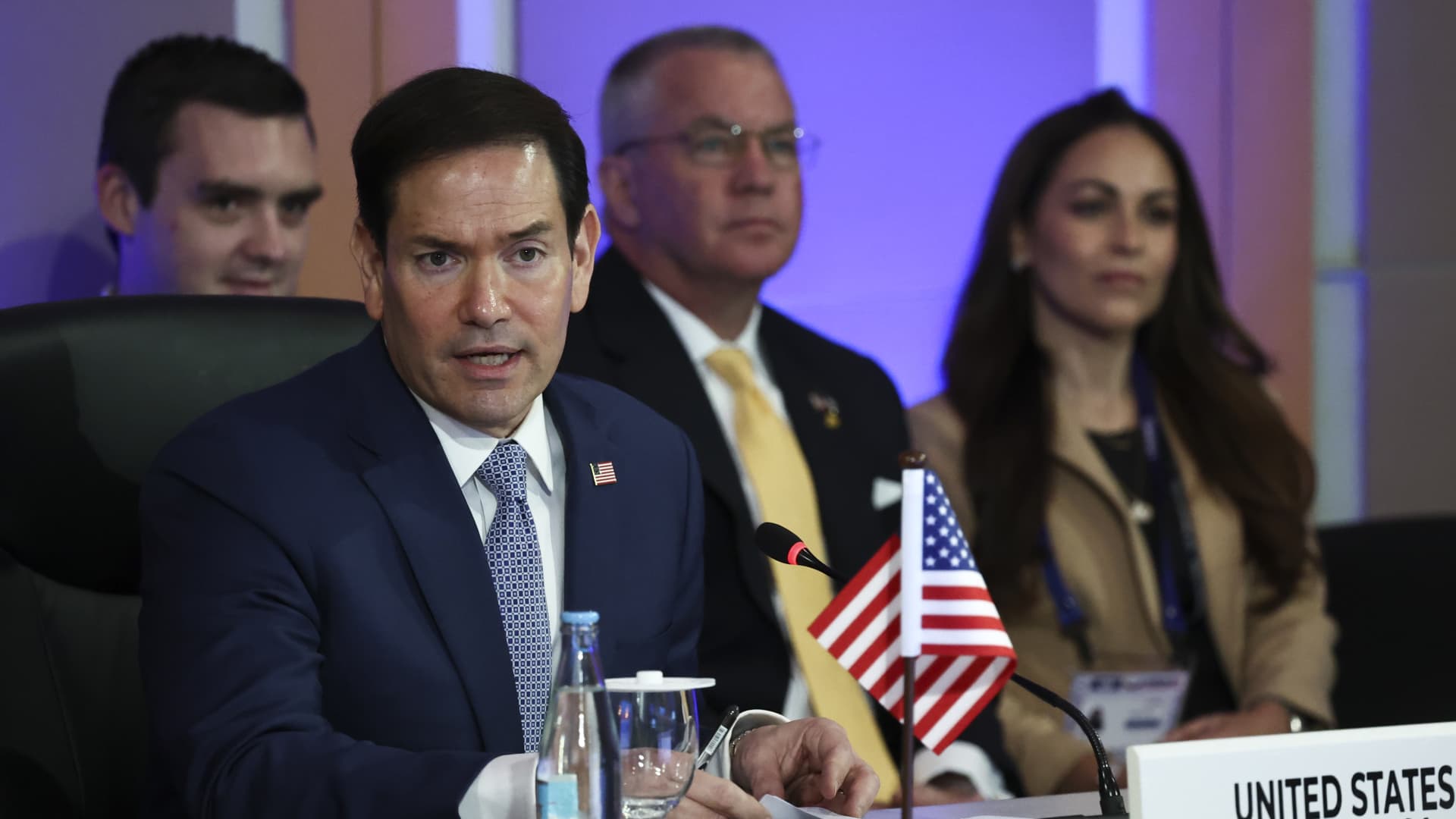
U.S. Secretary of State Marco Rubio warned Wednesday that Iran’s position on the Strait of Hormuz could threaten global trade and energy flows, while U.S. forces kept up strikes on Iranian targets for an 11th consecutive night. For investors, the pressure point is clear: Hormuz is a key oil and gas route, and any disruption there can feed into energy prices, shipping costs and inflation expectations.
Speaking at the ASEAN Foreign Ministers’ meeting in the Philippines, Rubio said Washington remains “committed to diplomacy” in the Middle East, but accused Tehran of failing to honor commitments tied to the waterway. He said the central dispute is Iran’s claim that it has the right to control traffic through the Strait of Hormuz, a position Rubio said is not supported by international law.
“The problem we’re having right now is that they’re not serious about talks,” Rubio said. “If they’re serious, we’re serious. If they’re not, then we will do what is necessary to protect our interest and also the interest of our allies.”
Why Hormuz is the market focus
The Strait of Hormuz sits between Iran and Oman and is one of the world’s most important energy chokepoints. A chokepoint is a narrow route that large volumes of goods must pass through, making it especially sensitive to military or political tension.
Rubio said 20% of global energy supply moves through the region. He argued that if Iran were able to charge tolls or restrict passage, the precedent could spread beyond the Middle East.
“If we create a precedent in the Middle East, where a nation state can decide that they are going to control an international waterway, charge a toll, and if you don’t pay them, blow up your ships, we have created a very dangerous precedent, which will repeat itself in other parts of the world, including in this region,” Rubio said.
Rubio also described the dispute as “a very fundamental principle about freedom of navigation.” Freedom of navigation refers to the principle that ships can move through international waters without unlawful interference.
U.S. strikes continue
U.S. Central Command said it hit Iranian targets overnight as part of an effort to “continue degrading Iran’s ability to threaten commercial shipping in the Strait of Hormuz.” Centcom said the strikes targeted military operations centers, drone storage facilities and military logistics infrastructure.
Rubio described the strikes as consequences for Tehran failing to keep its word. He said that without those consequences, a significant share of the region’s energy supply and 20% of the world’s energy supply would be “held hostage by a nation state.”
The unresolved deal
The current standoff follows an interim memorandum of understanding signed by the U.S. and Iran on June 17. That document halted military operations, called for reopening Hormuz and set a 60-day period to negotiate a permanent agreement, including terms related to Iran’s nuclear program.
The agreement did not settle how the Strait of Hormuz would be managed. Iran interpreted the memorandum as recognizing a role for Tehran in managing traffic through the strait and potentially charging for maritime services after the initial 60-day period. The U.S. position is that the waterway must stay open without mandatory Iranian fees or restrictions.
Iran and Oman said in a joint June 23 statement that “all arrangements related to the Strait of Hormuz must fully respect the sovereignty and sovereign rights of the two Coastal States of the Strait.”
Rubio’s remarks in Southeast Asia also connected the Hormuz fight to a broader debate over maritime rules. He said the region understands the importance of freedom of navigation in international waterways, a comment that comes as the U.S. Navy has carried out freedom of navigation operations near disputed islands in the South China Sea. Several Southeast Asian countries have competing claims with China there, while China’s “nine-dash line” claim covers nearly all of the sea. The Permanent Court of Arbitration ruled in 2016 that China’s claim had no basis under international law, but China has not recognized that ruling.
This story draws on original reporting from CNBC.


