Russia strikes Kyiv as NATO warns Moscow against Baltic move
Russian missile and drone attacks hit Ukraine as Kyiv targets sites inside Russia, adding pressure to energy markets already watching crude supply risks.
By Jordan Bell · Startups & Deals Reporter
· 3 min read
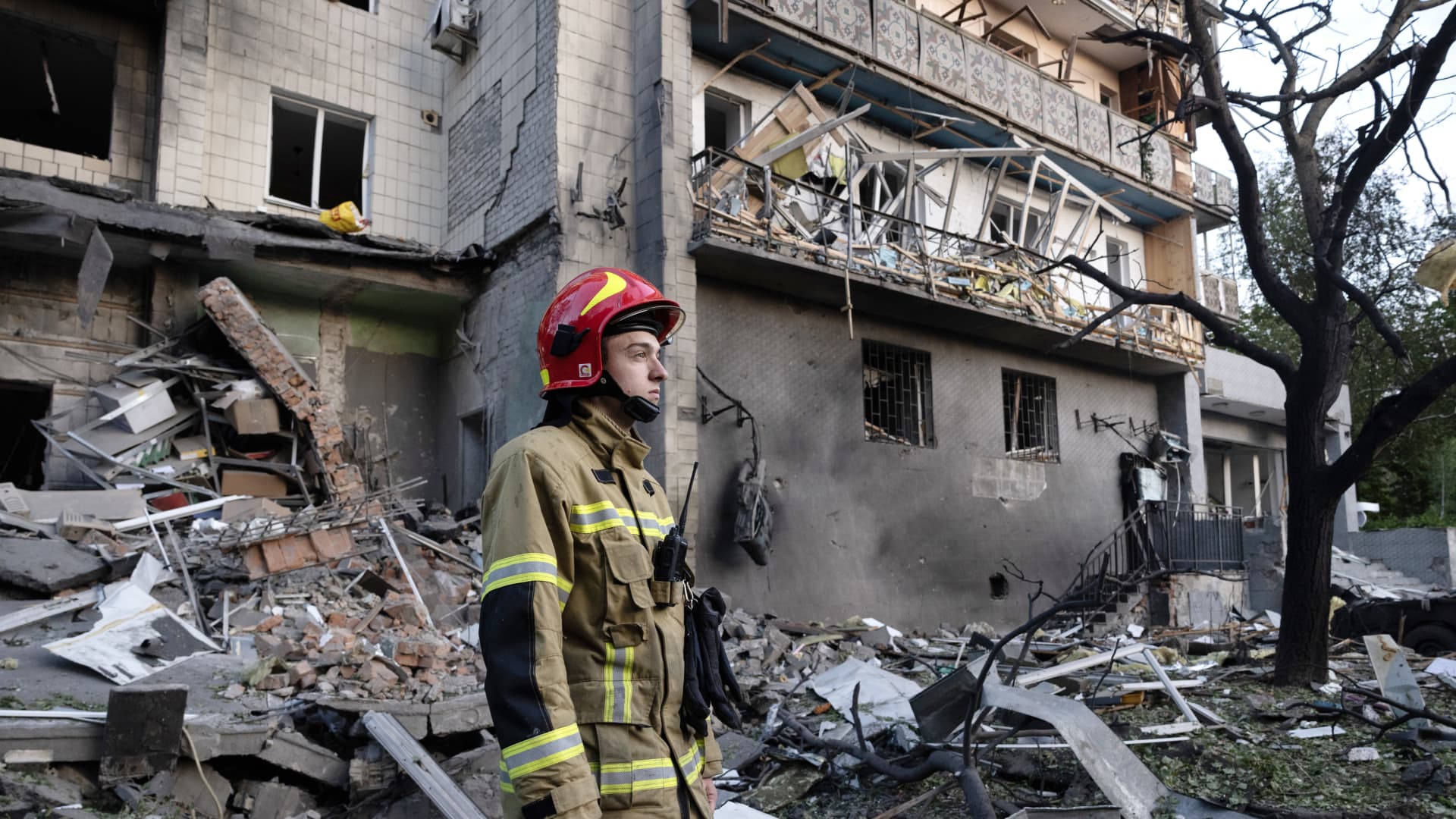
Russia launched a heavy missile and drone assault on Ukraine, including a major strike on Kyiv, while Ukrainian drones hit targets inside Russia. For everyday investors, the fight is adding another layer of geopolitical risk to oil markets, where attacks on export infrastructure can tighten supply and push fuel-linked costs higher.
Ukrainian officials said Sunday that Russian strikes killed at least eight people and wounded dozens. In Kyiv, Mayor Vitali Klitschko said on Telegram that at least one person was killed and 15 were injured, with damage reported at residential buildings, warehouses, a supermarket and a dormitory.
President Volodymyr Zelenskyy described the Kyiv raid as “one of the most massive ballistic attacks” since Russia began its full-scale invasion in 2022. Ballistic missiles follow a high-speed arc toward a target and are harder to stop than many drones, which is why air-defense systems have become central to Ukraine’s requests for military support.
Ukraine’s Air Force said Russia’s latest salvo included 25 ballistic missiles and 126 drones, and that Ukrainian defenses intercepted 18 missiles and 108 drones. Three more people were reportedly killed in Russia’s strikes on the northeastern Kharkiv region, according to the Kyiv Post.
Ukraine hits Russian sites
The Russian barrage followed Ukrainian drone attacks Saturday that destroyed two warehouses belonging to Wildberries, Russia’s largest online retailer, and an oil depot. Reuters reported the warehouse and oil-site strikes, while Deutsche Welle reported that at least nine people were killed and more than 80 were injured. CNN described the attacks as the deadliest Ukrainian strikes inside Russia in more than two years.
Russia’s Defense Ministry said 379 drones were shot down across 19 regions, according to PBS NewsHour. Zelenskyy said the sites targeted were used by Russia to supply sanctioned components for drone production and navigation equipment.
Ukraine has also been targeting Russia-linked energy flows. Ukrainian naval drones hit two Russia-linked crude tankers, the Louise 1 and Banda, in the Black Sea last week, according to Ukraine’s security service. The Black Sea handles more than 20% of Russia’s seaborne crude flows.
Oil traders watch those routes because crude futures are priced on expected supply and demand. If a pipeline, port, tanker route or refinery becomes harder to use, buyers may bid up available barrels elsewhere, especially when other regions are already under stress.
NATO signals readiness
Giuseppe Cavo Dragone, chair of NATO’s Military Committee, told the Kyiv Independent that the alliance is prepared for any Russian move against its eastern flank, including actions involving Poland or the Baltic states.
Moscow “would lose a lot, much more than what they could gain, just by touching Poland or the Baltic states. And we are ready,” Cavo Dragone said in the interview, which the Kyiv Independent said took place on the sidelines of the NATO summit in Ankara on July 7.
Cavo Dragone said NATO’s first objective remains a ceasefire and talks aimed at a lasting peace for Ukraine. He also said allied stockpiles are being reduced and pointed to joint ventures with Ukraine’s defense industry as one way to sustain support.
Zelenskyy said protection against ballistic missiles is Ukraine’s “constant and top priority” and that interceptors are needed daily. He said last week that the U.S. and Ukraine had reached a political agreement on licenses to produce Patriot interceptor missiles, with Kyiv hoping production can begin by the end of the year.
Energy markets are already tense because of the U.S.-Iran conflict and disruption in the Strait of Hormuz. CNBC reported that Brent futures, a global benchmark for crude oil, rose above $90 a barrel on Monday as investors prepared for the risk of renewed all-out war in the Gulf region. Andy Lipow, president of Lipow Oil Associates, told CNBC last week that any reduction in Russian crude exports could push prices far higher than $100.
This story draws on original reporting from CNBC.


