Sell chips buy software trade returns as chip stocks drag Nasdaq
Chip shares fell Friday while Salesforce and other software names gained, as investors weighed oil, tariffs and a heavy earnings week.
By Maya Okafor · Markets Writer
· 3 min read
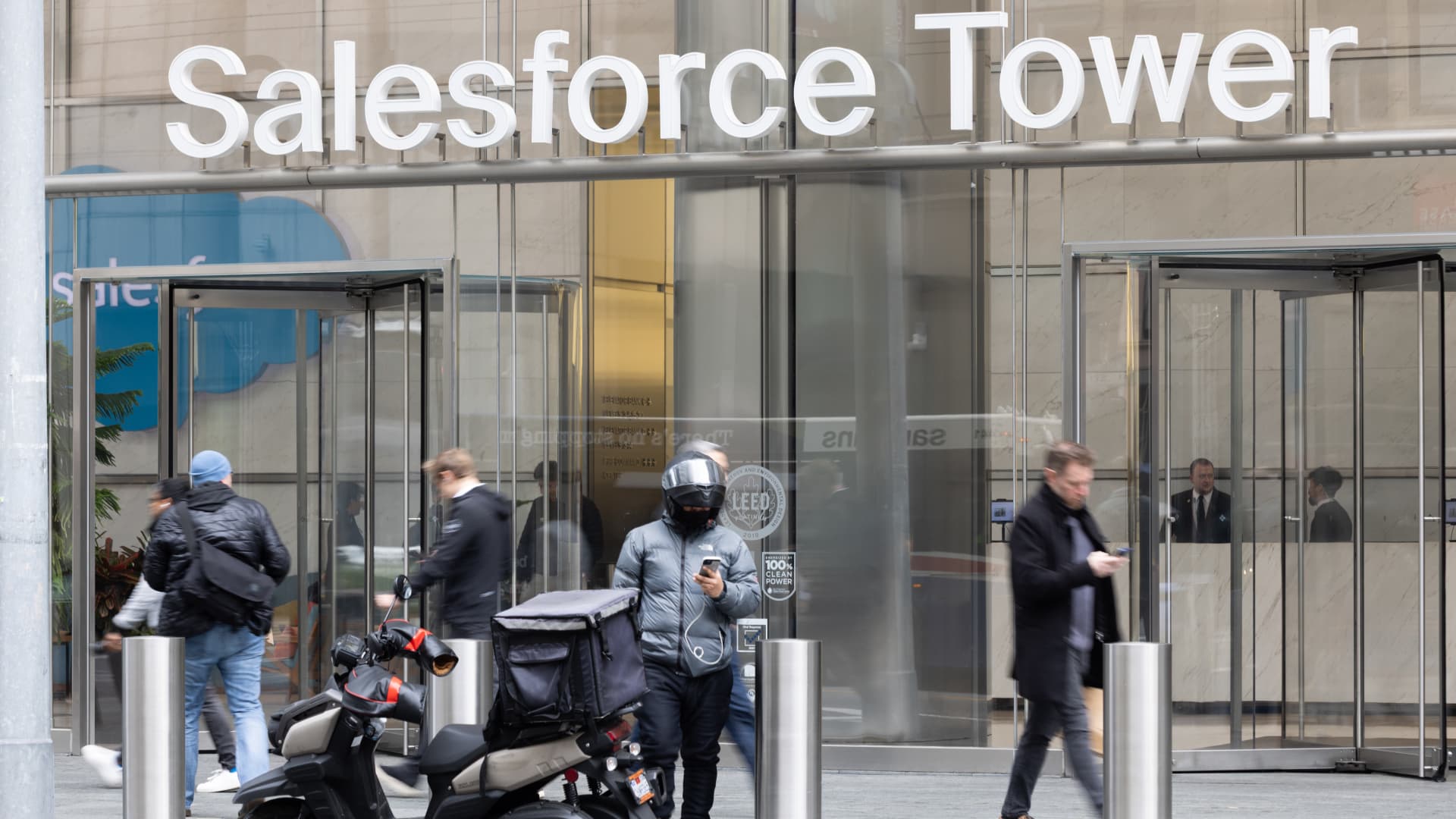
The sell chips buy software trade resurfaced Friday as semiconductor stocks weakened and several enterprise software names caught a bid. For everyday investors, the move shows how money can rotate inside the tech sector when confidence in one hot theme, in this case the AI hardware buildout, starts to wobble.
The Dow Jones Industrial Average rose nearly 200 points, or 0.4%, while the S&P 500 was roughly unchanged, according to the CNBC Investing Club. The Nasdaq Composite fell about 0.5%, with chip stocks weighing on the tech-heavy index.
Semiconductor shares had a strong second quarter, but July has been harder as investors questioned whether the pace of artificial intelligence infrastructure spending can keep supporting hardware demand, the Investing Club said. Micron fell more than 7%, Sandisk lost more than 10%, and Marvell Technology dropped 7%. Intel declined almost 6% even after reporting what the Investing Club described as strong second-quarter results Thursday night.
What is the sell chips buy software trade?
The phrase describes a rotation in which investors take profits or cut exposure in chip and hardware stocks, then move into software companies that have lagged. It does not mean money is leaving stocks altogether; it means traders are shifting which parts of tech they want to own.
Software was one of the stronger areas in technology Friday. Salesforce gained more than 4%, while Workday, Intuit and Adobe also posted solid sessions, according to the Investing Club.
Salesforce had company-specific news behind its move. The company announced a three-year, $1.6 billion contract with the U.S. Department of Veterans Affairs to provide agentic AI tools for VA employees. Agentic AI refers to systems designed to take actions or complete tasks with less step-by-step human direction than traditional software.
The contract adds to Salesforce’s public-sector momentum. In its May earnings release, Salesforce said annual recurring revenue, a measure of repeat subscription revenue, from its public sector cloud topped $2 billion for the first time and rose 23% from a year earlier.
D.A. Davidson analyst Gil Luria told the Investing Club the VA contract appears “significant” because of its size and the role of the department. He also warned that “one deal does not change the fact that Salesforce has been struggling to hold on to growth over the last few years,” and said large government contracts do not necessarily produce meaningful profit.
Salesforce shares are up more than 6% over the past month, but remain down nearly 40% in 2026, according to the Investing Club. The stock has been pressured by concerns that AI could weaken its seat-based enterprise software model, where customers pay based on the number of users. Salesforce CEO Marc Benioff has pushed back against that concern, the Investing Club said.
Outside tech, oil offered some relief Friday. U.S. benchmark WTI crude and global benchmark Brent crude pulled back after Reuters reported that Pakistan was seeking another round of peace talks between the U.S. and Iran. The Investing Club cautioned against giving too much weight to one Middle East headline, while noting that elevated oil prices can affect bond yields, Federal Reserve policy and the global economy.
Investors also faced renewed tariff headlines. President Donald Trump threatened “substantial” levies on the European Union over its treatment of U.S. technology companies. Earlier Friday, the Trump administration imposed new tariffs on 60 trade partners, citing alleged forced labor in global supply chains.
Next week brings the busiest stretch of the summer earnings season, with about one-third of the S&P 500 scheduled to report, according to the Investing Club. The calendar includes Meta Platforms, Microsoft, Apple, Amazon, Qualcomm, Arm Holdings, Visa, Mastercard, UPS and Robinhood, along with a Federal Open Market Committee announcement Wednesday.
This story draws on original reporting from CNBC.


