Skyroot rocket test puts India in private orbital launch race
The GIC- and BlackRock-backed space startup plans commercial launches in 2027 after a test flight carrying a 350-kilogram payload.
By Jordan Bell · Startups & Deals Reporter
· 3 min read
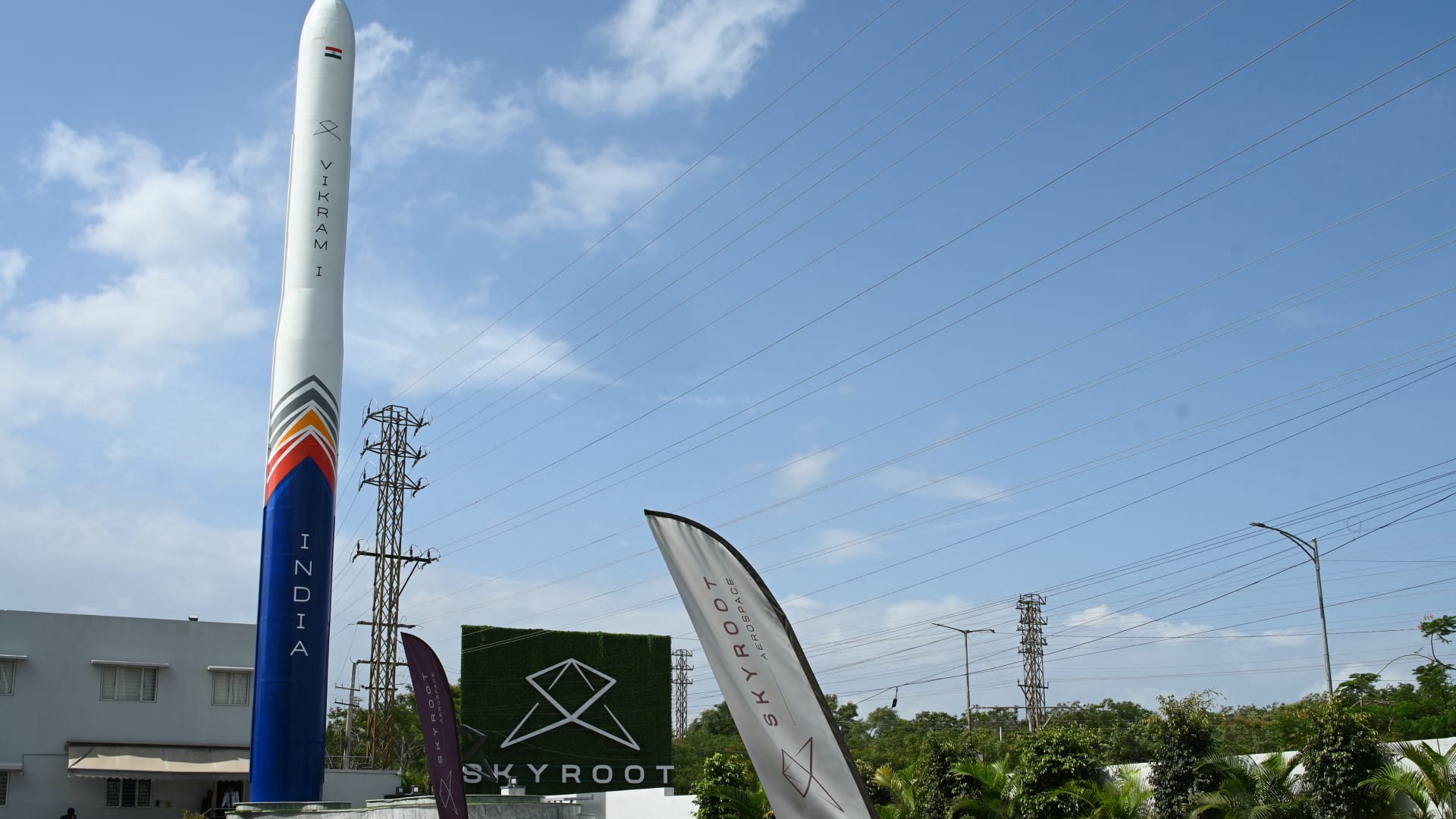
India’s Skyroot has moved from space-tech promise to orbital launch contender, giving investors another marker in the country’s push beyond software and consumer internet. CNBC reported that the startup successfully test-launched a low-orbit rocket carrying a 350-kilogram payload on Saturday, making it the first Indian private company with orbital launch capability.
That puts Skyroot into a small global group led by companies in the U.S. and China. The business case is straightforward: more satellites need rides to space, and there are still relatively few rocket companies able to deliver them.
Skyroot co-founder Naga Bharath Daka told CNBC the company plans to begin commercial operations in 2027. He said Skyroot is aiming for “one flight every month” after one more test launch later this year, when the company expects to move into paid launches.
The company is targeting the sub-1,000 kilogram payload category, according to data shared by market intelligence firm Analysys Mason. That means smaller satellites and smaller rocket missions, rather than the heavier payloads often associated with large launch providers.
Why small rockets have a market
Small launch vehicles serve customers that want a more direct trip to orbit. Ujjwal Chaudhry, a partner at Analysys Mason, described a small rocket to CNBC as an “orbit-on-demand taxi.”
In plain English, a dedicated small launcher can carry one customer’s satellite closer to the exact orbital position it needs. Larger rockets often group many payloads together, a model known as ridesharing. After being dropped off, a satellite may need to use its own fuel and time to reach its final operating position.
Dedicated launches can also give satellite operators a specific launch window instead of making them wait for space on a larger mission. For companies building time-sensitive satellite networks, that flexibility can be valuable.
Analysys Mason put the sub-1,000 kilogram launch market at $5 billion in 2025. The firm also identified Skyroot’s competitors in the category as including U.S.-based Rocket Lab, Firefly Aerospace and Astra Space, along with Chinese private firms i-Space, Galactic Energy and CAS Space.
Skyroot is selling a cost story
Daka told CNBC that Skyroot expects to be the “most cost-competitive launch vehicle” in the small-payload segment even before it benefits from economies of scale, meaning cost savings that can come as production and launch volume rise.
India’s government space agency, the Indian Space Research Organization, has built a reputation for lower-cost space missions, including past Mars and Moon programs. Skyroot’s founders, Daka and Pawan Kumar Chandana, previously worked at ISRO.
Daka contrasted Skyroot’s approach with SpaceX, saying Elon Musk’s company follows a “fail smarter and grow faster” model that can accelerate progress but “burns a lot of cash.” Skyroot, he told CNBC, had to be “ultra cautious with money” and focus on getting things right early.
Funding remains part of the test
Skyroot was founded in 2018 and has raised $150 million, according to CNBC. The company was valued at $1.1 billion during a $60 million fundraising round in May, and its backers include GIC and BlackRock.
Daka said the company is “well-funded” for commercial launches next year. He added that Skyroot would look to raise more capital when it steps up work on a reusable rocket, though that is not an immediate plan.
The comparison with public-market peers shows the gap Skyroot is trying to close. CNBC reported that Rocket Lab had a market capitalization above $43 billion and said in May that its order backlog more than doubled from a year earlier to $2.2 billion, with launches booked through 2029.
Natasha Malpani Oswal, founder and general partner at Boundless Ventures, told CNBC that India’s pool of patient capital for space technology remains shallow compared with the opportunity. She said backing from sovereign wealth funds and large institutions shows later-stage capital is beginning to arrive, but added that this is recent and “not yet a pattern.”
This story draws on original reporting from CNBC.


