Sony’s PlayStation disc exit puts used-game economics under pressure
PlayStation will stop making discs for new games in 2028, shifting more sales to digital while squeezing resale, lending and trade-ins.
By Jordan Bell · Startups & Deals Reporter
· 3 min read
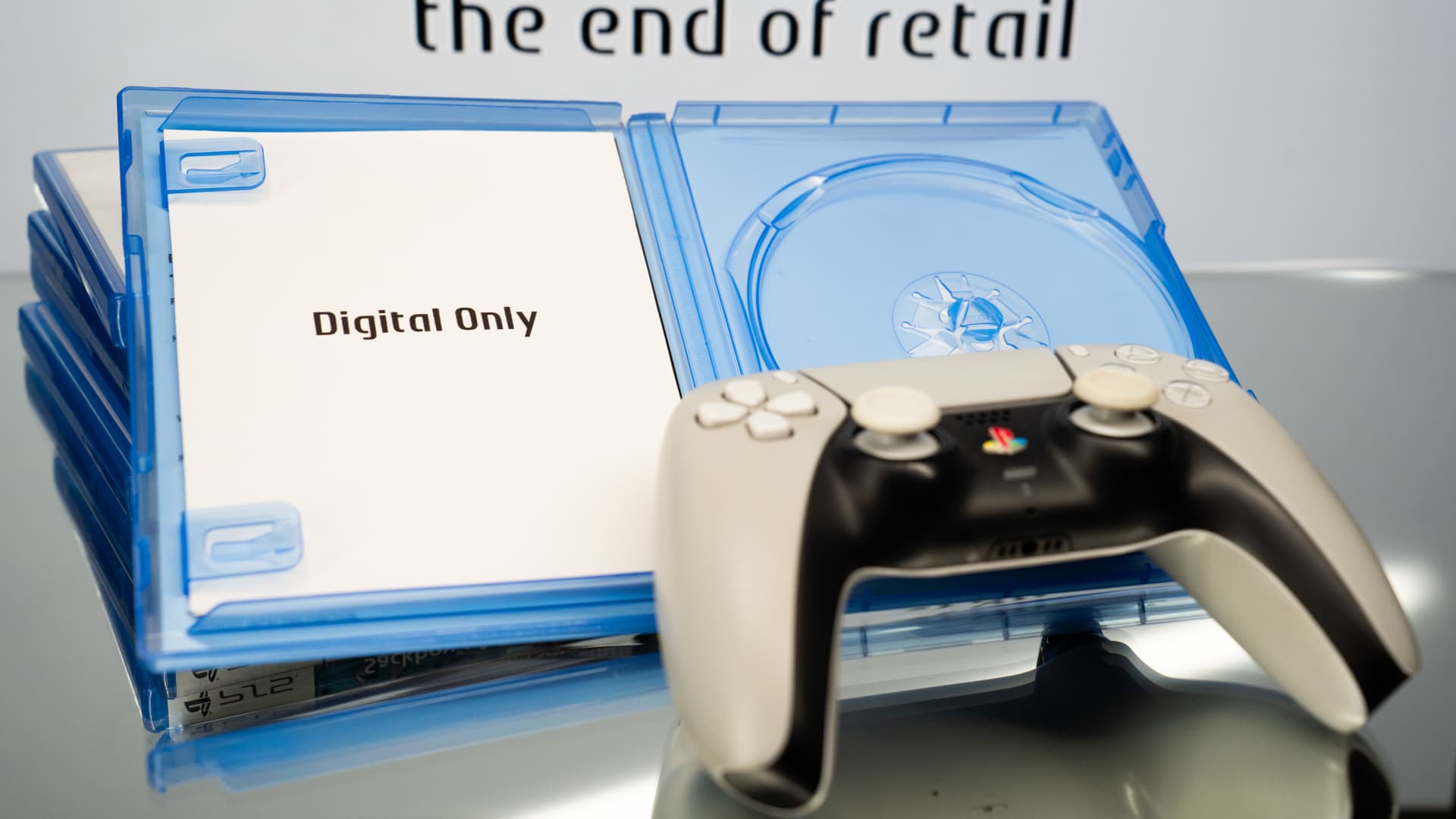
Sony Interactive Entertainment plans to stop producing physical discs for new PlayStation games starting in January 2028, a shift that could lift digital profit margins while cutting off a key benefit of console ownership: the ability to resell or lend a game. For retail investors, the move points to more sales flowing through Sony’s own PlayStation Store, while putting pressure on the second-hand game business.
PlayStation said new releases after the cutoff will be sold digitally. Boxed copies, if offered, will include download codes instead of discs, according to Sony’s announcement. Existing disc-based games and titles released physically before the change will not be affected.
The decision marks a sharp turn from PlayStation’s 2013 messaging around the PlayStation 4. At the time, Sony mocked Microsoft’s Xbox policies with a short video showing one executive handing a game disc to another. Jack Tretton, then president and CEO of Sony Computer Entertainment America, told a conference that players could trade, sell, lend or keep PS4 discs, and that buying a disc gave players rights to use that copy.
Why the shift changes the money flow
A physical disc is an asset a player can pass along. A digital purchase or download code is usually tied to an account, which means it generally cannot be resold, traded in or lent the same way. That difference is central to the business case.
Michael Pachter, managing director of strategic planning at Wedbush Securities, told CNBC that Sony will save some money, but said consumers will bear the cost through fewer choices. Without discs, Sony has more control over where games are bought, when prices are cut and how long access depends on its storefront.
Sony’s own financial data shows why the company is moving this way. In its full-year 2025 results, Sony reported that revenue from physical PlayStation 4 and PlayStation 5 games was almost 10 times lower than revenue from digital downloads of full games. Sony said in its announcement that the change reflects consumer behavior as demand for digital media has grown faster than demand for discs.
CNBC reported that Sony and PlayStation did not respond to requests for comment.
The resale market takes the hit
The biggest loser may be the used-game economy. Dataintelo estimated the global second-hand game platform market, including pre-owned games, consoles, accessories and peripherals, at $7.2 billion in 2025, with a projected rise to $13.8 billion by 2034.
Pachter told CNBC that at least one-third of games have historically been sold used, and that trade-ins gave players cash to put toward new purchases. He said physical game retail faces a grim future.
Kazunori Ito, director of equity research at Morningstar, told CNBC that the second-hand market for games is likely to keep shrinking and eventually disappear. Ito also said Sony earned goodwill in 2013 by framing discs as the more consumer-friendly option.
Michael Futter, founder of video game industry consultancy F-Squared, told CNBC that the console shift is different from the move to digital on PC. PC players can shop across stores such as Steam, Epic Games Store and GOG, while consoles are closed systems controlled by the platform owner.
The concern comes as Sony has also announced that PlayStation Store purchasing on PS3 and PS Vita will close in most countries in July 2027. Separately, Sony has said more than 500 previously purchased movies will be removed from PlayStation libraries because of licensing agreements, with its notice not mentioning compensation.
GameSpot has reported that one early title using the code-in-a-box model will be Take-Two Interactive’s Grand Theft Auto 6, published by Rockstar Games and slated for release this year.
This story draws on original reporting from CNBC.