South Korea property bubble fears meet Japan crash warning from Lee
President Lee Jae Myung compared Seoul housing risks with Japan’s 1990s crash, but economists told CNBC nationwide bubble fears look overstated.
By Dev Ramirez · Crypto Correspondent
· 4 min read
South Korea property bubble concerns are back in focus after President Lee Jae Myung compared parts of the country’s housing market with Japan’s real estate collapse in the early 1990s. For everyday investors, the debate matters because Korean households hold most of their wealth in property, while Lee’s government is also trying to pull more savings into financial markets.
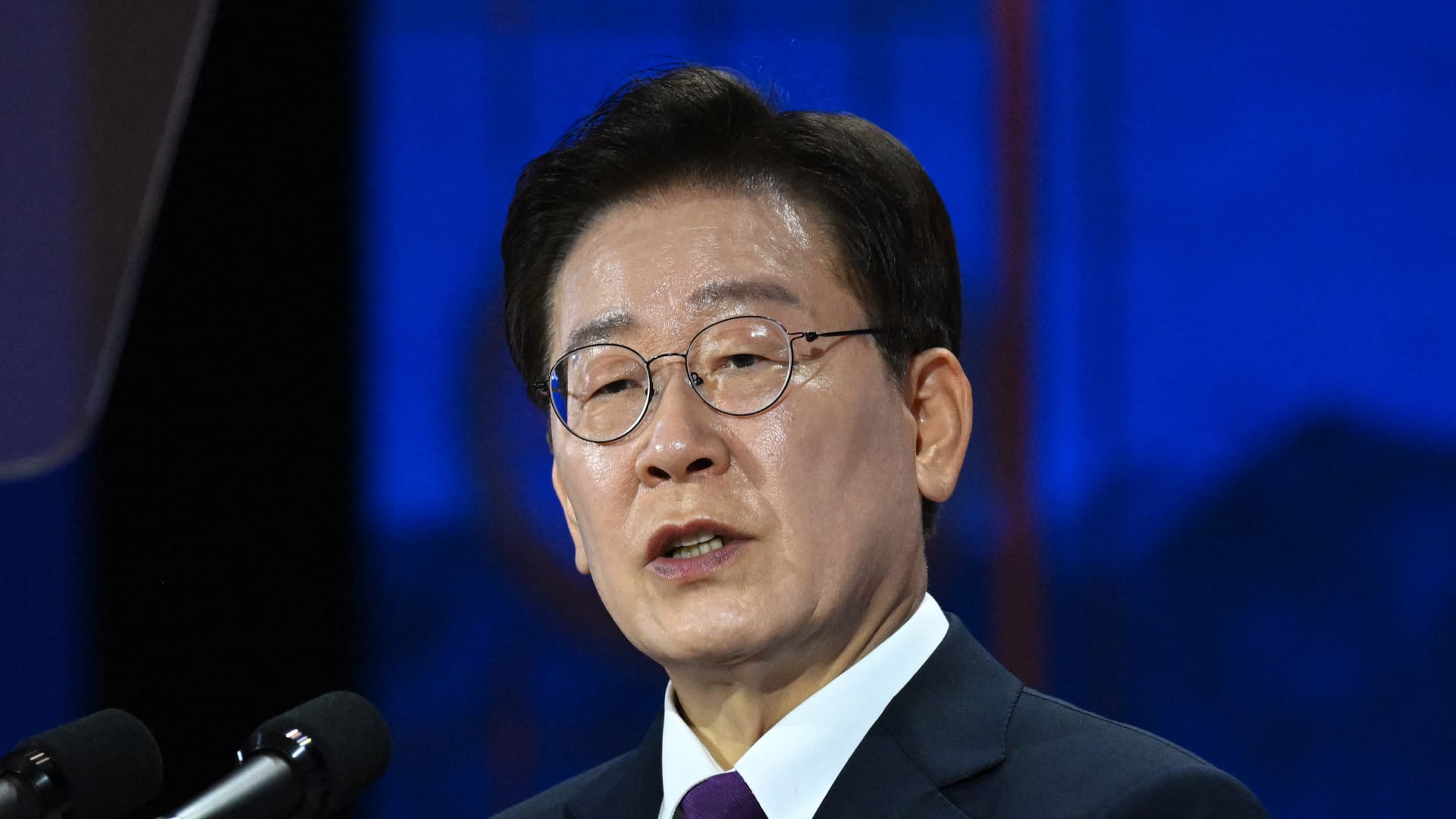
During a public discussion on real estate policy Thursday, Lee said, according to a CNBC translation, that “quite a few people” worry South Korea could face a long slump like Japan’s “lost” 20 or 30 years. He referred to Japan’s lost decades, the period of weak growth that followed a crash in property and stock prices.
Lee said Tokyo’s housing market “burst like a balloon” in the early 1990s as he argued that South Korea needs to address an overheated real estate market. His comments came as his administration prepares tax revisions aimed at stabilizing housing, according to South Korea’s finance ministry.
Real estate is the biggest store of wealth for Korean households. As of the end of March 2025, real assets made up 75.8% of household assets in South Korea, while financial assets accounted for 24.2%, according to the data cited by Lee.
What is the South Korea property bubble concern?
A property bubble means home prices rise far beyond levels supported by income, rents or sustainable borrowing, often because buyers expect prices to keep climbing. The fear is that if prices fall quickly, households can cut spending, banks can face losses and the broader economy can slow.
Economists told CNBC that South Korea does have housing pressure, especially in Seoul, but they said a nationwide Japan-style collapse is not the base case suggested by current data.
Kang Min Joo, senior economist for South Korea and Japan at ING, told CNBC that the chance of a real-asset bubble bursting in Korea is limited. She pointed to tight mortgage conditions and strict rules on loan-to-value and debt-to-income ratios. Loan-to-value, or LTV, measures a mortgage against the value of the home. Debt-to-income measures how much debt a borrower carries compared with income.
Kang said South Korea’s LTV ratio was once as high as 80%, but has dropped below 40% and even lower in the Seoul area. That means buyers generally need more cash upfront and can borrow less against a property, reducing the risk that a price decline would quickly hit banks.
South Korea’s household debt-to-GDP ratio stood at 90.14 in 2024, according to International Monetary Fund data cited by CNBC. That is down from a record 98.67 in 2021, though it remains the second highest in Asia after Australia.
Gareth Leather, senior economist for Asia at Capital Economics, also told CNBC that bubble fears look exaggerated. He said Seoul prices are rising quickly, but are only 10% above their January 2022 level, while prices in cities such as Busan have dropped to almost 80% of their January 2022 levels.
Leather said financial-stability risks are limited because homebuyers must make large down payments. That lowers the chance of negative equity, which happens when a borrower owes more on a mortgage than the home is worth.
How does Japan’s 1990s crash compare with Korea today?
Japan’s crash followed extreme speculation in real estate and stocks during the 1980s. CNBC noted that Japan’s central bank began raising interest rates in December 1989, before the country entered decades of slower growth.
Ma Tieying, senior economist at DBS Group Research, told CNBC that South Korea shares some traits with pre-crash Japan, including a high credit-to-GDP ratio and large stock market capitalization. She said that leaves Korea exposed to higher rates, tighter credit and global shocks.
Ma also said South Korea is not seeing the large capital inflows or persistent currency appreciation that Japan experienced before its bubble burst. She added that the Bank of Korea has moved earlier against inflation and financial imbalances than Japan did before its crash.
Lee has also pushed for more household wealth to move into financial markets. Before the 2025 presidential election, when the Kospi was near 2,500, he reportedly set a goal of 5,000 during his term as part of an effort to address the “Korea discount,” the term investors use for lower valuations on Korean stocks compared with global peers. The Kospi briefly passed 5,000 in January 2026 and now trades around 6,700, according to CNBC, helped by the AI-driven chip boom but made volatile by its reliance on Samsung Electronics and SK Hynix.
This story draws on original reporting from CNBC.