South Korean investors buy $4.5 billion of U.S. stocks after home-market selloff
South Korean retail investors shifted billions into U.S. stocks and leveraged ETFs in July, often keeping the same AI and chip exposure.
By Maya Okafor · Markets Writer
· 3 min read
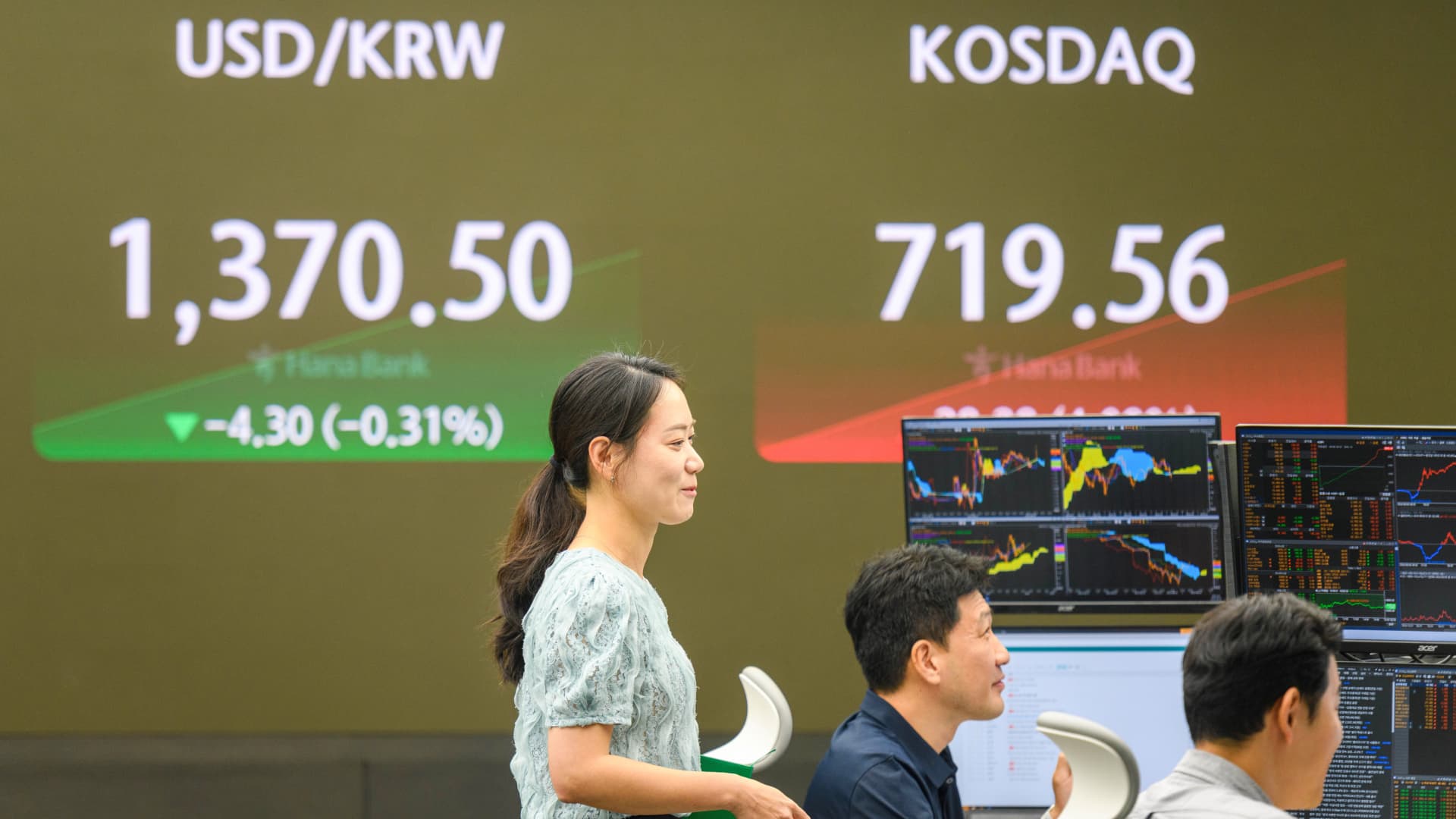
South Korean investors U.S. stocks buying reached about $4.5 billion on a net basis in July, according to Korea Securities Depository data reported by CNBC. For everyday investors watching chip and AI shares, the notable point is what these buyers chose: many appear to have moved their trading activity overseas without stepping back from the same volatile themes that had been under pressure in South Korea.
The buying came as South Korea’s stock market went through a selloff following an earlier rally. CNBC reported that margin-loan balances, money investors borrow against their holdings, fell from roughly 37 trillion won at the end of June to 27 trillion won earlier in August, citing the Korea Financial Investment Association.
What are South Korean investors buying in U.S. markets?
About $840 million of July’s net U.S. purchases went to American depositary receipts, or ADRs, for chipmaker SK Hynix, CNBC reported, citing the Korea Securities Depository. ADRs are U.S.-traded securities that represent shares in a foreign company. The purchases made SK Hynix ADRs the second-most bought U.S. securities among Korean investors, even though those investors can purchase SK Hynix shares directly on their home exchange.
Owen Lamont, a senior vice president at Acadian Asset Management, told CNBC that the U.S.-listed receipts had recently traded at about a 10% premium to the Korean shares and showed greater volatility. He described Korean investors’ buying of the ADRs as “absolutely crazy” and said such price gaps can signal speculative excess. That assessment is an analyst’s view, rather than proof that the premium will persist or that the trade reflects a broader market condition.
Leveraged products were also prominent. Four of the 10 most net-purchased U.S. securities in July were leveraged products, according to the Korea Securities Depository data cited by CNBC. These funds seek to multiply an index’s daily movement, which can also magnify losses when markets fall. An ETF is a fund that trades like a stock, but leverage makes its day-to-day risk meaningfully different from a standard index fund.
- Direxion Daily Semiconductor Bull 3X Shares ETF, known as SOXL, was the most popular leveraged product in the July data.
- ProShares UltraPro QQQ ranked fourth among net purchases.
- ProShares Ultra QQQ ranked sixth.
Are investors leaving AI stocks behind?
The available data suggest many are not. Phillip Wool, head of research at Rayliant Global Advisors, told CNBC that much of the buying remained tied to the AI-hardware theme that had been selling off in the local market. Jung In Yun, founder of Fibonacci Asset Management, said some investors may see U.S. AI stocks as higher quality or more liquid, meaning easier to buy and sell, while retaining their underlying AI view.
The flow is unlikely to shift the overall direction of the much larger U.S. market, Wool said, because institutional investors dominate U.S. trading volumes. Lamont said the greater risk of distortion could be in individual stocks and thinner, retail-favored segments, where concentrated demand can have a larger effect on prices.
This story draws on original reporting from CNBC.