South Korean retail traders hit by leveraged chip-stock selloff
Leveraged ETFs tied to Samsung and SK Hynix have dropped after a chip-stock reversal, putting South Korean retail traders and regulators on alert.
By Dev Ramirez · Crypto Correspondent
· 3 min read
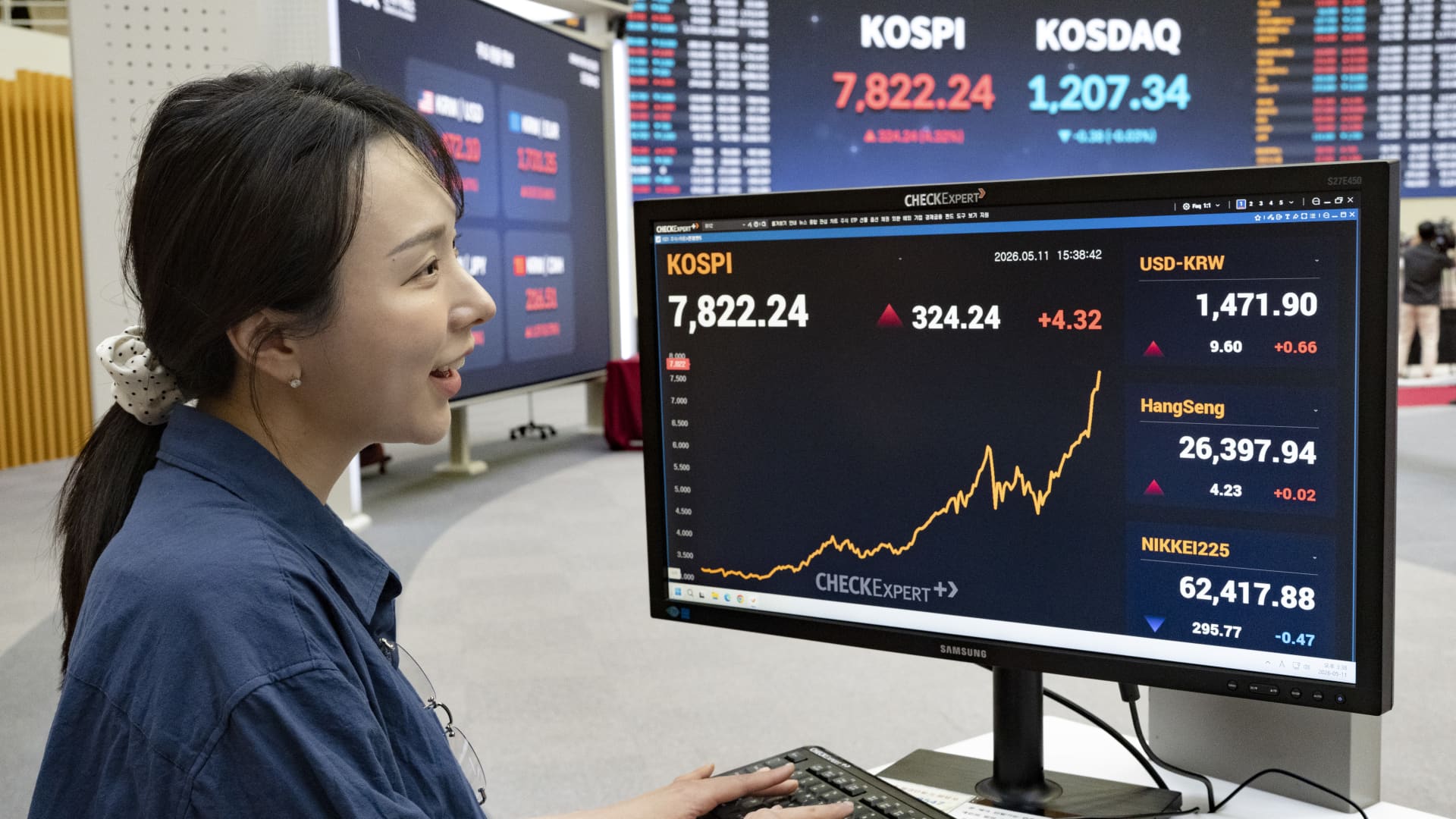
South Korean retail investors are facing heavy losses after leveraged bets tied to Samsung Electronics and SK Hynix reversed with the chip stocks behind them. For everyday investors, the episode shows how products built to amplify daily moves can turn a fast rally into fast losses when the trade swings the other way.
The pressure has centered on single-stock leveraged exchange-traded funds, or ETFs. An ETF is a fund that trades on an exchange like a stock; a leveraged ETF uses financial instruments to target a multiple of an asset’s daily move. In this case, some products were designed around South Korea’s leading semiconductor names, which had climbed during the artificial intelligence-driven chip rally.
South Korean retail investors have bought a net 14 trillion won, or about $9.4 billion, of single-stock leveraged ETFs since the products launched on May 27, according to KB Financial Group. Foreign investors bought roughly 2 trillion won on a net basis over the same period, KB said.
The reversal has been severe in at least one flagship product. The KODEX SK Hynix Single Stock Leverage ETF, which is designed to deliver two times SK Hynix’s daily share-price move, has fallen about 70% from its June record and is down roughly 50% from its launch price, according to LSEG data cited by CNBC.
Retail traders take the hit
Jung In Yun, founder of Fibonacci Asset Management, told CNBC that domestic retail investors account for most of the losses. South Korean trading forums reflected the frustration after SK Hynix suffered a record one-day drop last week. One investor wrote, “I want to go back to before I started investing in stocks. Give me my money back.” Another wrote, “You’re determined to kill me.”
The losses come after a surge in leveraged Korea-focused funds. Assets in the 25 largest leveraged Korea ETFs rose to about 30% of Korea-focused fund assets by June, from around 15% at the start of 2026, according to Oxford Economics.
Oxford Economics moved South Korean equities to neutral at the end of June. The firm warned that leverage had increased meaningfully and that securities firms could become less willing to offer credit to retail investors.
South Korea’s central bank also flagged the risk. In a report released last month, the Bank of Korea said leveraged stock investing by retail traders had reached a record, led by margin borrowing and concentrated positions in semiconductor shares. Margin borrowing means investors borrow money from a broker to buy securities, which can increase both gains and losses.
The Bank of Korea said the buildup was unlikely to threaten the financial system, but warned that leverage can worsen market swings during corrections, especially when investors use borrowed money to chase rising prices.
Regulators tighten access
South Korean authorities responded Thursday with stricter rules for single-stock leveraged ETFs, according to SBS. Investors will need at least 30 million won in cash to trade the products, up from an effective minimum of 3 million won.
Peter Kim, head of global investment strategy at KB Financial Group, told CNBC by email that the losses show single-stock leveraged ETFs have increasingly become tools for speculation rather than long-term investing. He said there were no signs of a large retail-driven market bailout, but added that a continued ETF overhang, slump and volatility could extend weakness.
Some market veterans think the trade may have more room to unwind. Thomas J. Hayes, chairman and managing member of Great Hill Capital, told CNBC that semiconductor and memory stocks have become the most crowded global trade among both institutional and retail investors. Hayes said one or more hyperscalers, meaning large cloud and internet infrastructure companies, other than Meta should moderate capital spending commitments in second-quarter earnings guidance, which he said could drive investors out of semiconductor and memory names in coming months.
This story draws on original reporting from CNBC.


