SpaceX AI spending eclipses revenue, testing investors’ faith in quick returns
SpaceX beat revenue estimates in its first public earnings report, but $18.4 billion in spending put its AI payoff claims under scrutiny.
By Dev Ramirez · Crypto Correspondent
· 3 min read
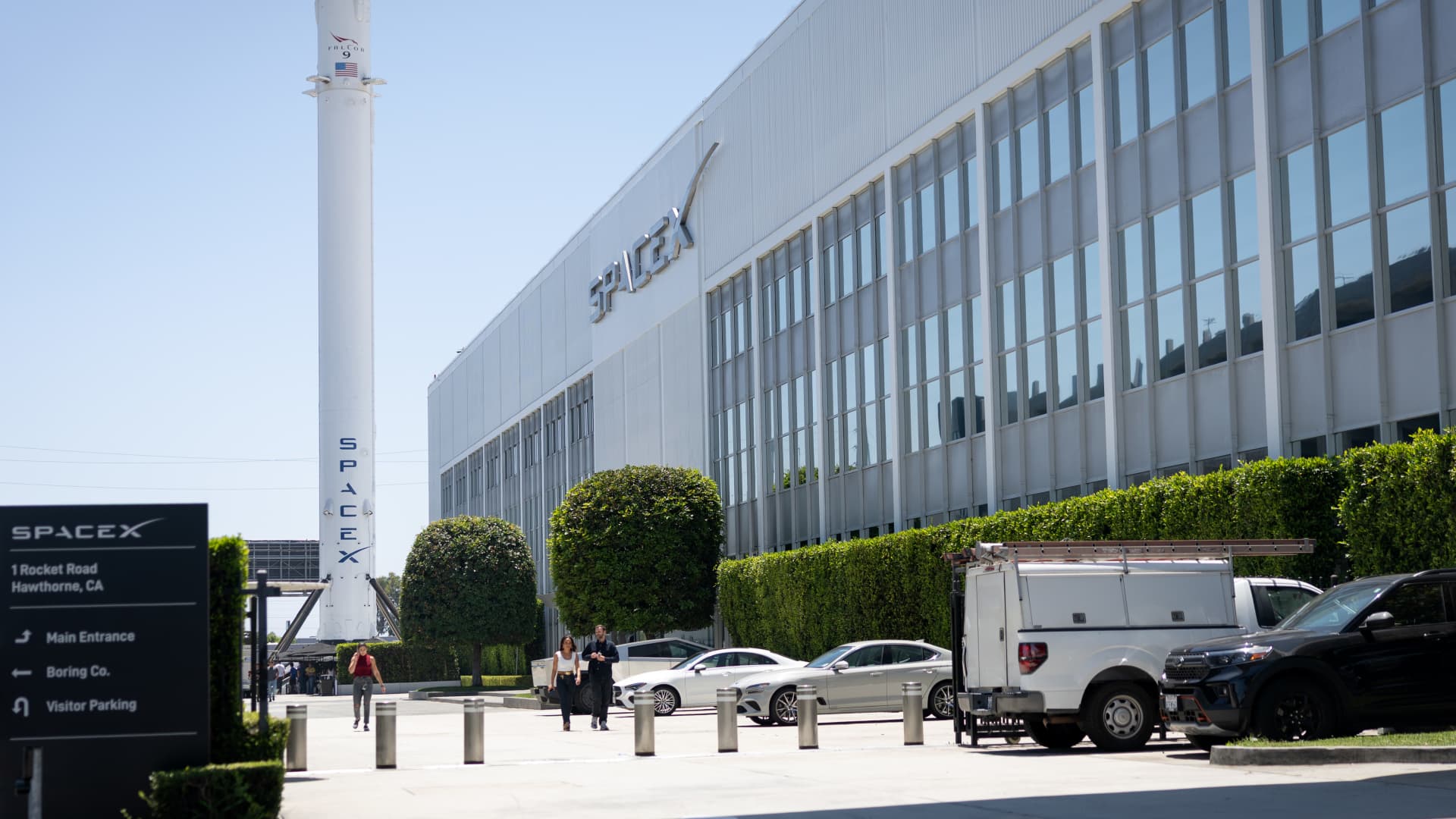
SpaceX AI spending became the central issue for investors after the company’s first quarterly report as a public company: revenue beat expectations, yet its shares fell about 8% in extended trading as capital expenditures reached $18.4 billion. For shareholders, the report put a hard number on the question of whether fast-growing AI revenue can justify the company’s much larger outlays.
SpaceX reported second-quarter revenue of $7.81 billion, above the $6.93 billion expected by analysts surveyed by LSEG, CNBC reported. Revenue rose 92% from a year earlier, while net loss narrowed to $541 million from $1 billion, according to CNBC’s account of the company’s statement.
Still, capital expenditures, meaning money spent on long-lived assets and expansion, were more than double quarterly revenue and more than six times the level a year earlier, CNBC reported. The total was also well above the roughly $14.05 billion in companywide spending analysts had expected before results, Reuters reported.
Why are investors focused on SpaceX AI spending?
The company’s AI business brought in $2.56 billion in quarterly revenue but posted a $1.26 billion operating loss, CNBC reported. That contrast helps explain the market’s reaction: the AI operation is already a meaningful revenue contributor, but it remains loss-making while the company increases spending.
SpaceX’s connectivity business, which includes Starlink, generated $4.29 billion in revenue and $1.66 billion in operating income during the quarter, CNBC reported. The space segment had $962 million in revenue and a $542 million operating loss. Investors are therefore watching whether profitable connectivity operations can continue to support the broader AI and space strategy.
Before the release, Reuters reported that analysts expected AI-segment capital spending to reach $10.2 billion for the April-to-June period. Analysts and investors cited by Reuters had framed the key test as whether revenue from third-party compute agreements could grow quickly enough to offset the AI operation’s capital intensity.
On the earnings call, Chief Financial Officer Bret Johnsen argued that the spending should be assessed by how fast it produces returns. He said SpaceX’s AI-compute capital deployment has a payback of less than one year. That is management’s estimate, rather than a reported financial result.
Johnsen also said the company had contracted $6.7 billion in cloud-services revenue during the first weeks of the current quarter, covering a six-month period that is set to begin ramping in October, CNBC reported. SpaceX provides compute capacity to third parties, and management presented those contracts as evidence of demand.
What should investors watch next?
The next evidence will come from whether the newly contracted services ramp as management described, how AI operating losses and capital expenditures develop, and whether connectivity profitability holds up. Those outcomes would show more clearly whether the reported investment pace is translating into durable results.
Management also projected $100 billion in annualized recurring revenue by December, a forward-looking target that Johnsen said assumes the proposed $60 billion acquisition of Cursor closes. Musk said the target was certain, according to CNBC. Investors have yet to see that projection reflected in reported results.
This story draws on original reporting from CNBC.