Synthesia AI video bet grows from Cuban seed check to $4 billion valuation
Victor Riparbelli’s startup raised $200 million at a $4 billion valuation after pivoting from Hollywood dubbing to enterprise AI video.
By Jordan Bell · Startups & Deals Reporter
· 4 min read
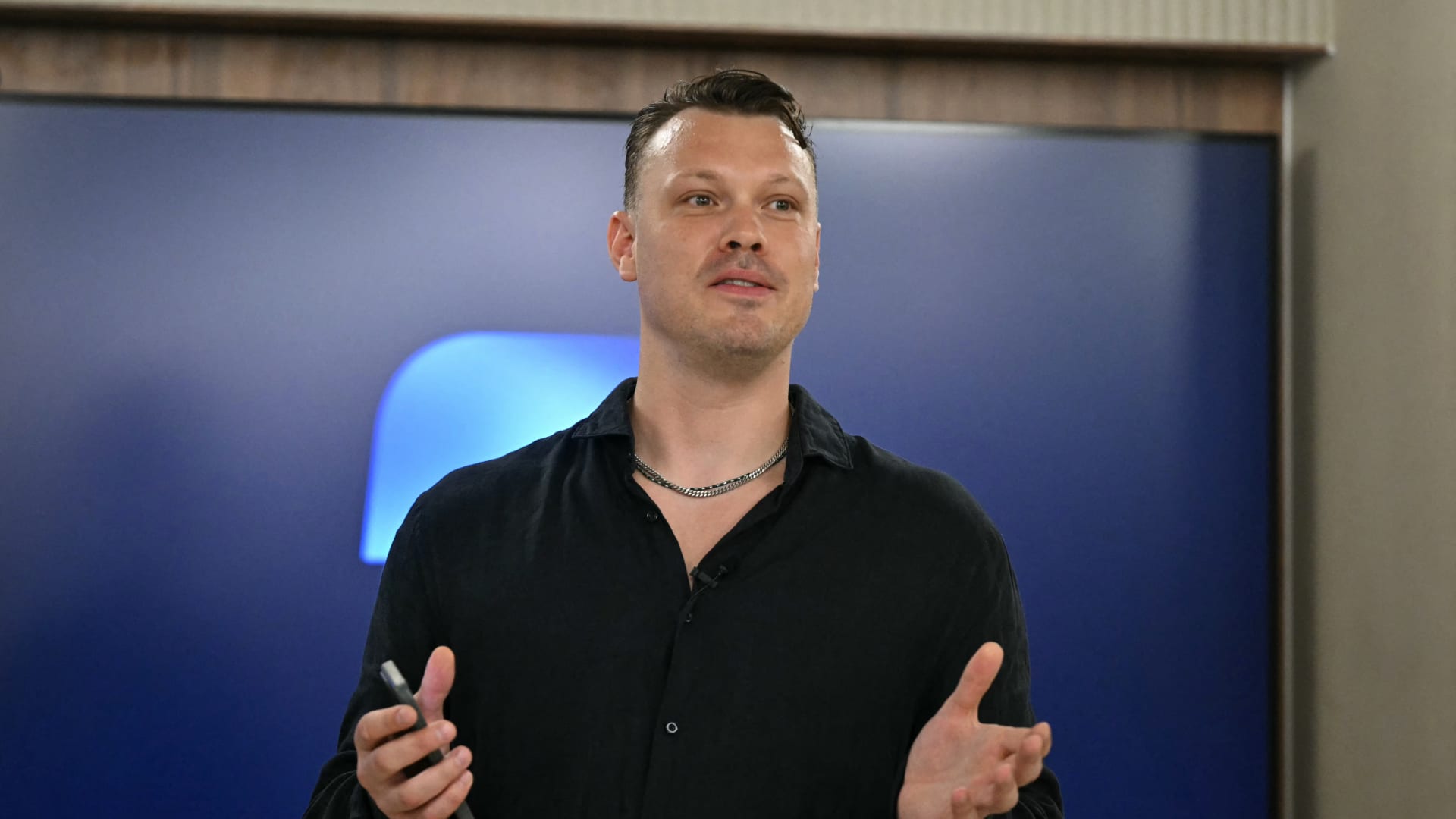
Synthesia AI video went from a hard-to-sell startup idea in 2017 to a private company valued at $4 billion, according to CNBC Make It and the company. For investors watching the AI boom, the story shows how early bets can depend less on a perfect first product and more on finding customers who will pay before the trend becomes obvious.
Victor Riparbelli co-founded London-based Synthesia in 2017, five years before ChatGPT’s public launch made generative AI a mainstream business topic. The company describes itself as an AI video platform for business, with tools that let workers create training videos and presentations using AI avatars and text-to-video features.
Riparbelli told CNBC Make It that many startup investors dismissed the idea at the time. He said more than 100 investors passed after he argued that artificial intelligence would change video production.
The company’s early funding break came from Mark Cuban. Synthesia co-founder and current chief operating officer Steffen Tjerrild sent Cuban a cold email in 2017 with a product demo, according to a partial screenshot reviewed by CNBC Make It. Cuban replied within five minutes, and over the next 14 hours agreed to invest $1 million in a round that valued Synthesia at $5 million, according to the company.
Cuban told CNBC Make It he already believed AI would become important and that video would be a central format. He also wanted to know whether the team was prepared to work intensely on the company.
How did Synthesia become an AI video company?
Synthesia did not start with the enterprise product it sells today. The original plan aimed at Hollywood, with technology that could add new dialogue to existing footage and translate video into other languages.
Riparbelli told CNBC Make It that film studios found the product interesting but did not see it as a must-have. He said the startup used Cuban’s investment to hire engineers and build the technology, while a small number of customers helped keep the company operating as funding ran down.
The technical bar was also high. Riparbelli said AI tools were not yet strong enough to produce movie-quality video at the scale needed for the company’s first vision.
By 2020, some companies that had seen Synthesia’s demos began asking whether the technology could make cheaper, faster corporate training videos and presentations, Riparbelli said. That shifted the company’s attention from entertainment studios to business customers, whose quality requirements were different and whose interest was more immediate.
Synthesia began building a self-serve enterprise text-to-video demo in March 2020 and released a beta version in July of that year. Within four months, the product generated more than $300,000 in revenue from about 1,000 new enterprise customers, according to the company.
Product-market fit means a company has found a product that customers actively want and are willing to pay for. Riparbelli told CNBC Make It that the enterprise tool gave Synthesia that kind of demand, though the company did not switch its whole business overnight.
Synthesia later added AI avatars, editing tools and video templates around the text-to-video product. In December 2021, it released a broader AI video platform, completing its move to a business-to-business model.
What does Synthesia’s valuation say about the AI market?
Synthesia announced a $200 million fundraising round in January at a $4 billion valuation. A private valuation is the price investors assign to a company in a funding round, rather than a public stock-market price.
The company has corporate clients including PepsiCo, Mondelez and Heineken, a spokesperson told CNBC Make It. Riparbelli declined to share annual revenue, while the company said it now has more than 60,000 enterprise customers worldwide.
The broader AI funding market has moved sharply since Synthesia’s early fundraising. AI companies received 61% of global venture capital funding in 2025, according to the Organisation for Economic Co-operation and Development. Menlo Ventures reported that enterprise spending on generative AI tools rose to $37 billion in 2025 from $11.5 billion in 2024.
Adoption is still uneven. A November 2025 McKinsey report found that 39% of companies using AI reported a measurable earnings impact.
Synthesia also faces open questions as it grows. Riparbelli told CNBC Make It that regulation across countries creates compliance uncertainty, and the company competes with AI video rivals including HeyGen and Colossyan. He said arriving early can help if a company survives long enough to understand the market as it develops.
This story draws on original reporting from CNBC.