Tesla earnings put EV rebound and robotaxi plans back in focus
Wall Street expects Tesla to post second-quarter revenue growth after deliveries rebounded, even as the stock trails the Nasdaq this year.
By Maya Okafor · Markets Writer
· 3 min read
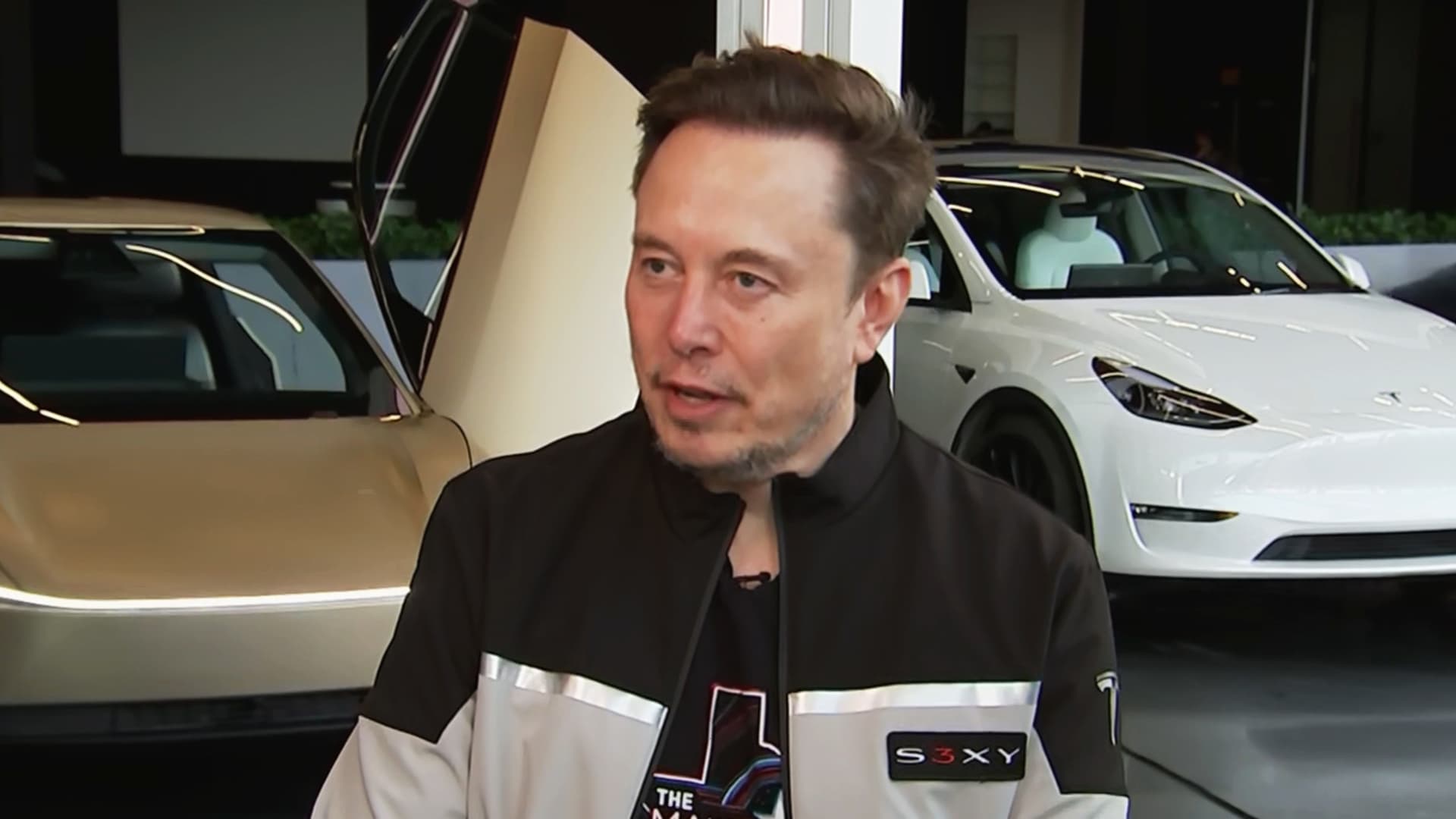
Tesla is due to report second-quarter results after the market closes Wednesday, giving investors a fresh look at whether its car business is stabilizing. The update lands at a tense moment for shareholders: CNBC reported Tesla shares are down about 16% this year, while the Nasdaq has gained 11%.
Analysts surveyed by LSEG expect Tesla to report earnings per share of 51 cents on revenue of $25.71 billion. Earnings per share, or EPS, is the portion of a company’s profit assigned to each share of stock, and it is one of the main numbers investors use to judge whether a company is becoming more profitable.
CNBC reported that the expected revenue figure would represent 14% growth. That would follow an early-July delivery update from Tesla showing more than 480,000 vehicles delivered in the second quarter, up 25% from a year earlier and above analyst expectations.
Autos are recovering, but pressure remains
The delivery rebound matters because Tesla has been trying to reverse consecutive years of annual delivery declines. CNBC reported that competition from Chinese electric-vehicle makers, including BYD, Nio and Xiaomi, has weighed on Tesla by offering lower-cost vehicles with advanced technology in markets outside the United States.
CNBC also reported that some consumers have boycotted Tesla over Elon Musk’s political comments and his work with the Trump administration. At the same time, higher gasoline prices linked to the U.S. war in Iran helped lift Tesla sales in the first half of the year, with more European buyers purchasing electric vehicles, according to CNBC.
During the second quarter, Tesla began selling lower-cost versions of the Model 3 and Model Y. CNBC reported that the company also made its premium driver-assistance system, sold in the United States as Full Self-Driving (Supervised), available in some European markets. Driver assistance means the software can perform some driving tasks, but the system still requires human oversight.
Investors are watching the AI pivot
Musk has shifted much of Tesla’s investor story toward artificial intelligence, robotaxis and humanoid robots rather than vehicle sales alone. CNBC reported that Tesla is increasing production of its driverless Cybercab and reworking older factory lines in Fremont, California, to build Optimus robots.
On Tesla’s April earnings call, Musk said, “I think Optimus will be our biggest product, not just Tesla’s biggest product ever, but probably the biggest product ever.” He has described an AI-powered robot that could work as a babysitter, factory worker or surgeon, according to CNBC.
Paul Miller, an analyst at Forrester, told CNBC by email that Tesla’s leadership has made “plenty of big claims about autonomous mobility and physical AI” over the years, while missing on some “bolder bets.” Autonomous mobility refers to vehicles operating without a human driver, while physical AI means software that can sense, reason and act in the real world through machines such as cars or robots.
CNBC noted that Musk told investors in 2019 Tesla would have 1 million robotaxis on the road by 2020. Last year, he said Tesla’s autonomous ride-hailing services would cover “probably half the population of the U.S.” by the end of 2025. At the World Economic Forum in Davos earlier this year, Musk said Tesla Robotaxis would be “very, very widespread” in the U.S. by year-end, a goal CNBC described as still far off.
Tesla also faces established competition. CNBC reported that Alphabet’s Waymo leads Tesla in U.S. robotaxis, while Baidu’s Apollo Go is ahead in China. In humanoid robots, Tesla is still developing its product while competing with companies including Unitree, Boston Dynamics, Agility Robotics, Apptronik and Humanoid.
On Wednesday’s call, CNBC reported investors will listen for updates on robotics, driverless technology and potential cooperation between Tesla and SpaceX, including Terafab, a chip factory the companies plan to build and operate with Intel in Texas.
This story draws on original reporting from CNBC.