Tesla faces a high earnings hurdle as options price a smaller swing
CNBC says Tesla’s delivery beat failed to lift the stock, setting up a tougher test for earnings and a defined-risk options trade.
By Maya Okafor · Markets Writer
· 3 min read
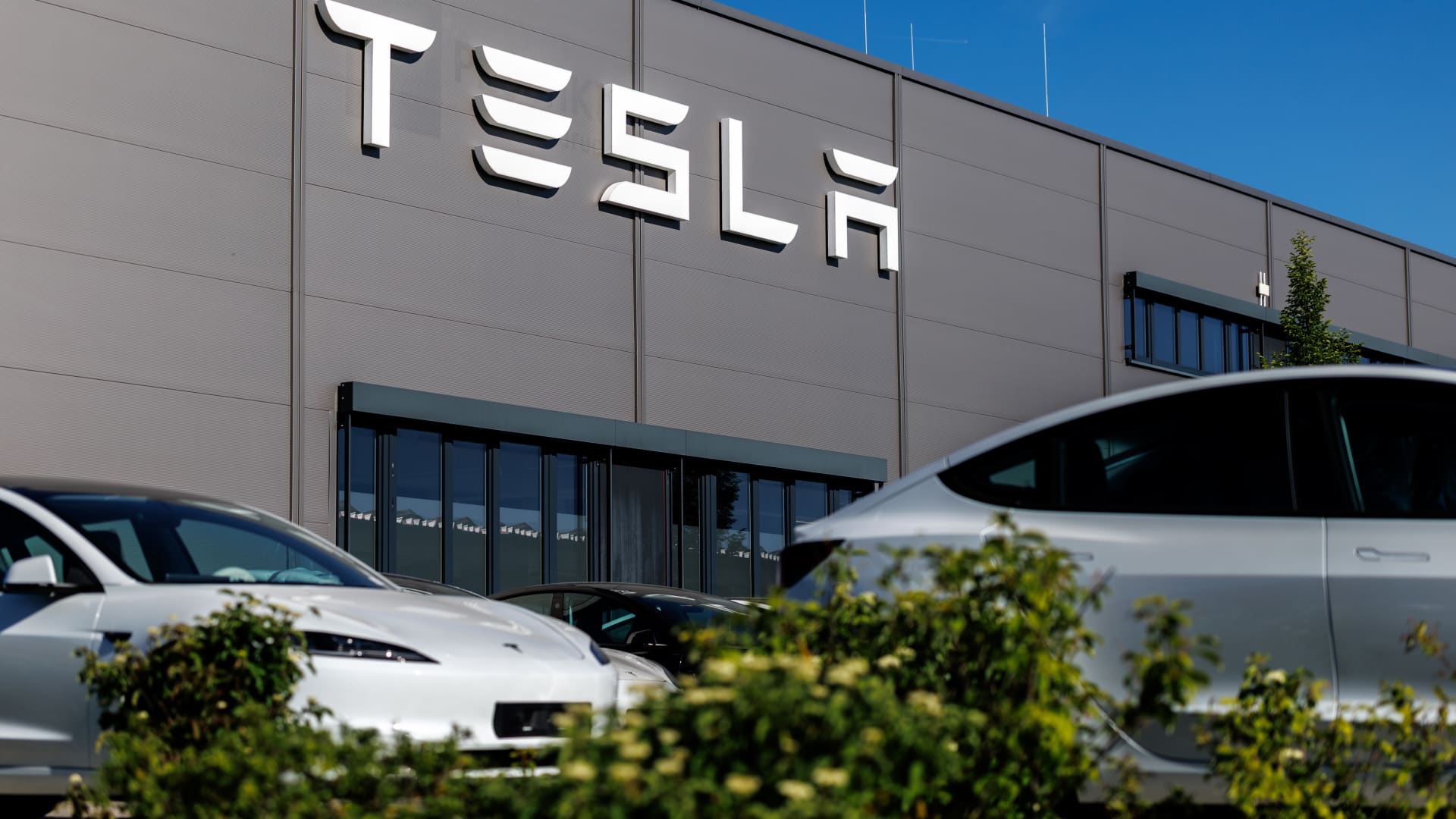
Tesla reports second-quarter earnings Wednesday with investors already demanding more than a clean delivery beat. For retail investors, the setup matters because a stock can fall even after good news when expectations are already baked into the price.
CNBC reported that Tesla recently posted second-quarter sales and delivery figures that topped consensus estimates, but the stock declined instead of rising. Tesla shares were quoted at $371.98, down 2.33%, at 1:31 p.m. EDT, according to CNBC market data.
That reaction suggests Wall Street may now treat upside delivery surprises as the starting point, not a reason to reprice the stock higher. CNBC’s analysis said a result that only meets or modestly beats earnings expectations could be received poorly if investors were already positioned for stronger news.
Competition is pressing Tesla’s core business
CNBC pointed to tougher competition in electric vehicles as one reason the earnings bar looks difficult. Rivian’s R2 rollout is aimed at the mass-market SUV segment in the $45,000 to $60,000 price range, the same zone where Tesla’s Model 3 and Model Y have been central to its volume.
According to CNBC, those two Tesla models accounted for more than 96% of 2025 sales. The analysis said Rivian does not currently have enough production capacity to displace Tesla’s best-selling vehicles, but strong demand for R2 could help Rivian raise capital and build more capacity over time.
The pressure point is margin, which is the share of revenue a company keeps after costs. If rivals compete more aggressively in Tesla’s main price band, Tesla may have less room to protect profitability through pricing.
Valuation depends on more than cars
CNBC said Tesla’s valuation also rests on expectations for businesses beyond autos, including humanoid robotics through Optimus and full self-driving technology. Those ideas give investors what Wall Street calls optionality, meaning potential future value that is not yet fully showing up in current profits.
The report said investor enthusiasm around artificial intelligence has shifted toward hardware companies with clearer near-term financial returns, rather than software promises farther in the future. CNBC also noted continued speculation about possible corporate actions or ties involving SpaceX, but said a merger or restructuring would make little strategic sense for either company’s core operations.
CNBC added that SpaceX shares are trading below their initial public valuation, which has reduced enthusiasm around cross-company financial engineering.
Options imply a smaller move than Tesla’s history
In the options market, CNBC said Tesla’s expected post-earnings move has compressed. An at-the-money straddle expiring July 24, using the $380 strike as an example, was priced at about 7% of Tesla’s stock price. A straddle is an options position that buys a call and a put at the same strike, often used to estimate how large a move traders expect.
That implied move is below Tesla’s longer-term average post-earnings swing of roughly 9% over similar two-day periods, according to CNBC. The report also said implied volatility, which measures how much movement options prices expect, is slightly higher than last quarter, while demand for downside puts remains elevated.
CNBC described a short-term bear put spread as a defined-risk way to express or hedge downside exposure. The example trade buys the Aug. 21 $360 put for $15 and sells the Aug. 21 $330 put for $6, creating a $9 net cost, or $900 per options spread.
Under CNBC’s example, the maximum loss is $900 and the maximum gain is $2,100 if Tesla falls to $330 by August expiration. The structure may reduce exposure to “volatility crush,” the drop in options prices that can happen after earnings once uncertainty clears, because the sold put offsets part of the cost and sensitivity of the bought put.
This story draws on original reporting from CNBC.


