Trump AI data centers push meets resistance from faith, labor and local groups
Trump is urging local officials to accept AI data centers as unions, religious leaders and activists press for stronger oversight.
By Jordan Bell · Startups & Deals Reporter
· 3 min read
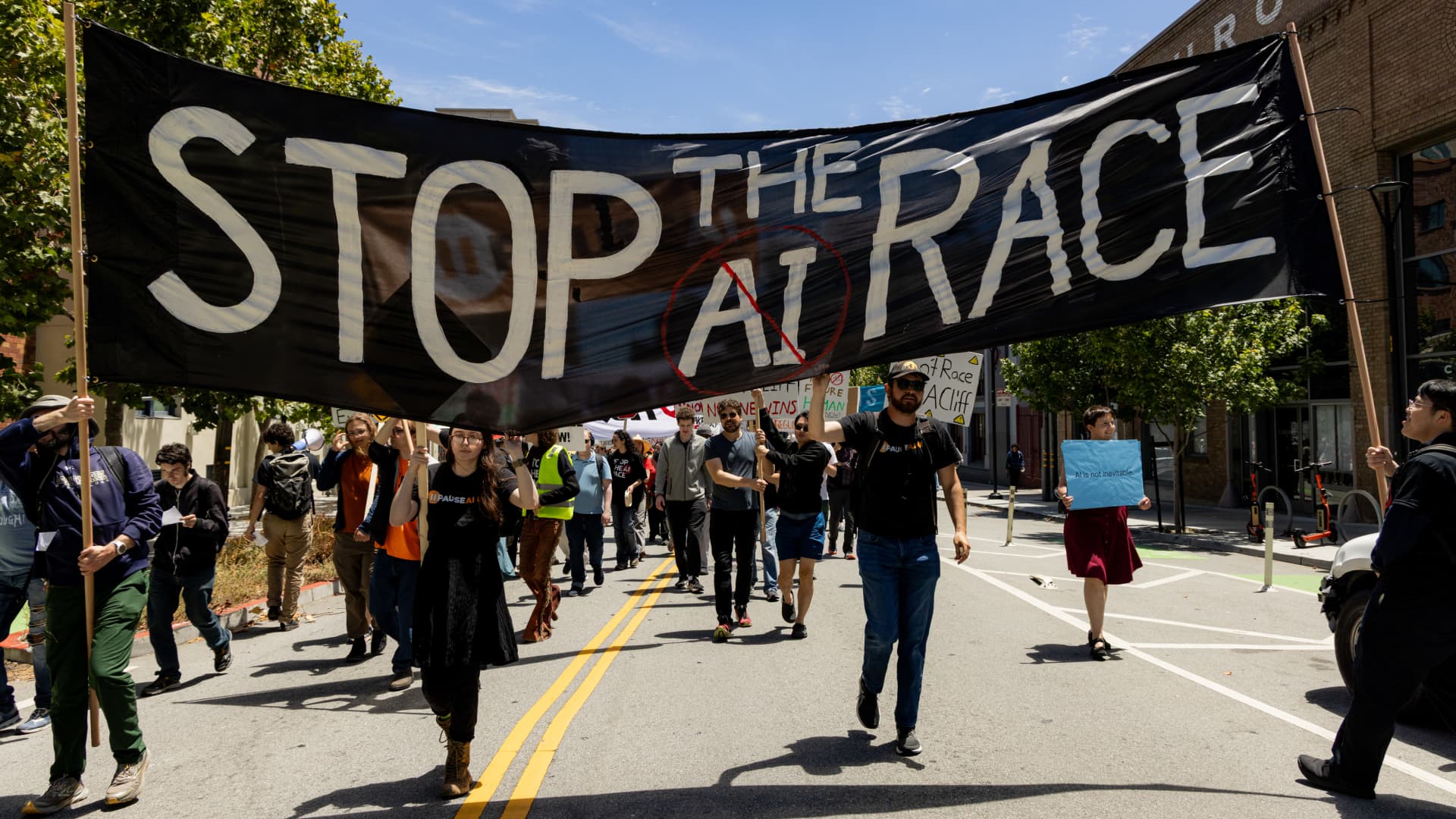
President Donald Trump’s AI data centers push is running into a broader political backlash that could matter well beyond the tech sector. CNBC reported that religious leaders, labor unions and local activists are increasingly warning that artificial intelligence needs stronger government oversight, a shift that could become a problem for Republicans if voters see the boom as mostly benefiting large tech companies.
Trump addressed those concerns Thursday by promoting commitments from data center developers and utilities that they would not raise electricity prices, according to CNBC. The pledge came as communities around the country question whether new data centers, which use large amounts of power to run and cool computing equipment, could put pressure on local electric grids and household bills.
At an Environmental Protection Agency event, Trump urged governors and local officials to support the projects. “You can’t fight it. You have to go with it,” he said, according to CNBC. He also told officials that if they did not accept the money tied to data center development, other places would.
Why are voters pushing back on AI data centers?
AI data centers are large facilities packed with servers that train and run artificial intelligence systems. They can bring investment and jobs, but they also require power, water and grid upgrades, which is why local debates often focus on utility costs, environmental strain and who receives the economic upside.
The political challenge for Trump is that skepticism is not limited to one party or one type of voter. A June poll from the Yale Program on Climate Communication found that 58% of registered voters opposed building data centers locally. The same poll found opposition from 53% of conservative Republicans and 74% of liberal Democrats.
That cross-party concern complicates a White House message that links AI expansion with economic growth and market strength. CNBC noted that the Nasdaq composite has reached 20 record closes this year, helped by investor enthusiasm around artificial intelligence. For many households, though, higher stock indexes may feel distant from worries about job disruption, utility bills and wealth concentrating among technology companies and their shareholders.
Faith leaders have also started to frame AI as a moral issue. Walter Kim, president of the National Association of Evangelicals, praised Pope Leo XIV’s warnings about AI and said Wednesday on CNBC’s “Squawk Box” that the technology has “positive benefits” but also “extraordinary harms.”
Kim said he was concerned about AI’s role in health care, education and warfare because it could remove people from decisions with major human consequences. Referring to the pope’s recent encyclical, Kim described unchecked faith in technology as “the construction of a Tower of Babel” and said it could disconnect people from God and from one another, according to CNBC.
Labor leaders are pressing a related argument focused on workers. Liz Shuler, president of the AFL-CIO, said at the union federation’s convention last month that candidates seeking the presidency in 2028 should remember: “Working people should come before algorithms.”
Sean O’Brien, general president of the International Brotherhood of Teamsters, has also called for workers to have more influence over AI’s rollout. At a recent event with Palantir CEO Alex Karp organized by American Compass, O’Brien said, “We’ve never had a seat at the table.” Karp added that he sees “political unrest” as the biggest challenge for AI in the U.S., according to CNBC.
Some state-level action has already begun. New York Gov. Kathy Hochul has moved to impose a moratorium on data center construction, CNBC reported. With the midterm elections approaching, the fight over AI development is becoming less about whether the technology advances and more about who pays for it, who profits from it and who gets a voice in setting the rules.
This story draws on original reporting from CNBC.


