Trump AI executive order deadline puts model rules in focus
Federal agencies face an Aug. 1 deadline to shape AI model reviews as OpenAI, Nvidia and others press Washington on regulation.
By Maya Okafor · Markets Writer
· 3 min read
The Trump AI executive order is nearing its first major deadline, putting federal rules for advanced AI models back at the center of the market debate. For everyday investors watching Nvidia, Microsoft, Meta, Palantir and private AI leaders, the issue is how much Washington may shape the pace and reach of new model releases.
President Donald Trump signed the order in early June and gave federal agencies 60 days to create a framework for carrying it out, according to CNBC and the White House order. That deadline falls on Saturday, Aug. 1.
The order asks AI companies to voluntarily submit models to the government for evaluation before public release. It assigns officials including Treasury Secretary Scott Bessent, Defense Secretary Pete Hegseth, White House Chief of Staff Susie Wiles and Commerce Secretary Howard Lutnick to work out the details.
CNBC reported that when it asked the White House about the framework’s status, officials pointed to a social media post from spokesperson Kush Desai that said, “BREAKING: Trump White House to meet a deadline we set for ourselves.” OpenAI and Anthropic did not immediately respond to CNBC’s requests for comment.
What is in the Trump AI executive order?
The order calls for a classified benchmarking process, according to the White House document. Benchmarking means testing a model against set measures, and in this case the process would assess cyber capabilities and help determine whether a system qualifies as a “covered frontier model.”
A frontier model is a highly advanced AI system near the leading edge of current capabilities. The order also encourages companies to work with the government on deciding which “trusted partners” can access certain models.
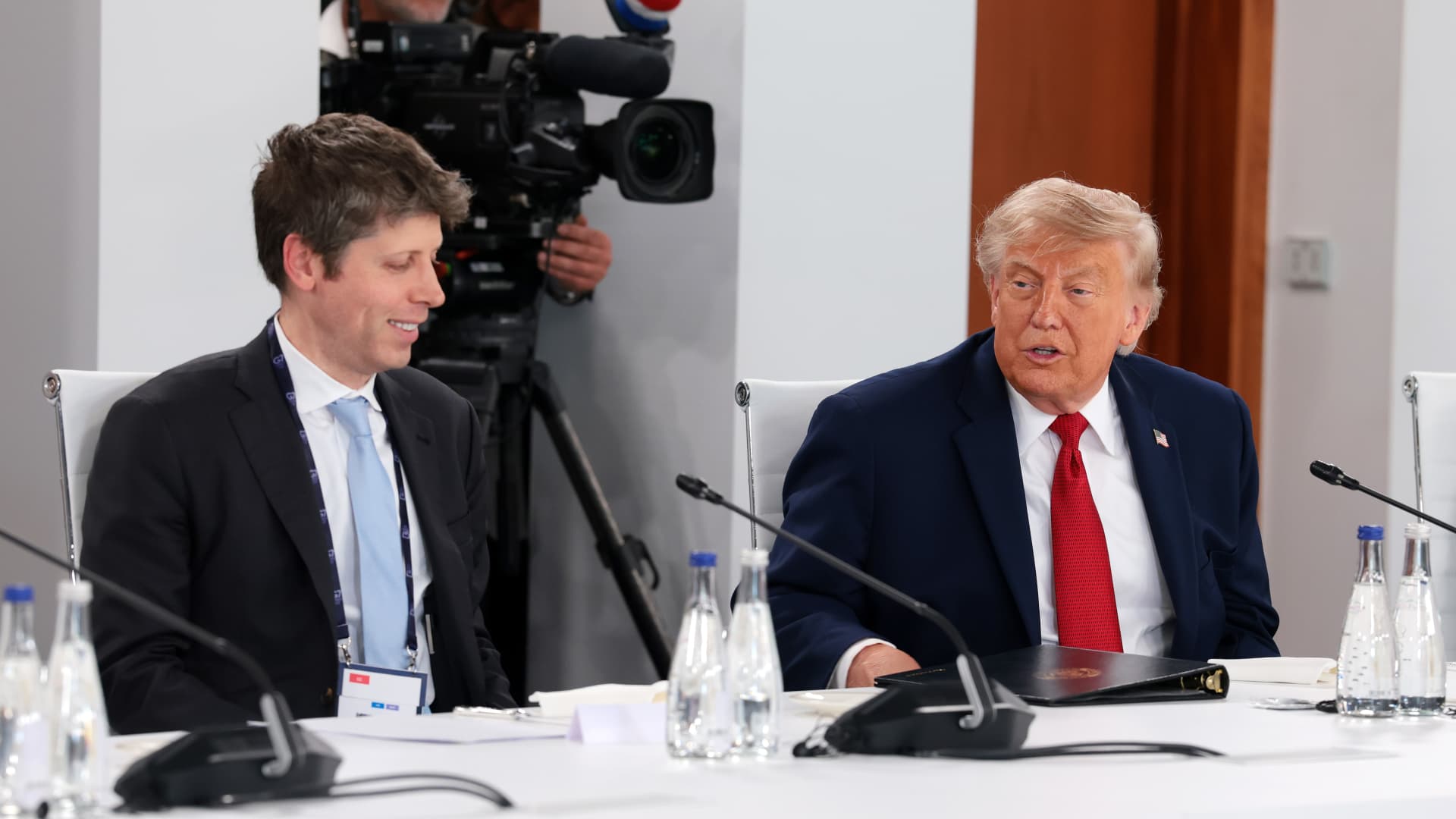
OpenAI CEO Sam Altman told CNBC on Wednesday that he had seen a draft of the framework and did not have “anything specifically in mind” for changes. CNBC reported that Altman met with Wiles and was expected to meet with Bessent and Lutnick during his Washington visit.
Nvidia CEO Jensen Huang was also in Washington this week, CNBC reported, as industry executives met with lawmakers and Trump administration officials while the regulation debate picked up.
Why open-weight AI models are part of the fight
A major flashpoint is whether the U.S. should limit or ban Chinese open-weight AI models. Open-weight models let users download the technology, change it and run it on infrastructure they choose, which can make them cheaper alternatives to closed frontier models from companies such as OpenAI and Anthropic.
CNBC reported that open-weight models, many from China, have advanced quickly in recent weeks and stirred debate across the tech sector. Huang released a letter Monday urging policymakers to avoid “premature restrictions” on open-weight models, using the post as his debut on X, formerly Twitter.
Elon Musk, who controls X through SpaceX, replied that Huang had his “full support” and said, “Jensen is right.” Microsoft, Meta, Palantir and dozens of other companies signed the letter. OpenAI later joined, while Anthropic set out its view in a separate blog post, according to CNBC.
The Trump administration has not formally announced its position on a possible ban, CNBC reported. David Sacks, the former AI czar who CNBC said still has influence in the administration, has been one of the more public opponents of such restrictions.
The framework could give model developers more clarity after a choppy rollout period following the order. CNBC reported that Anthropic disabled access to its Fable 5 and Mythos 5 models after a Commerce Department export-control directive, while OpenAI agreed to limit the rollout of its GPT-5.6 model series to trusted partners at the U.S. government’s request. Both companies later released their models more broadly.
Wiles wrote on X in late June that the government and private sector had worked together in a way she described as unprecedented, adding that the shared priority was to get the best technology deployed “as quickly and safely as possible.”
This story draws on original reporting from CNBC.