Trump steps up ‘communist’ attacks on Democrats before 2026 midterms
Trump and Republican leaders are sharpening attacks on progressive Democrats as both parties fight over the terms of the 2026 midterm debate.
By Maya Okafor · Markets Writer
· 3 min read
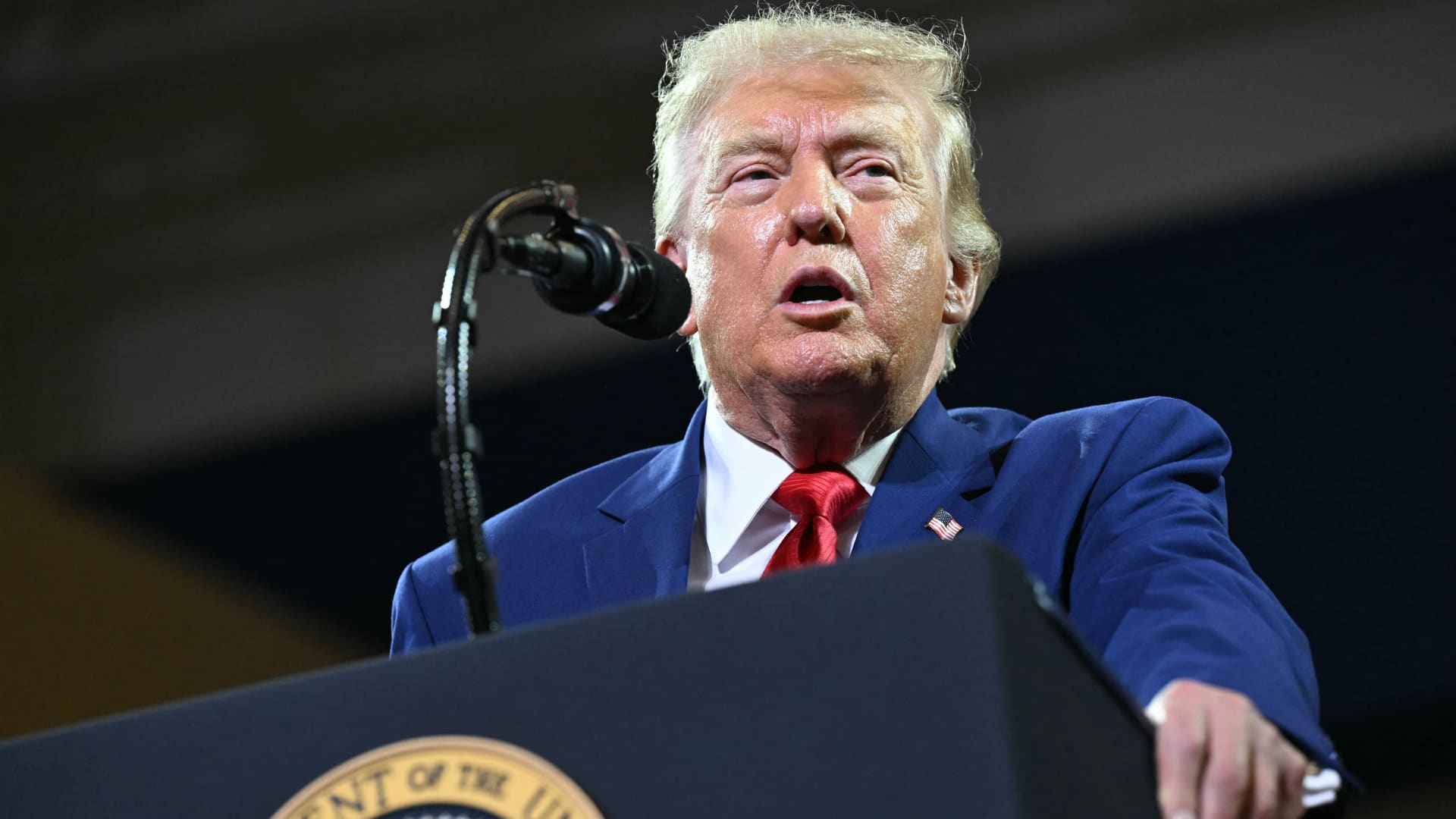
President Donald Trump and Republican allies are escalating their use of the word “communist” for Democratic opponents ahead of the 2026 midterms. For voters and investors following the policy debate, the immediate issue is political messaging: Republicans are seeking to turn recent progressive primary wins into a broader argument about the direction of the Democratic Party.
According to CNBC, Trump described the Michigan Democratic Senate primary as “a communist versus a socialist,” referring to Abdul El-Sayed and Rep. Haley Stevens. El-Sayed rejects the democratic-socialist label, CNBC reported.
The language has appeared repeatedly in Trump’s public remarks. On July 3 at Mount Rushmore, he called a “communist menace” a “mortal threat,” CNBC reported. At a July 22 speech in Georgia, Trump said candidates needed to win “by a lot,” or “we’re going communist.” In a July 28 endorsement video for Wisconsin Republican congressional candidate Michael Alfonso, Trump said Alfonso would stand up to “radical left communists in Congress.”
Why are Republicans calling Democrats communists?
The push follows victories by progressive and democratic-socialist-backed candidates, including political attention after New York Mayor Zohran Mamdani’s win. Republicans see an opening to draw a harder ideological contrast in the contest for control of Congress, CNBC and Time reported.
House Speaker Mike Johnson has framed the election as a choice between a constitutional republic and a path to communism. Rep. Lisa McClain, the Michigan Republican who chairs the House GOP conference, also portrayed the new Democratic candidates as representing government control and communism. Those are political characterizations by Republican leaders, not descriptions established by the candidates’ party affiliation or policy platforms.
Progressive Democrats have campaigned on affordability, including higher taxes on the wealthiest Americans to fund universal health care, a higher minimum wage and universal basic income, according to CNBC. El-Sayed has made Medicare for All central to his Michigan Senate campaign and is not a member of the Democratic Socialists of America, the Associated Press reported.
How is democratic socialism different from communism?
Democratic socialism, as described by Time’s reporting on recent primary winners, generally supports a larger government role in programs and benefits while operating within a market-based economy. Time said the Democratic Party has not been taken over by communists and that no members of Congress openly identify as Communist Party members.
The debate echoes Cold War-era and 1950s Red Scare politics, when communist accusations were a prominent part of American political conflict, CNBC and Time reported. Democrats are divided over how to respond: Time reported that some centrist figures worry the attacks could damage candidates in close races, while progressive advocates argue that distancing the party from its left flank would reinforce the Republican framing.
This story draws on original reporting from CNBC.


