Trump investment portfolio linked to JPMorgan, Schwab, UBS and Stephens
CNBC tied four financial firms to at least four Trump accounts holding hundreds of millions, raising fresh questions about oversight and conflicts.
By Dev Ramirez · Crypto Correspondent
· 4 min read
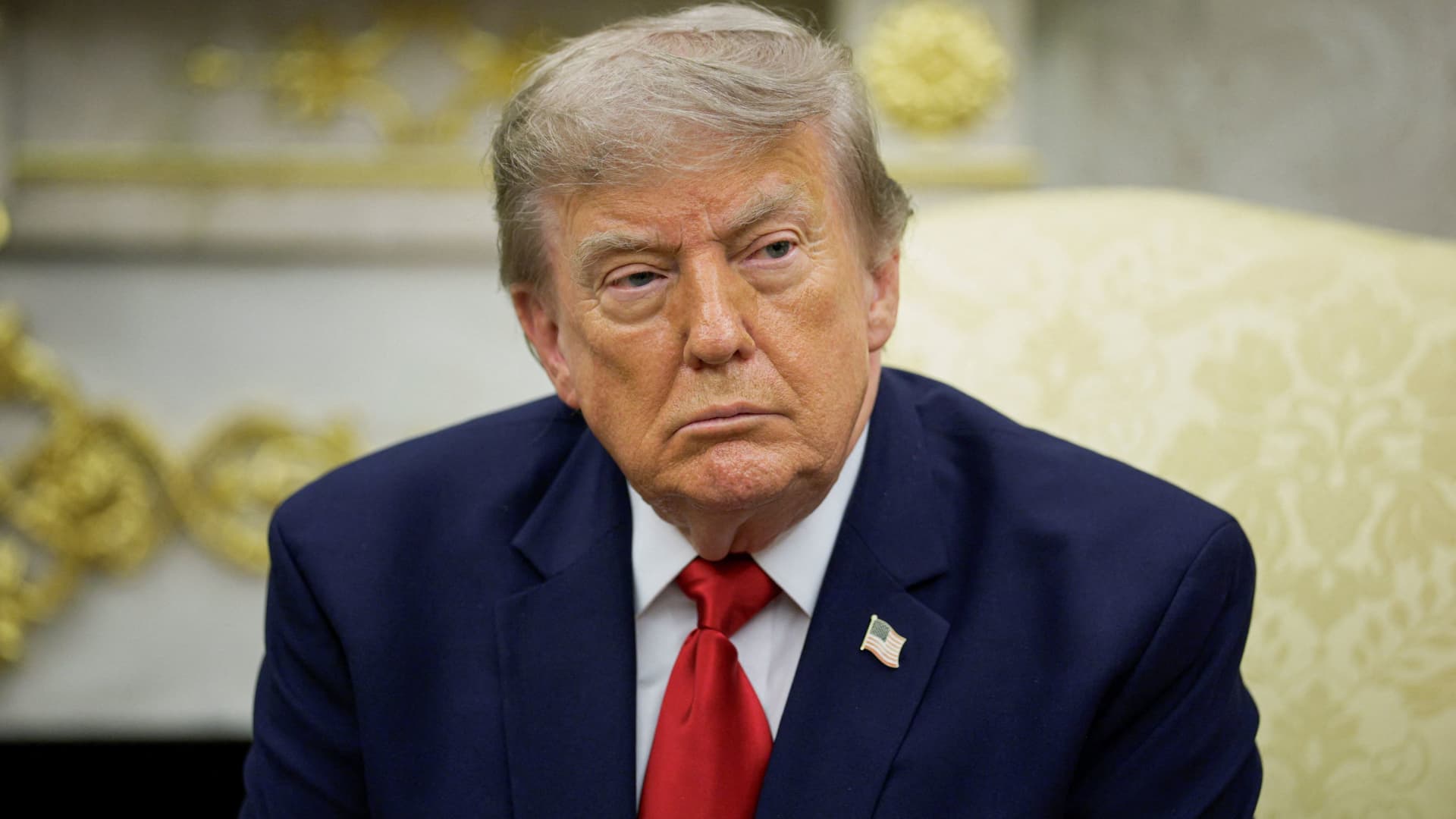
President Donald Trump’s investment portfolio is tied to JPMorgan Chase, Charles Schwab, UBS and Stephens Inc. across at least four of eight numbered accounts, according to a CNBC analysis of his 2025 annual financial disclosure. For retail investors, the story is less about one rich person’s brokerage setup and more about how a sitting president’s private market exposure is handled while he oversees the financial system.
CNBC said it connected the firms to accounts Nos. 3, 5, 6 and 8 by reviewing firm-specific funds, deposit programs and credit arrangements listed in Trump’s filing with the Office of Government Ethics. Three unnamed financial-industry experts reviewed the materials separately and supported CNBC’s findings, according to the network.
Across the eight accounts, Trump reported at least $858 million in assets in 2025 and more than 21,000 trades, CNBC said. That was up from at least $237 million a year earlier. The disclosure does not always state whether a firm acted as investment manager, broker, custodian or in another role.
Who manages Trump's investment portfolio?
CNBC linked Schwab to Account No. 6, which held at least $163 million. The Wall Street Journal reported that Schwab manages Account No. 7, which held about $302 million and produced 10,311 trades in 2025, nearly half of all disclosed trades. CNBC said it had not independently confirmed Schwab’s role in that account.
Schwab spokesperson Mayura Hooper told CNBC the firm does not comment on current or former clients, citing client privacy rules. She said Schwab applies the same standards across its 46 million client accounts.
CNBC also connected JPMorgan to Account No. 8. That account reported transactions around the same period when Trump accused JPMorgan of “debanking” him for political reasons. Trump later sued JPMorgan and CEO Jamie Dimon for $5 billion, alleging political discrimination and a banking blacklist. CNBC said JPMorgan has previously denied the claims and called the case meritless.
UBS told CNBC it had no comment and could not discuss client matters. Stephens declined to comment, and JPMorgan did not respond to CNBC’s detailed requests, according to the network.
How could 21,000 trades happen in one year?
The Trump Organization told CNBC that outside financial firms, not Trump, controlled individual investment choices and that the accounts rely heavily on automated strategies. One such strategy is direct indexing, where an investor owns many individual stocks selected to track a benchmark such as the S&P 500 instead of buying a single index fund.
Direct indexing software can buy, sell and rebalance holdings frequently. It can also sell losing positions to capture tax losses, a process called tax-loss harvesting, while keeping broad market exposure through other securities.
Larry Harris, a former chief economist at the Securities and Exchange Commission and a finance professor at the University of Southern California, told CNBC the activity would not necessarily be unusual for a very large portfolio. Harris described the approach as “computer-driven trading” and said it was unlikely that the outside firms were engaging in improper conduct if fiduciaries controlled the process.
CNBC said it found no evidence that government action was influenced by the financial relationships, or that Trump directed any specific trade. White House spokesperson Anna Kelly told CNBC, “There are no conflicts of interest.”
Why does the trust structure matter?
Much of Trump’s wealth remains in a revocable trust, according to CNBC, with Trump as sole beneficiary. A revocable trust can generally be changed or ended by the person who created it, unlike a traditional blind trust, which is designed to separate an official from knowledge and control of holdings.
Federal ethics rules require a presidential blind trust to be run by an independent trustee and restrict communications with the beneficiary about assets. CNBC noted that every president from Jimmy Carter through Joe Biden, except Trump, either used blind trusts or limited investments to assets generally viewed as less likely to create conflicts, such as diversified mutual funds, according to the Office of Government Ethics.
Ross Delston, a former FDIC banking regulator and anti-money-laundering lawyer, told CNBC that banks working with a sitting president face unusual compliance and reputational risks. He said institutions would likely treat Trump as a politically exposed person, a term banks use for clients whose public roles can create heightened corruption or money-laundering concerns.
Delston told CNBC that such accounts could require enhanced monitoring of trades, wires, checks and other transactions. CNBC said it could not determine how much the firms earned from Trump’s accounts.
This story draws on original reporting from CNBC.


