Trump Iran tariffs push could complicate Senate sanctions bill
Trump wants Iran tariffs added to a Russia-Iran sanctions bill, but U.S. trade with Tehran is minimal and the change could slow passage.
By Jordan Bell · Startups & Deals Reporter
· 3 min read
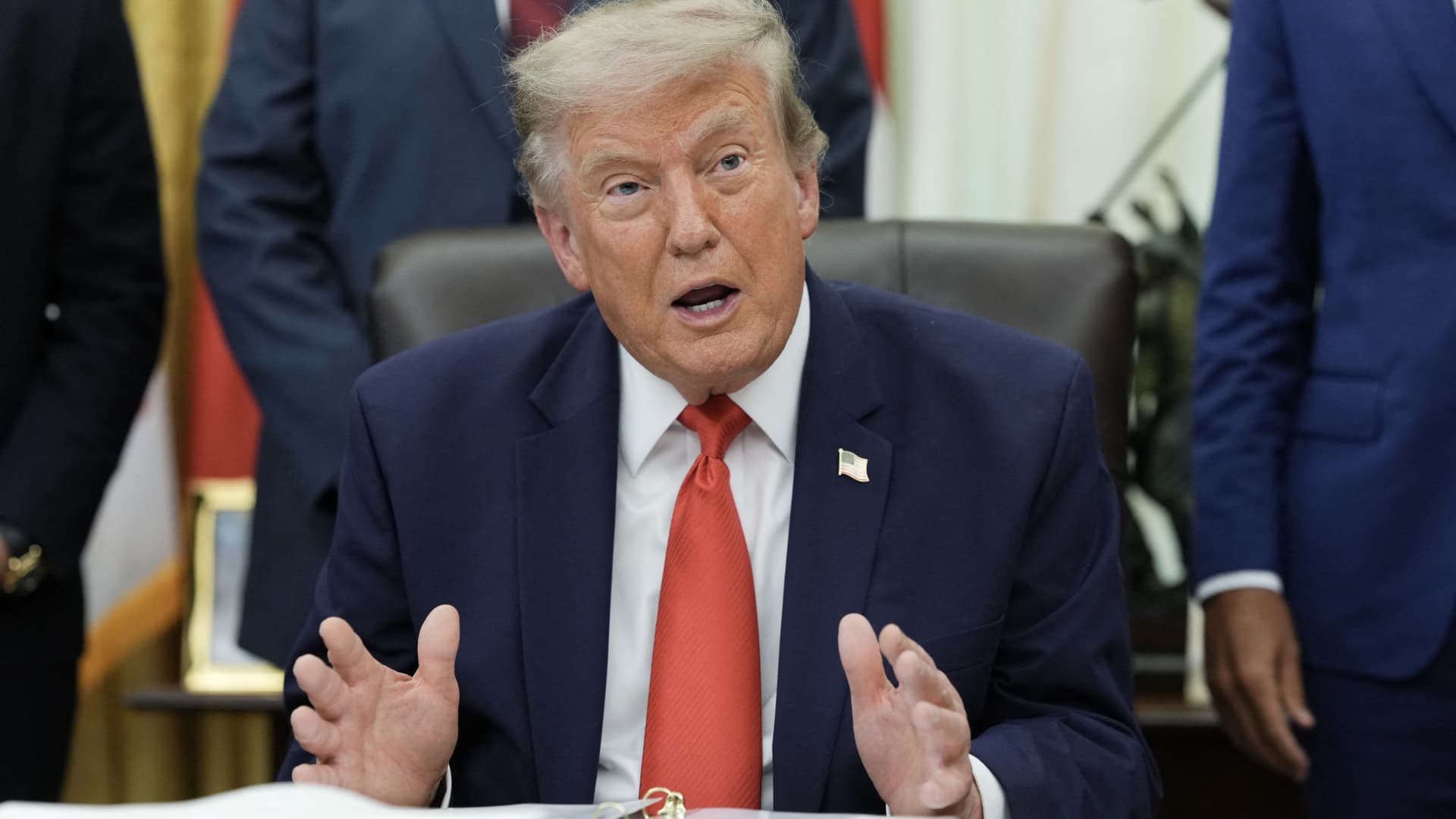
President Donald Trump is pushing for Iran tariffs to be added to a bipartisan sanctions bill aimed at Russia and Tehran, CNBC reported. For investors tracking trade policy and geopolitical risk, the twist is less about direct U.S.-Iran commerce and more about whether a late change could stall a bill that had just gained momentum in the Senate.
Trump was asked at the White House on Wednesday about the pending legislation and said, according to CNBC, “I’d like them to add Iran as tariffs, not just as sanctions.” He also said he wanted tariffs on Iran because “It would make it much stronger.”
A tariff is a tax on imported goods. Sanctions are broader government restrictions that can block trade, financing or business with targeted countries, companies or people. In Iran’s case, the U.S. already has long-running sanctions that sharply limit commercial activity.
Would tariffs on Iran have much impact?
The direct economic effect would likely be limited because the U.S. buys very little from Iran. The Office of the U.S. Trade Representative said U.S. imports from Iran totaled $1.4 million in 2025, CNBC reported.
Trading Economics data cited by CNBC showed that works of art, collectors’ pieces and antiques were the largest import category from Iran, accounting for 55% of the value.
Jonathan Doh, a professor of international business at Villanova School of Business, told CNBC by email that the tariff threat was “entirely symbolic” because U.S. imports from Iran are “trivial.” Doh said existing sanctions are more meaningful than tariffs because primary sanctions restrict U.S. persons from trading with Iran, while secondary sanctions target non-U.S. companies and individuals that do business with Iran.
The sanctions backdrop has also tightened during the current conflict. CNBC reported that the U.S. and Israel launched a war against Iran in late February and that the fighting continues. The U.S. has kept sanctions on Iran for decades, and the Treasury Department has moved to put more pressure on Tehran’s economy during the war, according to CNBC.
Where the Senate bill stands
The sanctions package advanced this week after a bipartisan group of senators said they had agreed to combine Russia and Iran provisions into one bill, CNBC reported. Reuters reported that the Senate voted 86-12 on Tuesday on a procedural step to move the measure forward.
The bill is named for former Sen. Lindsey Graham, the South Carolina Republican who died unexpectedly in mid-July, according to CNBC. Trump said Wednesday that adding Iran tariffs was “what Lindsey wanted.” Graham’s office, now held by his sister Darline Graham, did not respond to CNBC’s request for comment.
The legislation would impose economic sanctions on Russia and on those supporting its war against Ukraine. It would also give Trump authority to place targeted tariffs on imports from the five largest buyers of Russian energy that help Moscow avoid sanctions, according to the bill text cited by CNBC.
Trump’s request could create a new political problem for a bill that had bipartisan support. CNBC reported that Democrats have criticized Trump’s broad use of tariffs, which increased again this month after the Supreme Court limited some of that authority earlier in the year.
The Trump administration has recently imposed or announced new duties on goods from numerous countries, including Canada, Brazil and the European Union’s 27 member states, CNBC reported. The White House and the Office of the U.S. Trade Representative did not respond to CNBC’s requests for comment on Trump’s Iran tariff proposal.
This story draws on original reporting from CNBC.


