Trump polysilicon tariffs lift solar stocks before December start
Trump set a 15% tariff and import price floors for polysilicon products, lifting solar shares while raising supply-cost questions.
By Dev Ramirez · Crypto Correspondent
· 3 min read
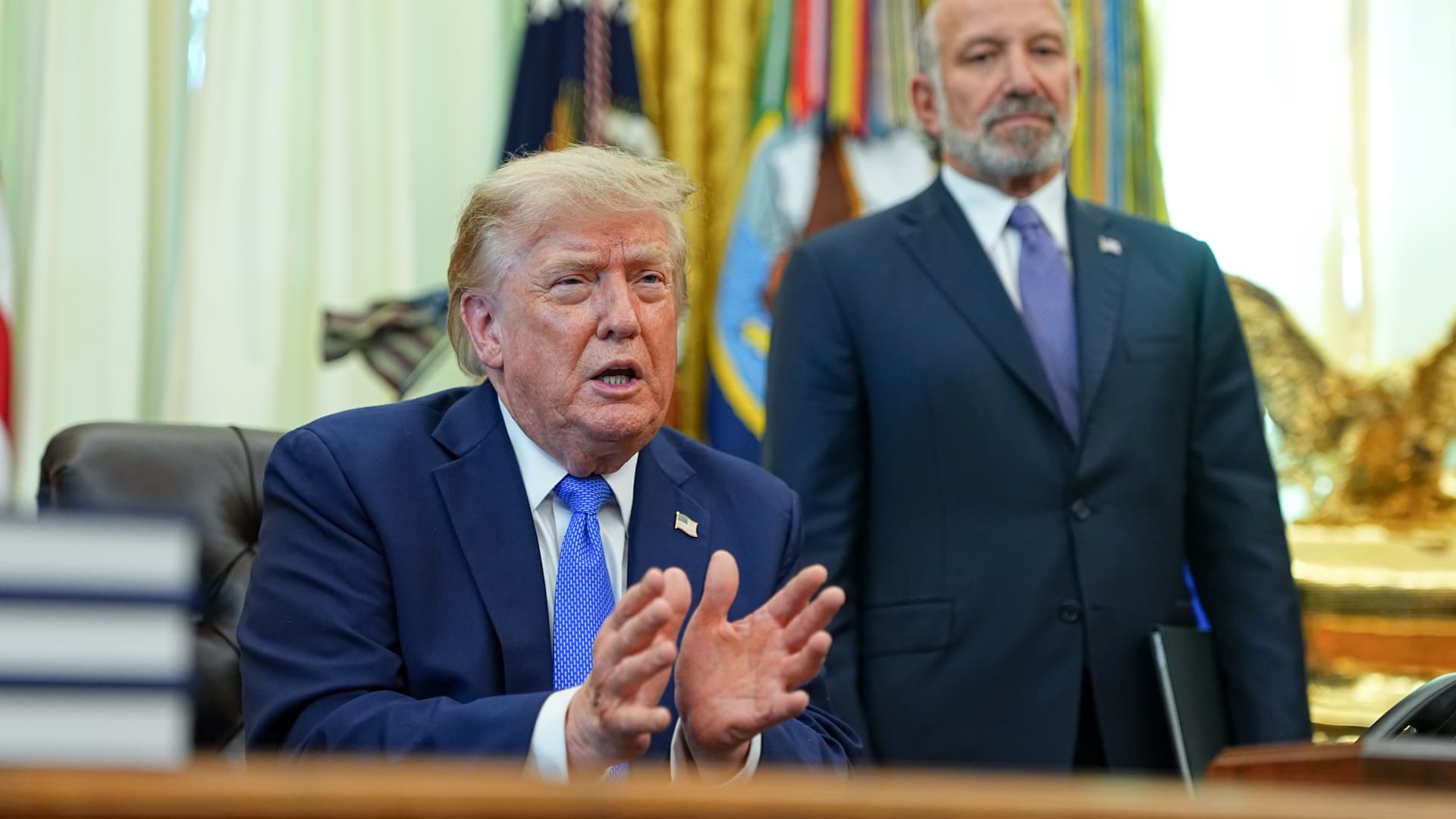
Trump polysilicon tariffs solar stocks were in focus Friday after President Donald Trump ordered a 15% duty on imported polysilicon and related products, plus minimum import prices for several solar-industry imports. The rules are designed to support U.S. supply chains, but they could also raise costs for companies building solar projects or buying chip inputs.
The directive was announced Aug. 6 and is scheduled to take effect Dec. 4, according to Politico. CNBC reported Friday that First Solar rose about 8% in premarket trading, while SolarEdge Technologies gained 2.4% and the Invesco Solar ETF rose 1.4%.
Those moves came after the announcement, though a single premarket session does not establish what investors expect the policy to mean for individual companies' earnings.
What do Trump’s polysilicon tariffs cover?
The order places a 15% tariff on imported polysilicon and its derivatives, Politico reported. It also sets minimum import prices for polysilicon, polysilicon ingots and wafers, solar cells and solar modules.
Polysilicon is a highly refined form of silicon used at the beginning of solar-panel and semiconductor production. As Reuters explains, manufacturers turn silicon into wafers, then make those wafers into solar cells and assemble cells into panels. The material also matters to chip production, putting the trade action at the intersection of energy and technology supply chains.
Trump used Section 232 of the Trade Expansion Act of 1962, which permits import restrictions after a national-security investigation. The Commerce Department began its polysilicon investigation in July of the prior year, Politico reported.
The order also seeks to prevent importers from building inventories before the rules begin. Customs and Border Protection is authorized to restrict imports when it suspects an importer is trying to avoid the coming duties through stockpiling, according to Politico.
Why could the policy help some manufacturers and raise costs elsewhere?
The White House framed the action as an effort to protect domestic solar supply chains against Chinese competition, CNBC reported. Lower-cost imports can pressure U.S. producers, while tariffs and minimum prices can make those imports more expensive.
That protection has a trade-off. Reuters reported that the measures could benefit domestic producers while increasing costs for solar developers and semiconductor buyers that use the material or downstream products.
Supply-chain dependence makes the transition difficult. Reuters reported that China accounts for roughly 80% of worldwide solar manufacturing capacity. U.S. solar manufacturing has expanded since 2022, but much of that growth has been in panel assembly, leaving companies reliant on imported wafers and cells as domestic upstream production develops.
For investors looking at the sector-wide move, the Invesco Solar ETF offers a basket of solar-related holdings rather than exposure to a single company. An ETF lets one trade buy a basket of investments, though its price can still move with the industry and broader market.
The key date is Dec. 4, when the tariff and price measures are due to begin. The eventual effect on manufacturers, project developers and chip buyers will depend on how import costs and domestic production capacity change after that date.
This story draws on original reporting from CNBC.