Trump asks Supreme Court to allow White House ballroom construction
The administration seeks an emergency stay before an Aug. 21 order restricting aboveground work on the $400 million White House project.
By Jordan Bell · Startups & Deals Reporter
· 3 min read
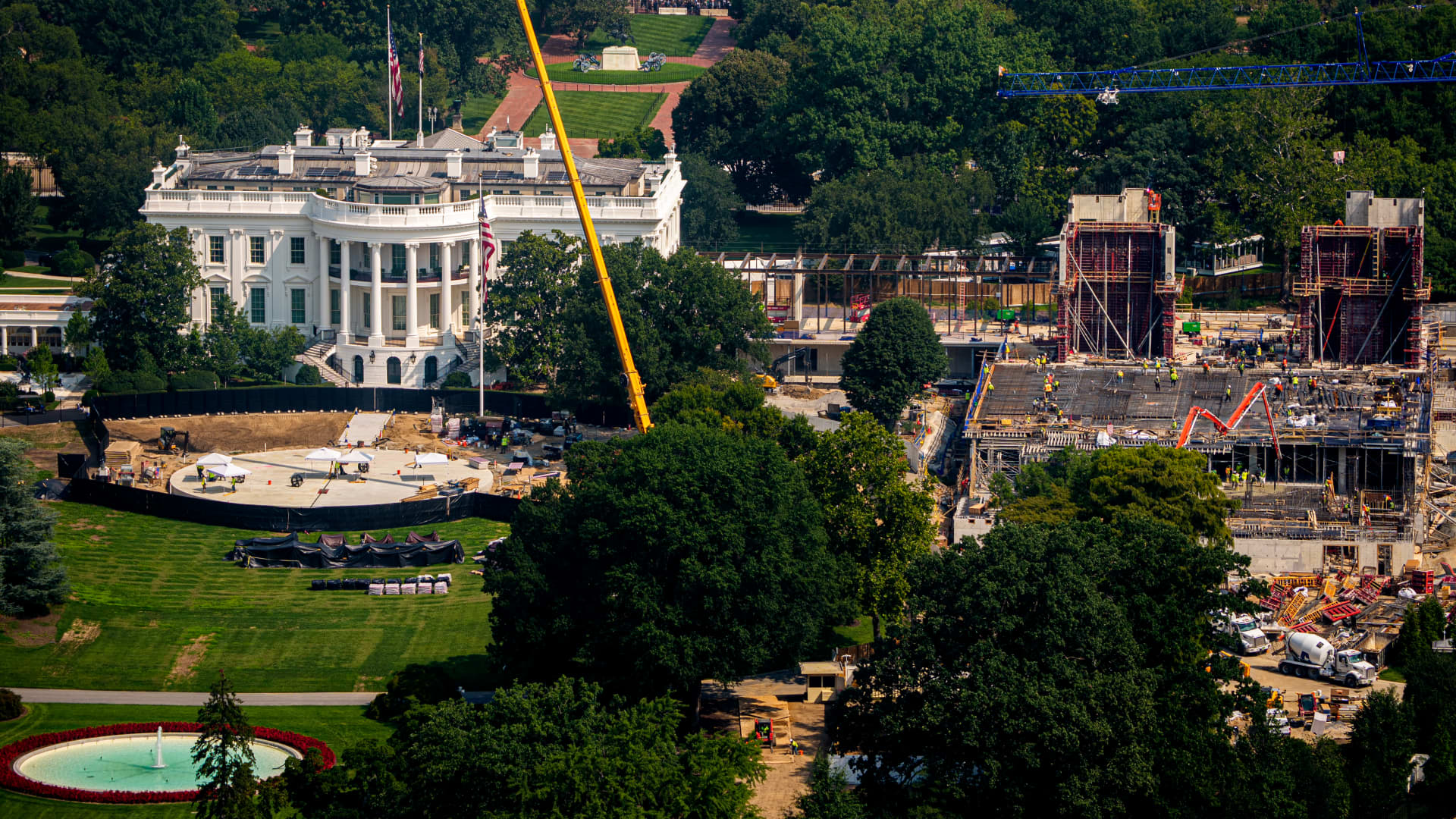
President Donald Trump has asked the Supreme Court to let White House ballroom construction continue while the legal challenge plays out. The Trump administration’s emergency request, filed Aug. 14, seeks to pause a lower-court restriction before it takes effect Aug. 21, according to CNBC and Associated Press reporting.
The immediate issue is procedural, not a final decision on whether the project is lawful. The administration wants the justices to issue a stay, meaning a temporary freeze of the lower-court order while the appeal proceeds. Without that relief, a ruling by the U.S. Court of Appeals for the D.C. Circuit will restrict most aboveground work on the project.
The fight concerns a proposed 90,000-square-foot ballroom at the former East Wing site. The project is estimated to cost $400 million, according to the Associated Press report carried by WTTW.
What would the Supreme Court decision mean for ballroom construction?
A Supreme Court stay would allow the administration to continue the construction it says is needed while the broader litigation continues. If the court does not intervene before Aug. 21, the D.C. Circuit’s order will take effect and generally halt aboveground ballroom construction.
Some work is allowed under the existing lower-court order. A federal district judge permitted underground construction tied to security, including bunkers, military installations and medical facilities. The order also allows aboveground work necessary to protect those facilities, according to USA Today.
Why did lower courts restrict the project?
The D.C. Circuit, in a 2-1 decision issued Aug. 7, upheld the district court’s restriction on aboveground construction. The appellate majority concluded that Congress had not approved the ballroom project and said the decision whether to build it belonged to Congress, according to the Associated Press report.
The National Trust for Historic Preservation sued over the construction. The administration has challenged the group’s legal standing, which is the requirement that a plaintiff show it has a valid basis to bring a case. Judge Neomi Rao dissented from the D.C. Circuit ruling, saying the preservationist group lacked that right to sue, the AP report said.
The administration’s argument
Solicitor General D. John Sauer told the Supreme Court that stopping the work would disrupt what the administration describes as an integrated military complex and create national-security risks. The administration maintains that the president has authority to renovate and secure the White House, and argues that leaving the site in its current construction state makes the building harder to protect.
Those are the government’s arguments, not findings adopted by the lower courts. The justices have not indicated how they will rule on the emergency application or on the underlying dispute over congressional authorization.
This story draws on original reporting from CNBC.


