Trump tariffs ads target Democrats in competitive House races
The NRCC is running digital ads in 15 districts attacking Democrats who oppose Trump’s tariffs, making trade a midterm campaign issue.
By Maya Okafor · Markets Writer
· 3 min read
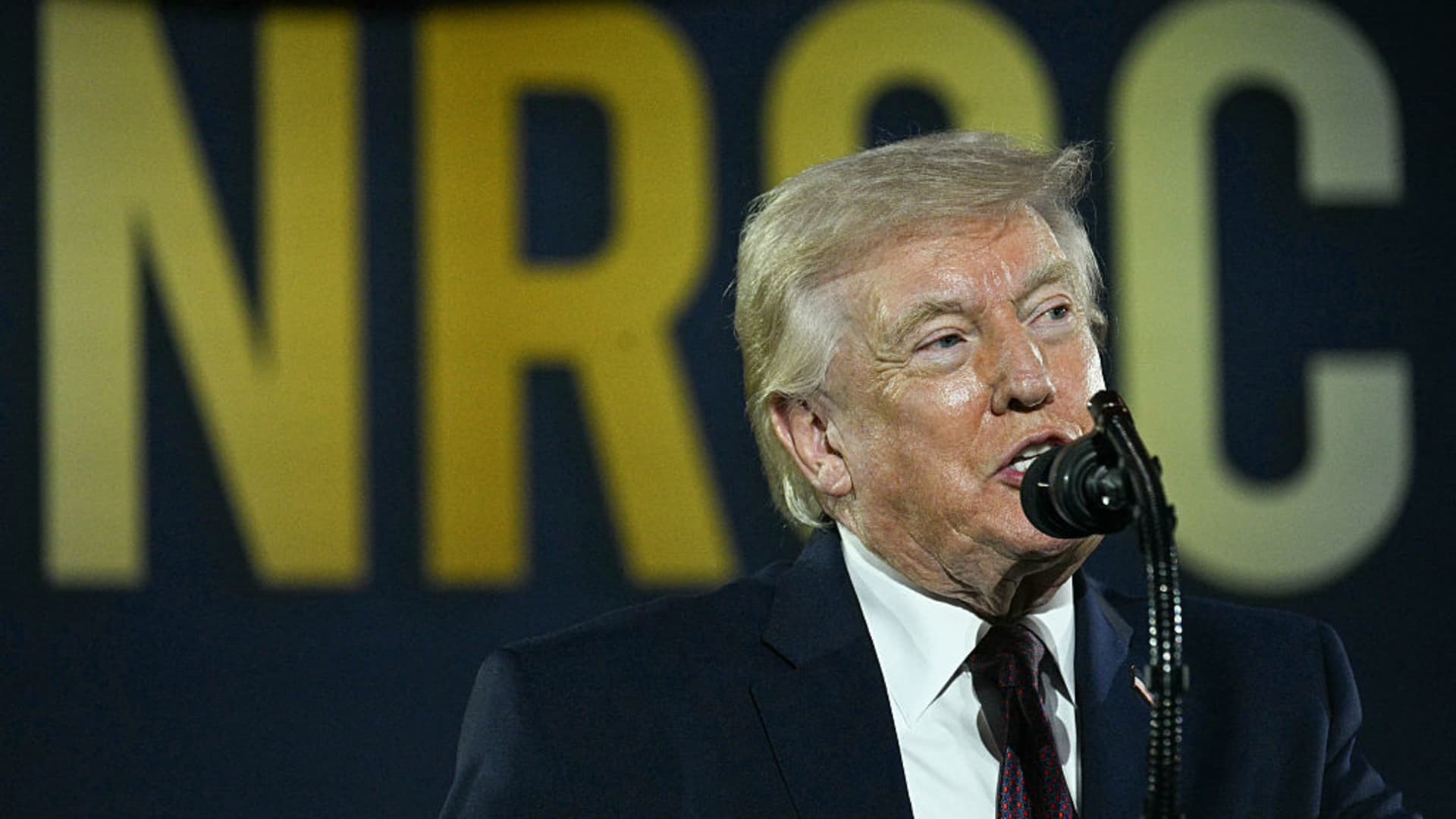
The National Republican Congressional Committee is putting Trump tariffs ads into competitive House races, betting that trade policy can help Republicans defend their narrow majority. For investors and consumers, the campaign puts a pocketbook issue, import taxes that can affect prices, inflation and company costs, back at the center of the midterm fight.
The NRCC launched the digital campaign Tuesday, targeting vulnerable House Democrats and Democratic candidates who have opposed President Donald Trump’s tariffs on China and other countries, CNBC reported. The ads are set to run on social media in 15 districts across California, Maine, Michigan, Missouri, Nevada, Ohio and Pennsylvania.
The ads try to cast Democratic opposition to the tariffs as support for China. According to CNBC, the creative places the words “China first. America last” next to images of battleground Democrats.
NRCC spokesperson Mike Marinella said in a statement that House Democrats faced a choice between “American workers” and “Communist China,” adding, “They chose China. Voters won’t forget who stood with American workers and who stood with Beijing.” The committee described the campaign as a modest ad buy, CNBC reported, but did not disclose how much it is spending.
Why are Republicans running ads on Trump tariffs?
Republicans are using the ads to turn Democratic criticism of Trump’s trade policy into a campaign liability with fewer than 100 days before the 2026 midterm elections. The move signals that the party sees tariffs as an issue it can use in swing districts, even though Trump’s trade policy has divided voters and some Republicans in Congress.
A tariff is an import duty placed on goods entering the country. Trump has argued that tariffs raise revenue and help U.S. businesses compete, while critics say the costs can flow through to American consumers and producers.
Democrats targeted by the ads have generally opposed the import duties by arguing they raise prices for households, hurt farmers and strain relations with U.S. allies, CNBC reported. Some Democrats have also said trade policy should still be used against adversaries such as China, but not through the broad tariff approach used by the White House.
Trump has made tariffs a central part of his second-term economic agenda. After the Supreme Court struck down many earlier levies this year, the White House recently reimposed new duties on dozens of countries and the European Union. On Friday, the White House announced tariffs on 60 trade partners, including China, setting rates between 10% and 12.5% and citing alleged labor violations, CNBC reported.
The politics are complicated for Republicans. CNBC’s All America Economic Survey of 1,000 registered voters in July found that 60% disapproved of Trump’s handling of the economy, while 73% described the economy as only fair or poor. A Harris poll conducted in late February for The Guardian found that seven in 10 Americans said Trump’s tariffs had led to higher prices.
Some business groups support the policy. Jon Toomey, president of the Coalition for a Prosperous America, said after the latest tariff announcement that the administration’s labor tariff action recognized that “the unlimited duty-free tariff era is over.” The group represents U.S. manufacturers that favor more federal protection from foreign competition.
Several Democrats in the NRCC campaign have already taken public positions against parts of Trump’s tariff agenda. Reps. Emanuel Cleaver of Missouri, Dina Titus of Nevada and Emilia Sykes of Ohio voted to overturn Trump’s Canada tariffs, CNBC reported. Cleaver has said China tariffs have hurt farmers, while Titus and Rep. Susie Lee of Nevada have criticized the broad use of tariffs.
Other targets include Pennsylvania Democratic candidates Paige Cognetti and Janelle Stelson, who are running against Republican incumbents and have argued that Americans bear tariff costs. Eric Chung, a Democratic candidate in Michigan’s 10th District, says on his campaign site that tariffs can be “useful tools” but should not be used constantly, adding that economic incentives can also help bring industry back.
This story draws on original reporting from CNBC.


