Trump tariffs lawsuit challenges new duties on more than 80 countries
Two small businesses sued hours after new Trump tariffs began, arguing Section 301 cannot revive a global tariff plan courts rejected.
By Maya Okafor · Markets Writer
· 4 min read
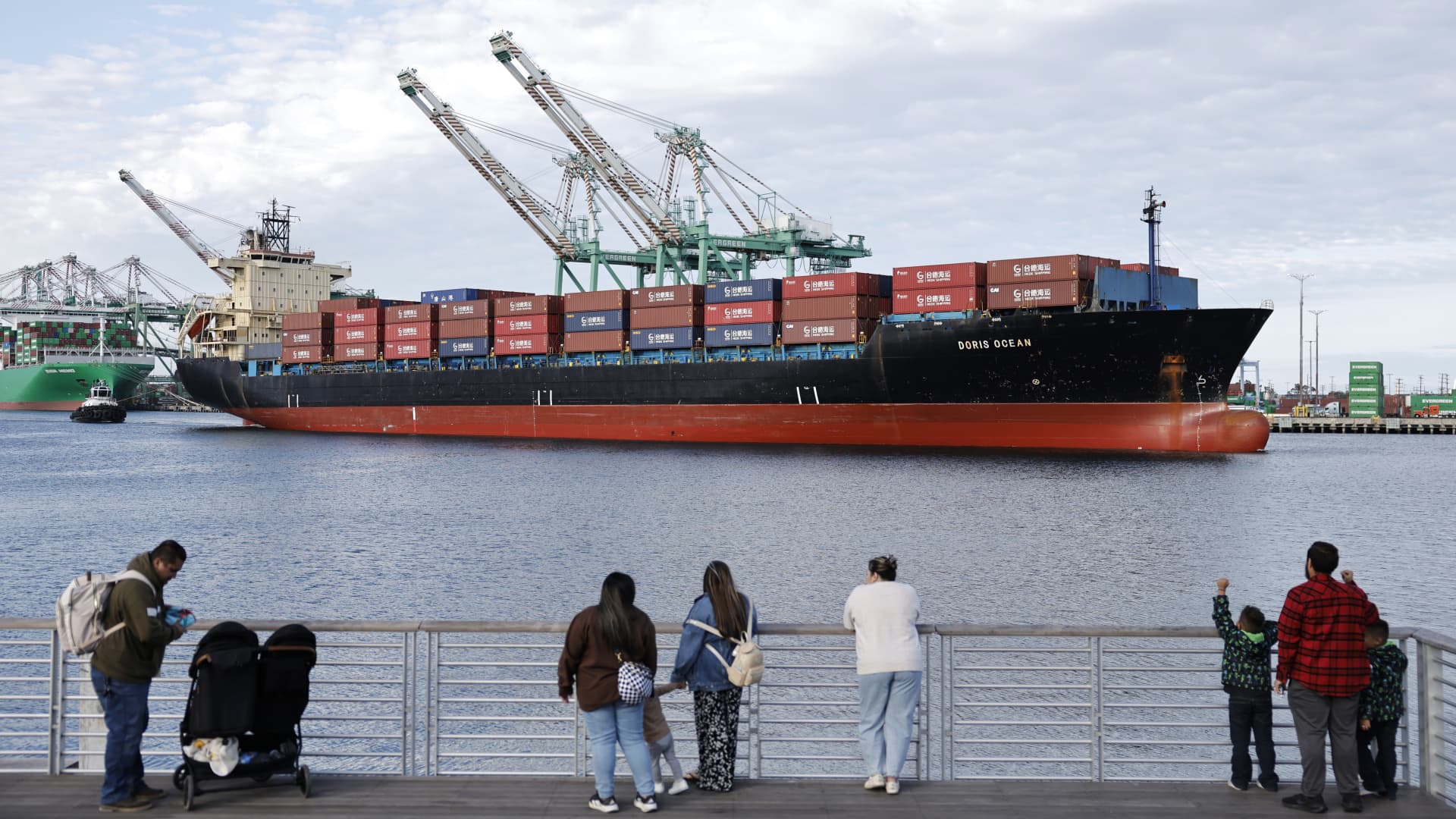
A new Trump tariffs lawsuit hit federal trade court just hours after the administration began collecting duties on imports from more than 80 countries. For retail investors, the fight matters because tariffs are taxes on imported goods, and they can flow through to company costs, consumer prices and margins.
The Trump administration imposed the new duties Friday, saying the targeted trading partners had not done enough to stop forced labor practices, CNBC reported. The tariffs cover countries that account for 99.4% of U.S. trade and were issued under Section 301 of the Trade Act of 1974, a law that lets the U.S. respond to unfair foreign trade practices with measures such as import levies.
Section 301 has been used across administrations, including against China during Trump’s first term. The dispute now is whether the law can support tariffs this broad after courts rejected an earlier global tariff program.
Why are the Trump tariffs being sued over?
Two small businesses sued President Donald Trump and his administration in the U.S. Court of International Trade, according to CNBC. The complaint argues the administration is using Section 301 to preserve a wide tariff system similar to one the Supreme Court rejected five months earlier.
The earlier tariffs were imposed under the International Emergency Economic Powers Act, or IEEPA. The Supreme Court ruled on Feb. 20 that IEEPA did not authorize Trump to impose those tariffs on nearly every other country, CNBC reported.
After that ruling, Trump announced another set of tariffs under Section 122 of the 1974 trade law, CNBC reported. Those duties had an end date, and the new Section 301 tariffs took effect as that prior batch expired, according to the lawsuit.
The case was filed by the Liberty Justice Center, the legal nonprofit that also represented plaintiffs in the successful challenge to Trump’s use of IEEPA, CNBC reported. The group argues the administration cannot keep a global tariff policy intact by shifting from one statute to another.
What is Section 301?
Section 301 is a trade enforcement tool that allows the U.S. government to investigate foreign actions it considers unfair and respond with penalties, including tariffs. A tariff raises the cost of bringing goods into the country, so importers, retailers and manufacturers may absorb the cost or pass some of it to customers.
Peter Harrell, a visiting scholar at Georgetown University Law Center’s Institute of International Economic Law, told CNBC that Trump is using Section 301 in a different way than the statute was designed for. Harrell said the law was not meant to let a president broadly rewrite the tariff schedule with lasting duties, and he said the new approach could be blocked in court.
Kimberly Clausing, a UCLA School of Law tax professor and senior fellow at the Peterson Institute for International Economics, told CNBC by email that she views the Section 301 tariffs as unlawful. Clausing said the forced labor rationale appears to be a pretext for recreating the IEEPA tariff structure and said she sees no evidence tying this trade action to the stated forced labor goal.
Alan Wolff, another Peterson Institute senior fellow, wrote in a blog post that the Supreme Court would likely reject the forced-labor tariffs. Wolff said Section 301 retaliation requires foreign acts or policies to be found to burden U.S. commerce, and he argued that standard is not clearly met for the targeted countries.
Other trade specialists were more cautious. Greta Peisch, a former general counsel for the Office of the U.S. Trade Representative and a partner at Wiley Rein, told CNBC that the administration followed Section 301 procedures and that the law gives the government wide flexibility.
Andrew Siciliano, global and U.S. head of trade and customs at KPMG, told CNBC that Section 301’s long history may make the tariffs harder to undo. He said companies should plan around the tariffs now in place rather than assume a fast reversal.
A senior administration official told reporters Thursday that forced labor has been a long-running focus for Trump and said the timing was chosen to avoid complexity, CNBC reported. CNBC also reported that a spokesperson for the Office of the U.S. Trade Representative did not immediately respond to its request for comment on the lawsuit.
This story draws on original reporting from CNBC.