Trump tariffs Supreme Court fight widens as new duties take effect
Trump said new tariffs can achieve what earlier duties did, as a lawsuit challenges whether the administration is reviving an illegal trade regime.
By Maya Okafor · Markets Writer
· 3 min read
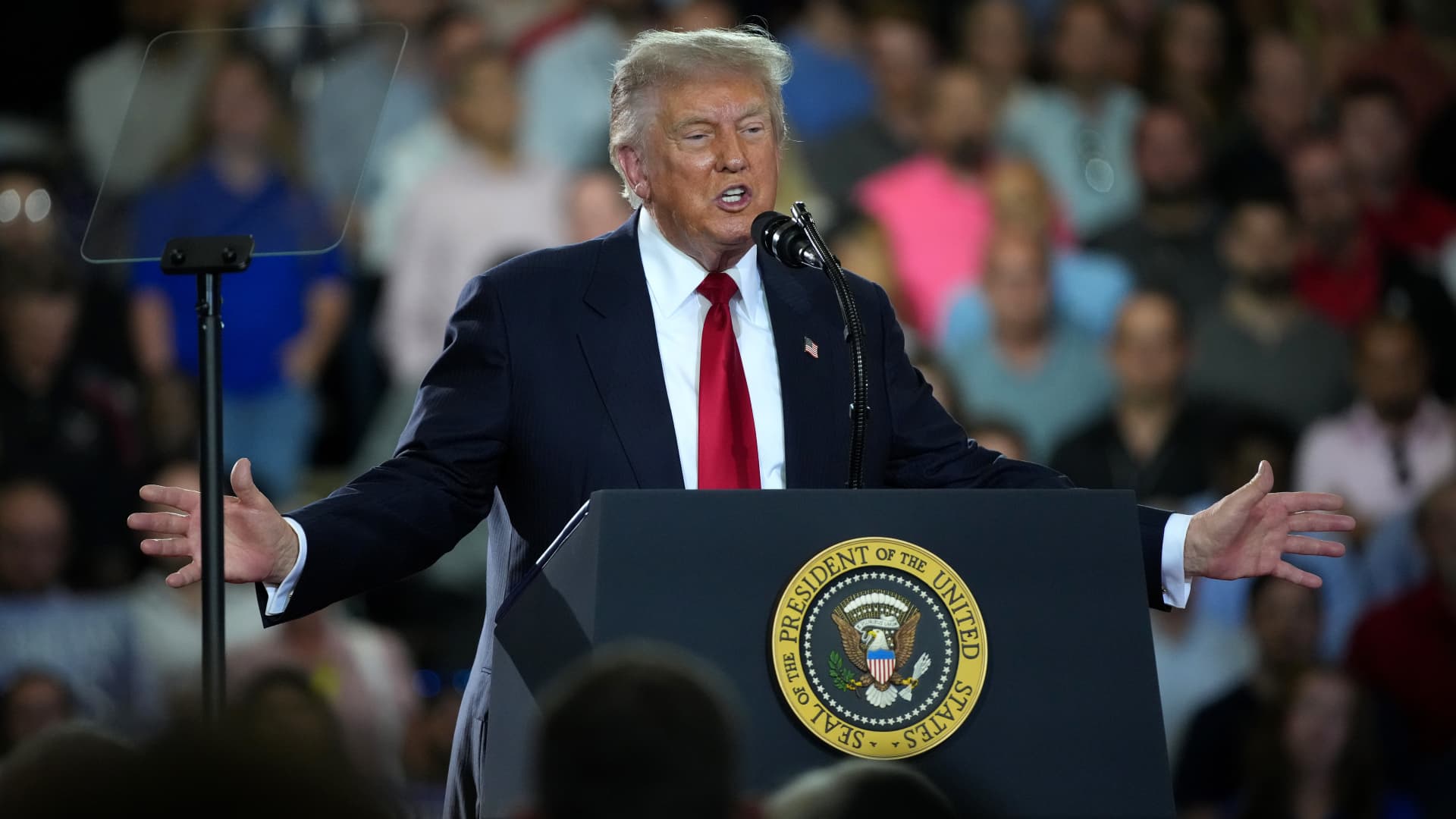
President Donald Trump linked his new tariff push to the Trump tariffs Supreme Court fight that knocked out an earlier version of his trade program. For investors and consumers, the issue is direct: tariffs are taxes on imported goods, and they can affect company costs, product prices and trade-sensitive sectors.
Trump told Fox News on Tuesday that the Supreme Court had forced him to use a more difficult route after it ruled against his prior tariff plan in what he called a close decision. He said he had “other ways of doing the same thing,” though he described the process as more cumbersome.
The comment came four days after a federal lawsuit accused the Trump administration of relying on different laws as a cover to rebuild the broad tariff structure that courts had already rejected. The suit argues that the newest duties are meant to preserve substantially the same trade regime that the Supreme Court and another court said Congress had not authorized.
What are Trump’s new tariffs?
The Trump administration on Friday imposed tariffs of 10% to 12.5% on goods from more than 80 countries, saying those trading partners had not done enough to block the use of forced labor. The duties took effect as Trump’s worldwide 10% tariff reached its 150-day limit and expired.
Tariffs raise the cost of imported goods at the border. Companies may absorb those costs, pass some of them to customers through higher prices, or change suppliers, which is why trade policy can show up in earnings, margins and inflation data.
The new forced-labor tariffs followed several earlier rounds of trade measures. On Feb. 20, Trump announced a temporary worldwide 10% tariff on the same day the Supreme Court struck down his earlier “liberation day” duties. That prior plan included a near-global 10% baseline tariff and higher country-specific rates for dozens of nations.
Each of the three tariff efforts relied on a different legal authority, according to the lawsuit. A senior administration official, speaking to reporters Thursday, denied that the forced-labor rationale was an excuse to bring back the “liberation day” policy. The official said Trump had made forced labor a priority for years and said the timing was picked “to avoid complexity,” not to replace the expiring temporary tariff.
Trump also questions the USMCA trade deal
Trump also told Fox News he would prefer for the U.S. to leave the trade agreement with Canada and Mexico rather than renegotiate it. The deal, known as the U.S.-Mexico-Canada Agreement, or USMCA, governs trade among the three North American economies.
Asked whether he still wanted to update the agreement, Trump said he would “rather be independent.” He added that Mexico and Canada need the U.S. more than the U.S. needs them.
The U.S. decided this month not to renew the USMCA, according to CNBC. That adds another trade risk for companies with North American supply chains, including automakers and manufacturers that move parts and finished goods across borders.
Trump rejected concerns that tariffs could damage the economy as cost-of-living issues become a focus before the midterm elections. He told Fox News that tariffs had made the country “a fortune” and claimed they had helped stop numerous wars.
The Office of the U.S. Trade Representative did not immediately respond to CNBC’s request for comment on Trump’s remarks.
This story draws on original reporting from CNBC.


