TSMC’s U.S. chip buildout puts pressure on margins
TSMC is spending heavily on U.S. chip production as Trump pushes domestic manufacturing, adding costs even as AI demand keeps profits strong.
By Dev Ramirez · Crypto Correspondent
· 4 min read
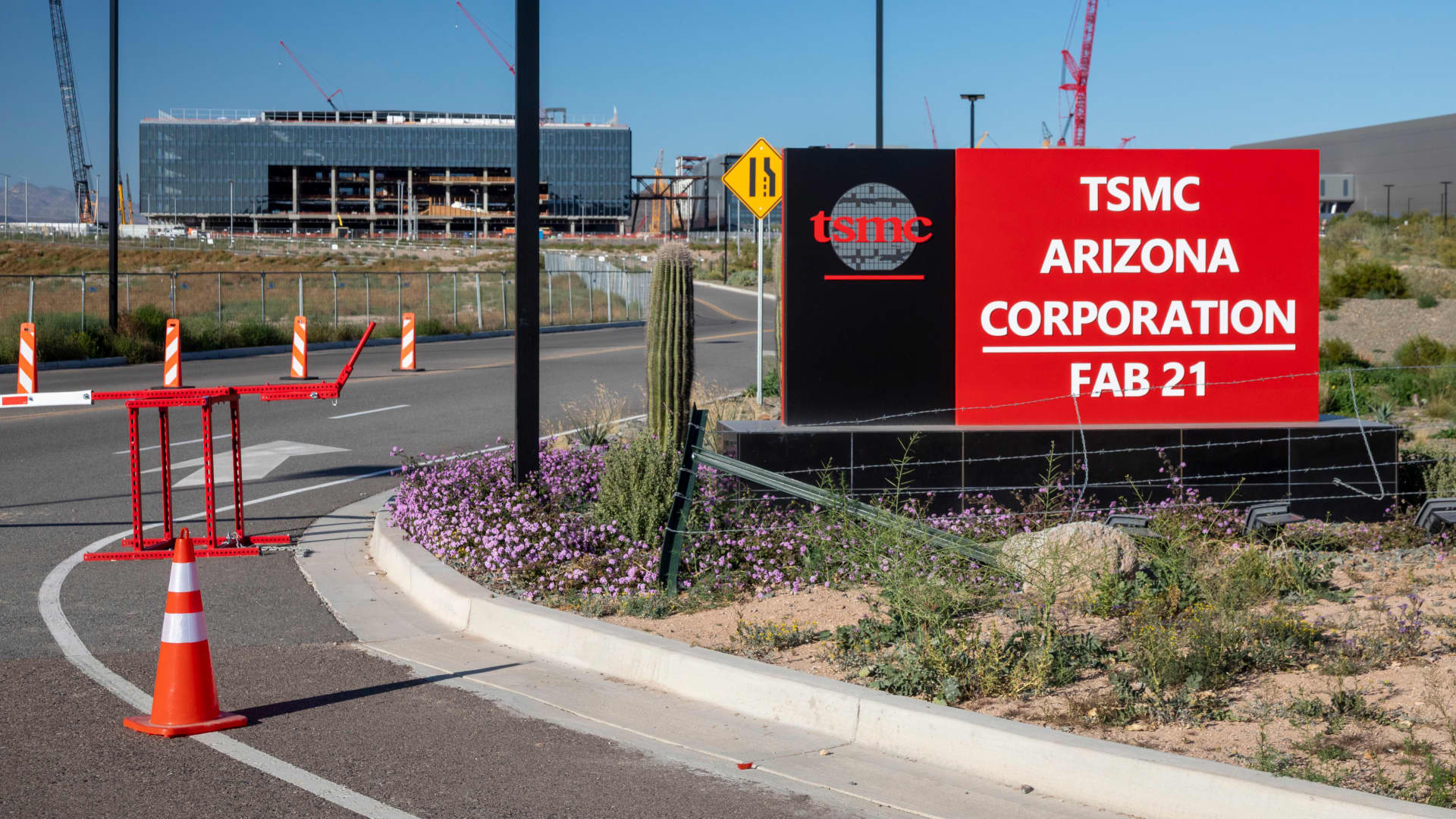
TSMC’s push to make more advanced chips in the U.S. is starting to show up in its margins, a key profitability measure investors watch closely. The Taiwan-based chipmaker is still riding powerful artificial intelligence demand, but building factories outside Taiwan costs more and can pull down returns while those sites scale up.
President Donald Trump has pressed companies to manufacture more products in the U.S. since returning to office in 2025, including by threatening tariffs on companies that keep production overseas, CNBC reported. Since then, TSMC has announced $200 billion in U.S. manufacturing commitments, including a $100 billion plan disclosed last week for advanced chip production and packaging facilities.
TSMC is the world’s largest contract chipmaker, meaning it manufactures semiconductors designed by other companies. Its factories are central to the AI supply chain because advanced chips used for AI computing require leading-edge production technology.
AI demand is strong, but U.S. fabs are costly
TSMC reported second-quarter profit growth of 77.4% from a year earlier, according to CNBC, topping estimates and setting another quarterly record. The company’s market value has also more than doubled over the past 12 months, helped by investor enthusiasm around AI-related chip demand.
That strength has not erased the cost issue. Chief Financial Officer Wendell Huang said on the company’s earnings call that gross margin came in above guidance, but overseas factory expansion diluted margins. Gross margin measures how much revenue remains after production costs, before other expenses.
Huang said that margin pressure from overseas fabrication plants, or fabs, will continue for the next several years as those facilities ramp up. A fab is a semiconductor factory, and ramping up means moving from early production toward higher-volume output.
TSMC expects overseas fab expansion to reduce gross margin by 2 to 3 percentage points in the early stages and by 3 to 4 percentage points in later stages, Huang said. The company’s second-quarter gross margin was 67.7%, up from 66.2% in the first quarter.
Washington sees the spending as a policy win
A White House spokesperson told CNBC that “trillions of dollars in investments by TSMC and other semiconductor companies” are tied to Trump’s trade and economic agenda, including a trade deal with Taiwan and revised CHIPS program investments.
Commerce Secretary Howard Lutnick also framed TSMC’s U.S. expansion as a result of the administration’s policy. In a statement, he said Trump’s leadership is pushing companies to invest in American manufacturing and said TSMC’s additional $100 billion investment would create tens of thousands of U.S. jobs and bring advanced semiconductor manufacturing back to America.
TSMC is not the only Asian chip company adding U.S. capacity. CNBC reported that others, including SK Hynix, are developing U.S. facilities. TSMC, however, has made the largest commitment among them.
Analysts say customers may absorb some costs
Making chips in the U.S. is more expensive than making them in Taiwan, analysts told CNBC. Phelix Lee, senior equity analyst at Morningstar, estimated that TSMC’s U.S.-made chips could cost 20% to 50% more than chips produced in Taiwan, depending on subsidies, tax credits and other cost swings. Lee said he expects customers to absorb more of those higher production costs.
Nikkei reported Tuesday that TSMC is set to raise prices for advanced and mature chip production by up to 10% in 2027. TSMC told CNBC it does not comment on pricing.
Gaurav Gupta, a vice president analyst at Gartner, told CNBC that TSMC benefits from a lack of major competition. He said customers seeking supply diversification or following U.S. government mandates to buy locally made chips may have to absorb a large share of higher costs.
Gil Luria, head of technology research at D.A. Davidson, told CNBC that TSMC can afford the margin hit because its overall margins are high. Morningstar’s Lee added that demand for geographic diversification grew after Covid disrupted global supply chains, and he expects pressure for U.S.-made chips to continue beyond Trump.
This story draws on original reporting from CNBC.


