UN maritime agency rejects Hormuz transit tolls after Trump fee demand
The IMO said mandatory fees for passage through the Strait of Hormuz have no legal basis as Trump seeks cargo-based payments for U.S. Navy protection.
By Dev Ramirez · Crypto Correspondent
· 3 min read
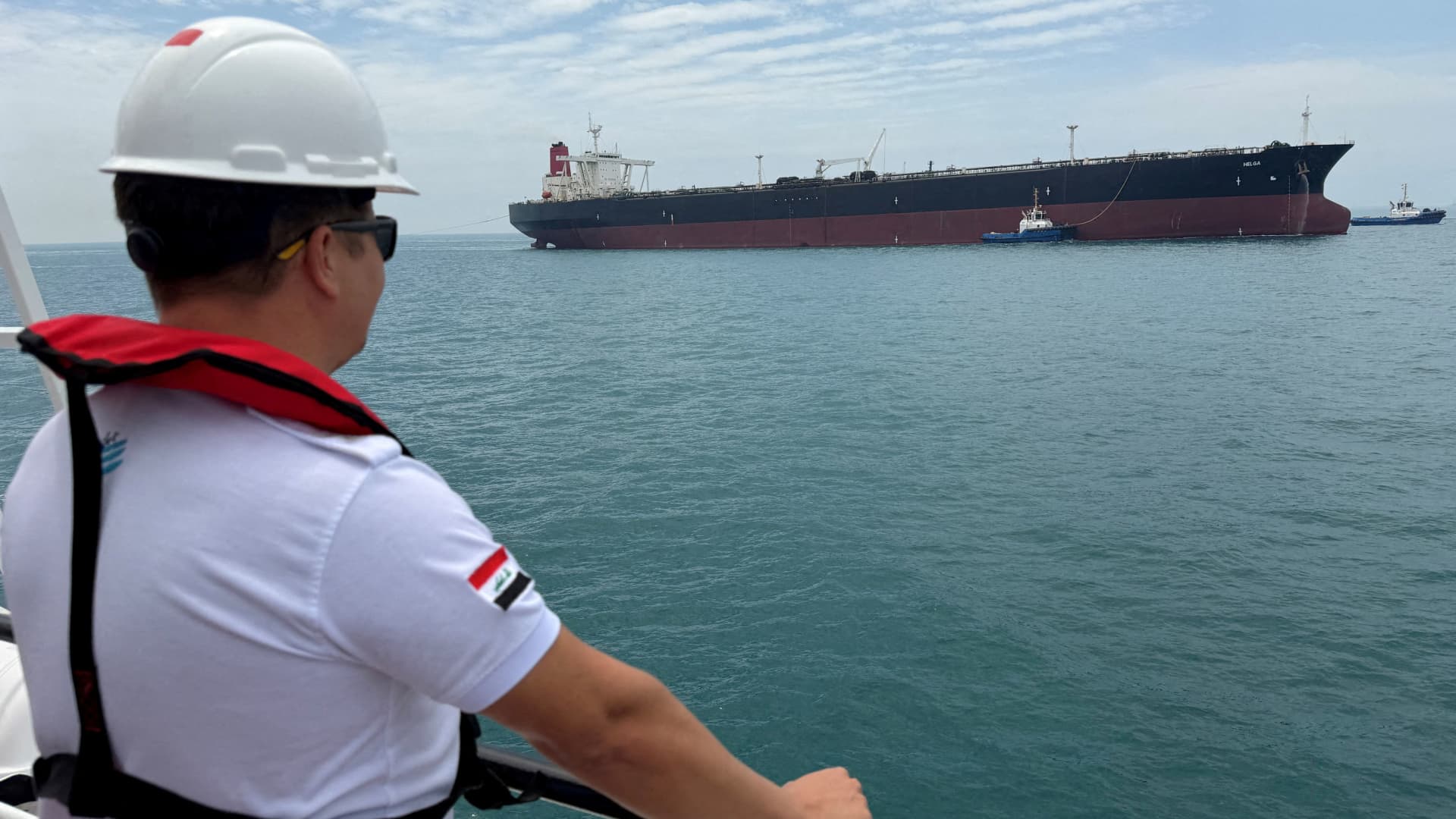
The United Nations maritime agency pushed back Monday against charging ships to pass through the Strait of Hormuz, a dispute that matters for investors because CNBC reported ship traffic through the key waterway has already fallen amid U.S.-Iran tensions. A toll, meaning a required fee for passage, could add another layer of uncertainty for shipping companies and businesses that rely on global trade routes.
The International Maritime Organization said it opposes fees for vessels moving through straits used for international navigation. A spokesperson for the agency said there is “no legal basis” for mandatory tolls charged only because a ship is passing through a strait.
The statement came after President Donald Trump said Monday that the U.S. military would protect ship traffic through Hormuz, while seeking reimbursement equal to 20% of the value of all cargo transported through the strait. Trump also said he had ordered the U.S. Navy to restart what he called an Iranian blockade.
Trump said the Strait of Hormuz would stay open “with or without Iran,” and said the blockade would stop only Iranian ships or Iran’s customers from entering or leaving, while other countries would have access to the waterway.
Why the legal issue is central
James Kraska, an international maritime law expert at the U.S. Naval War College, told CNBC that tolls for transit through Hormuz violate international law. Kraska said the world has an unimpeded right to pass through the strait.
The Strait of Hormuz is treated as a strait used for international navigation, a legal category that gives ships transit rights through the passage. The IMO’s position is that countries cannot create a mandatory fee just because a vessel uses that route.
Iran has previously demanded tolls from ships seeking safe passage through Hormuz, according to CNBC. Tehran agreed not to charge such a toll for 60 days under a memorandum of understanding signed with the U.S. on June 17.
Shipping companies are watching the route
Nordic American Tankers CEO Herbjorn Hansson told CNBC that he views Trump’s proposed 20% fee as unrealistic. Hansson said the U.S. and Iran need to agree on how the strait will be administered.
“Iran is suffering, America is suffering, 192 countries outside the Hormuz Strait are suffering,” Hansson said in the CNBC interview.
CNBC reported that the security situation in Hormuz has worsened since Iran attacked multiple commercial ships moving through the strait over the past week. Tehran is demanding that ships use a northern route through Iranian territorial waters, while the U.S. Navy has been helping vessels use a southern corridor along Oman’s coast.
The U.S. has launched several rounds of airstrikes against Iran in response to the ship attacks, according to CNBC. Tehran has answered by firing on U.S. allies in the Gulf.
Kraska said Iran cannot unilaterally change traffic routes through Hormuz under the Convention on the International Maritime Organization and the International Convention for the Safety of Life at Sea. He said Iran is required under those treaties to follow the traditional route through Hormuz, known as the traffic separation scheme, which is the established system of lanes used to manage vessel movement safely.
This story draws on original reporting from CNBC.


