Unitree IPO puts humanoid robots’ business case to the test
Unitree raised $900 million at a roughly $9 billion valuation, but its robots still need to prove they can deliver repeatable paid work.
By Maya Okafor · Markets Writer
· 3 min read
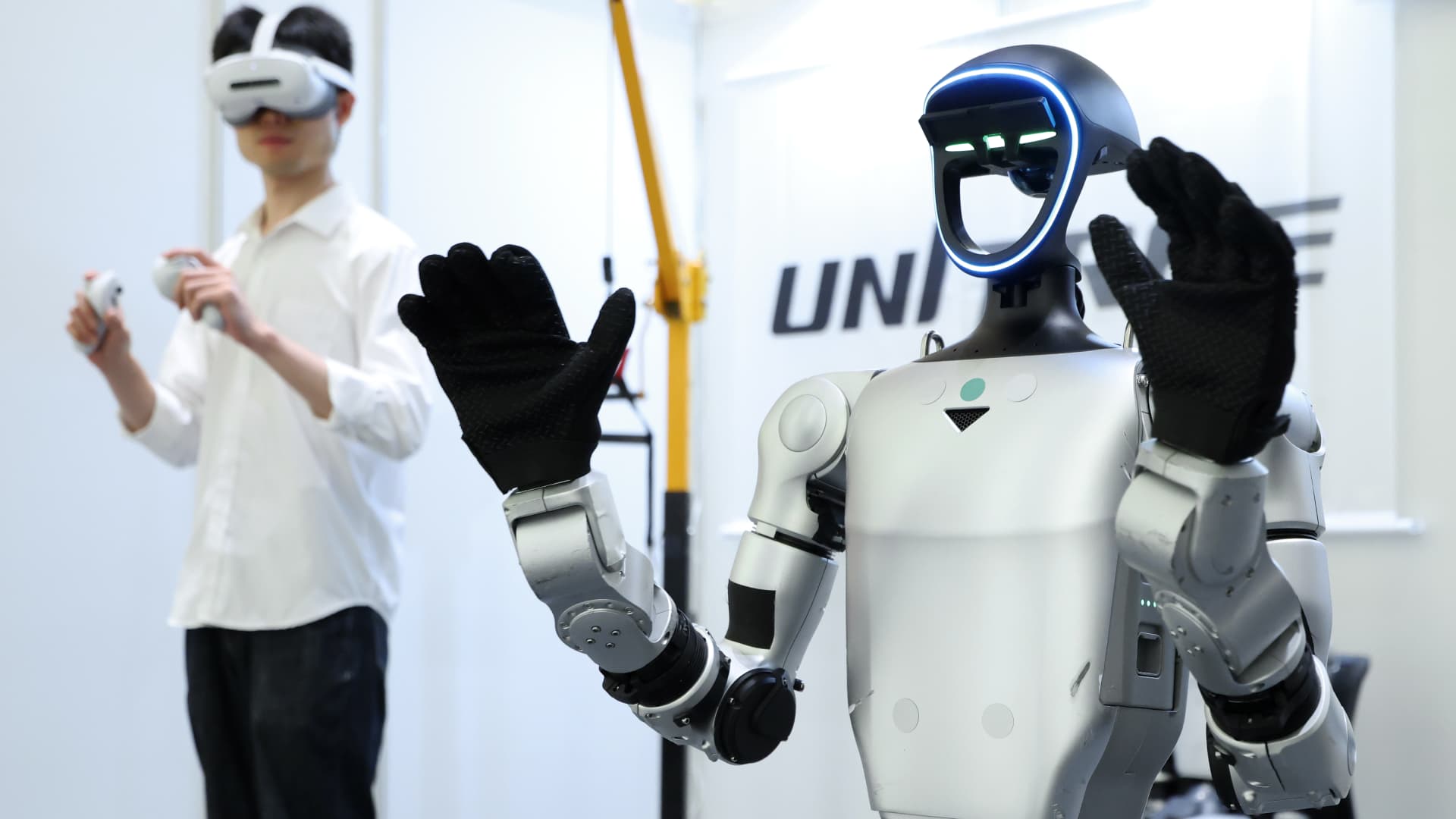
The Unitree IPO humanoid robots story is a test of whether striking robot demonstrations can turn into steady business. Unitree Robotics priced its shares at 150.8 yuan, or $22.40, raising $900 million at a valuation of about $9 billion, CNBC reported. The Hangzhou company is expected to begin trading on Shanghai’s STAR Market later this month.
Investors are responding to robots that can recover from falls and perform martial-arts-style moves. For an investor, the harder measure is whether a customer will repeatedly pay for a machine that can complete useful work reliably enough to justify its cost.
Unitree has evidence of momentum, but not yet of a broad, mature market. CNBC reported that its revenue more than quadrupled last year. Its adjusted first-quarter profit, however, dropped by more than 52% as research, development and marketing spending increased.
Can Unitree humanoid robots make money?
The available evidence suggests they may find paying customers in tightly controlled jobs, particularly industrial and logistics settings, but does not yet show a scalable profit model for general-purpose humanoids. Return on investment is the value a buyer gets from a machine compared with what it costs to buy, run and maintain it. That calculation remains under test for humanoid robots, according to analysts cited by CNBC.
China has meaningful advantages on the cost side. CNBC, citing Wood Mackenzie, reported that average humanoid prices fell 93% from 2020 to 2025, to $58,000. The research firm also said China accounted for more than 70% of global industrial-robot installations and nearly 90% of humanoids deployed in the prior year. Government support for manufacturers shifting from labor-intensive work toward automation is also drawing interest and funding, CNBC reported.
There are reported signs of buyer interest. The Associated Press reported that Chinese manufacturers say they have thousands of orders from government and private-sector customers. Matrix Robotics said it had received about 1,000 orders, including from coffee chains and hotels, though AP said the company had made only a few hundred units. Such order claims are different from evidence of recurring revenue or profitable deployment.
Unitree’s own sales mix shows the gap. A company filing cited by CNBC said nearly three-quarters of its humanoid revenue in the first nine months of 2025 came from research and education. Corporate tours accounted for more than half of its still-small industrial business.
The technical limits are central to the economics. Unitree warned in its prospectus that commercial adoption could proceed more slowly than expected because robotic hands are not yet precise or durable enough for sustained use. Analysts cited by CNBC said robots generally need training for each assigned task and can handle only a limited set of jobs before recharging. Experts interviewed by AP said they also struggle in messy, unpredictable environments.
That leaves a clearer near-term path in narrow, structured workplaces. Yet conventional robotic arms already handle many repetitive factory jobs, AP reported. Unitree’s listing demonstrates strong investor appetite and improving hardware economics; it does not settle whether humanoids can earn durable profits across a broad market.
This story draws on original reporting from CNBC.


