U.S.-China AI competition is an ecosystem contest, CNBC op-ed argues
Dewardric L. McNeal says China’s AI advances require a U.S. strategy beyond model benchmarks, though the op-ed provides no comparable data.
By Jordan Bell · Startups & Deals Reporter
· 3 min read
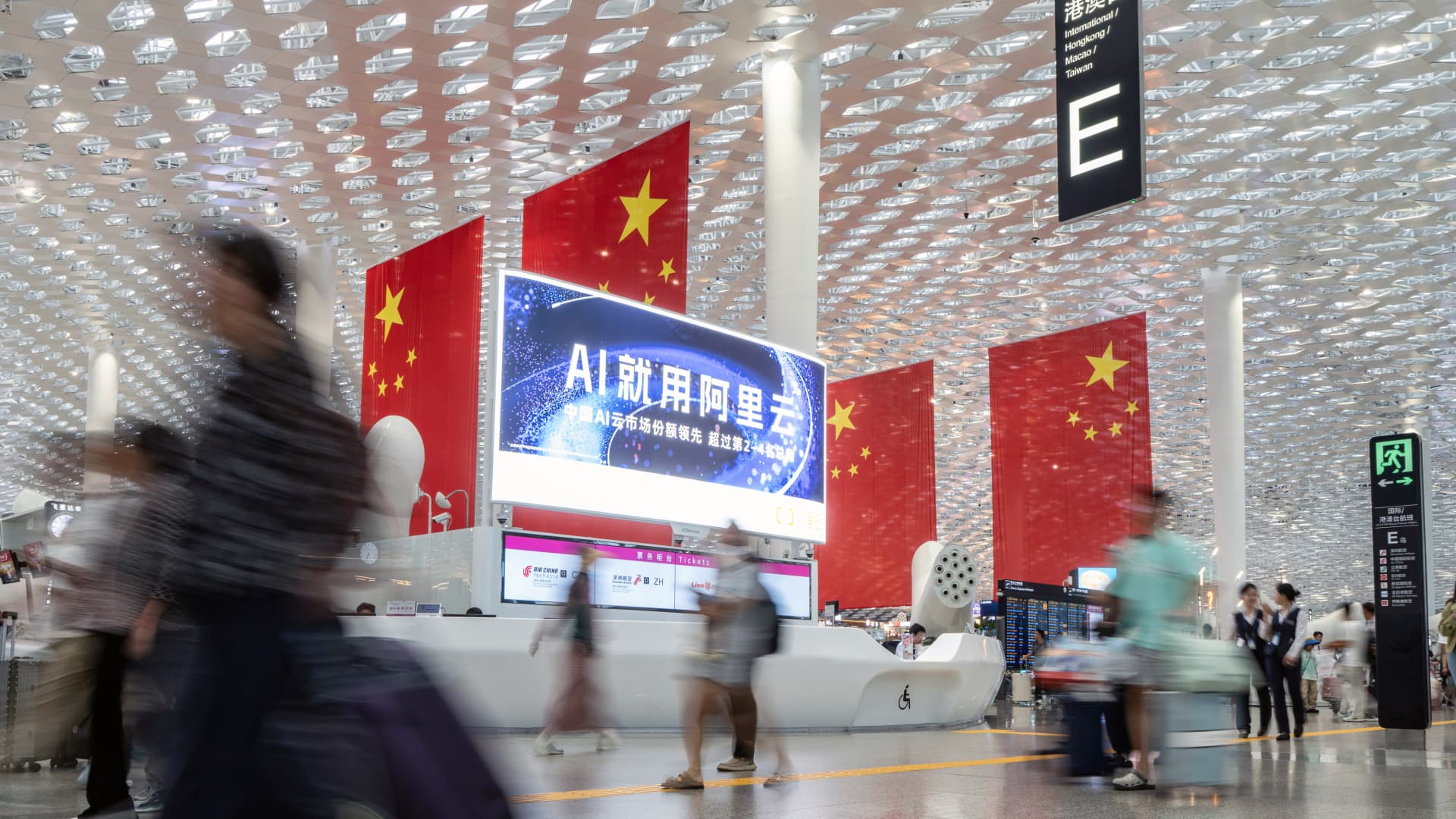
U.S.-China AI competition is no longer a contest that can be judged by a single chatbot release or benchmark score, according to a CNBC op-ed published Sunday by Dewardric L. McNeal. For investors following AI companies, the argument shifts attention from who has the strongest model today to who can make AI cheaper, easier to use and more widely adopted.
McNeal argues that China has narrowed America’s advantage through a group of companies rather than one isolated challenger. He cites DeepSeek, Moonshot AI’s Kimi K3, Alibaba’s Qwen models, Tencent’s Hunyuan, Zhipu AI and MiniMax as evidence of an AI sector producing competitive capabilities across multiple firms.
The claim that the U.S. lead is nearly gone is McNeal’s assessment, not a conclusion demonstrated by comparative data in the op-ed. The piece does not provide side-by-side benchmarks, adoption measures, investment totals or other data needed to establish a definitive ranking between the two countries.
What does U.S.-China AI competition involve beyond model performance?
McNeal’s framework includes model capability, cost, deployment, customization, financing, technical standards, developer adoption and international reach. Deployment means putting an AI system into practical use. Standards are the technical rules that can influence whether software and services work together across markets.
That broader scorecard matters because a company can build a capable model yet struggle to turn it into a widely used product. Conversely, lower-cost systems that are easier for developers and businesses to customize could gain reach even without leading every technical benchmark.
McNeal says U.S. policy has concentrated on preserving frontier innovation, alongside export controls, investment screening and restrictions on China’s access to advanced computing. He describes those tools as important, while arguing that they do not by themselves match China’s wider approach.
McNeal’s proposed lens: “ecosystem statecraft”
The author calls China’s approach “ecosystem statecraft,” meaning an effort to shape the conditions surrounding technology as well as the technology itself. In his definition, that combines industrial policy, financing, innovation, global standards, university curriculum direction, developer communities, diplomacy and commercial expansion.
McNeal argues that China’s longer-term technology plans predate Biden-era restrictions on advanced technology. He points to industrial policies, Five-Year Plans and national technology strategies that, in his view, laid the groundwork for the current AI push.
For readers assessing the argument, the useful question is whether each side can translate technical progress into affordable products, developer use and broad international adoption. The CNBC essay supplies a strategic thesis and examples of Chinese firms, but it leaves the underlying comparison open because it does not present the data necessary to measure those dimensions across both countries.
This story draws on original reporting from CNBC.


