2027 debt ceiling fight could give Democrats leverage over Trump
Democrats may gain leverage in a 2027 debt-limit vote, a potential standoff that could unsettle Treasury markets already facing high yields.
By Priya Nair · Economy Reporter
· 3 min read
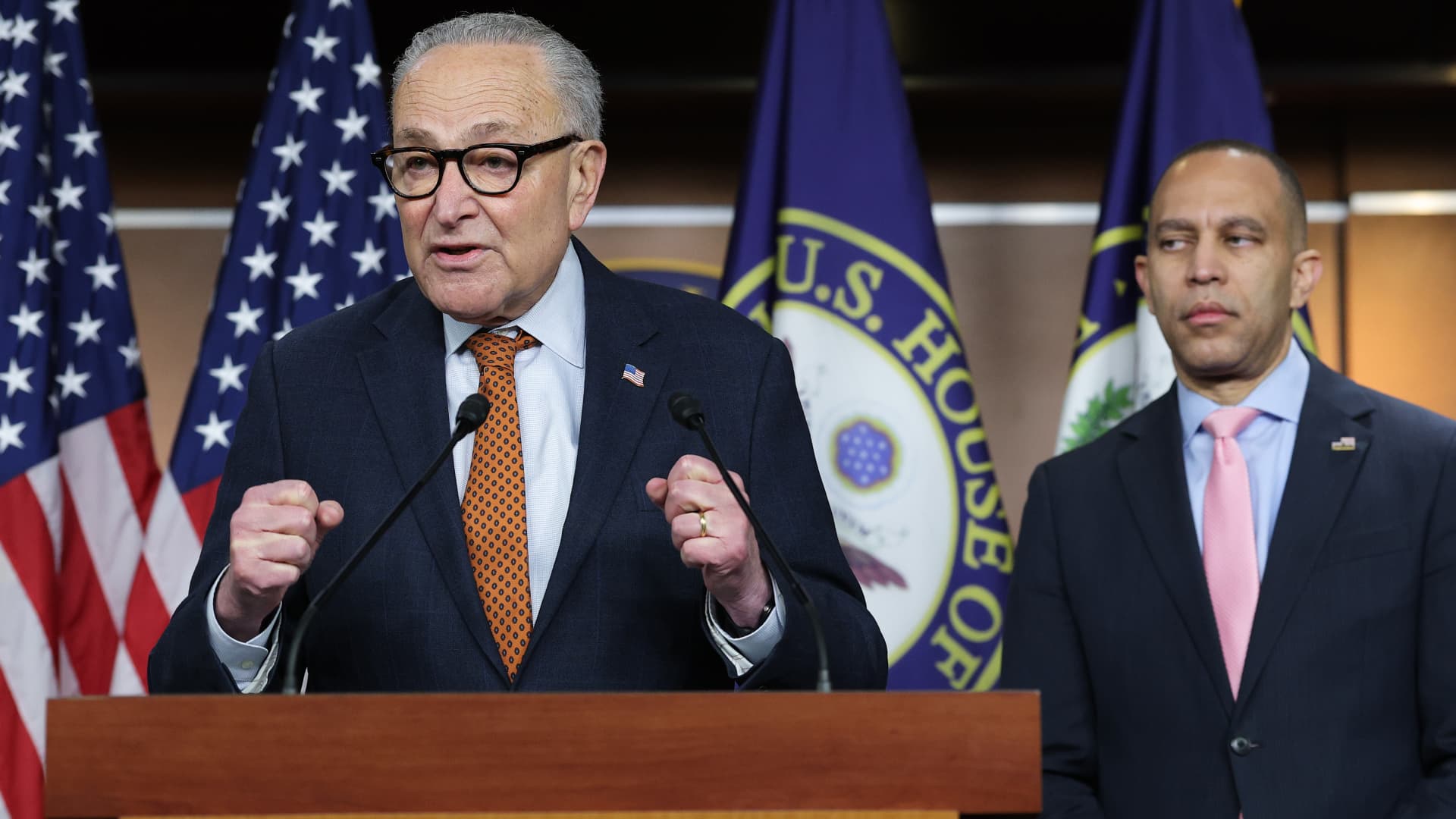
A 2027 debt ceiling fight could become Democrats’ most consequential point of leverage over President Donald Trump after the party’s sweep in the 2026 midterms, CNBC reported. For investors, the immediate issue is not a default that has happened, but the risk that a deadline-driven political dispute raises uncertainty in Treasury markets.
The leverage exists only if Republicans do not raise the borrowing limit before the incoming Democratic-majority Congress takes office. Trump has urged Republicans to settle the matter in the remaining weeks of their control, according to CNBC. Republicans could try to act through the budget process known as reconciliation, which can avoid needing Democratic votes, but CNBC said that would require unity within a divided Republican conference.
What is the 2027 debt ceiling fight?
The debt ceiling is the statutory cap on how much the Treasury Department can borrow to pay for spending that Congress has already approved. It does not authorize new spending. When the government reaches the limit, Treasury can use certain accounting measures for a time, but it eventually reaches an “X-date,” when it can no longer pay all federal obligations in full and on time.
Congress last set the limit in 2025, allowing Treasury to borrow up to $41.1 trillion, CNBC reported. Citing the Bipartisan Policy Center, CNBC said Treasury could reach its maximum borrowing capacity by midsummer 2027. Wall Street estimates cited by CNBC suggest Treasury’s measures could push the X-date into the fourth quarter of 2027.
The United States has not meaningfully breached the debt limit, according to CNBC. Jefferies Washington-policy chief Aniket Shah told the network that Wall Street broadly expects a compromise after volatility, though that is an expectation rather than a guaranteed outcome.
What could Democrats seek in a debt-limit deal?
No Democratic negotiating package has been set out in the reporting. CNBC said possible demands could include reversing 2025 Medicaid and other health-care cuts. A CNBC report republished by Democratic Underground also cited Goldman Sachs analysts as saying Democrats might seek limits on the Iran war or tariff rollbacks.
George Pollack of Signum Global Advisors said a corporate-tax increase was another possible compromise being discussed in some Washington circles, according to that repost. These are scenarios from analysts and commentators, not commitments by Democratic leaders or agreed terms with the White House.
Why investors are watching Treasury yields
A prolonged impasse could unsettle Treasury markets and increase concern about whether federal payments will be made on time, CNBC reported. Treasury securities sit at the center of global finance, and the Federal Reserve Bank of St. Louis’ FRED service says their yields serve as a benchmark for other borrowing costs, including mortgages.
Yields were already elevated on Nov. 4. The Federal Reserve’s H.15 release showed the 10-year Treasury yield at 4.90%, the 20-year yield at 5.30%, and the 30-year yield at 5.28%.
That backdrop makes the political process worth watching. The eventual date, the concessions sought and the shape of any agreement remain uncertain, but a dispute over the government’s ability to borrow would put a fresh focus on a market that investors use as a reference point across the economy.
This story draws on original reporting from CNBC.