Chinese carmakers gain ground with UK buyers
Chinese-built vehicle sales are rising fast in Britain, helped by lower prices, tech-heavy models and a tariff setup that differs from the EU.
By Dev Ramirez · Crypto Correspondent
· 3 min read
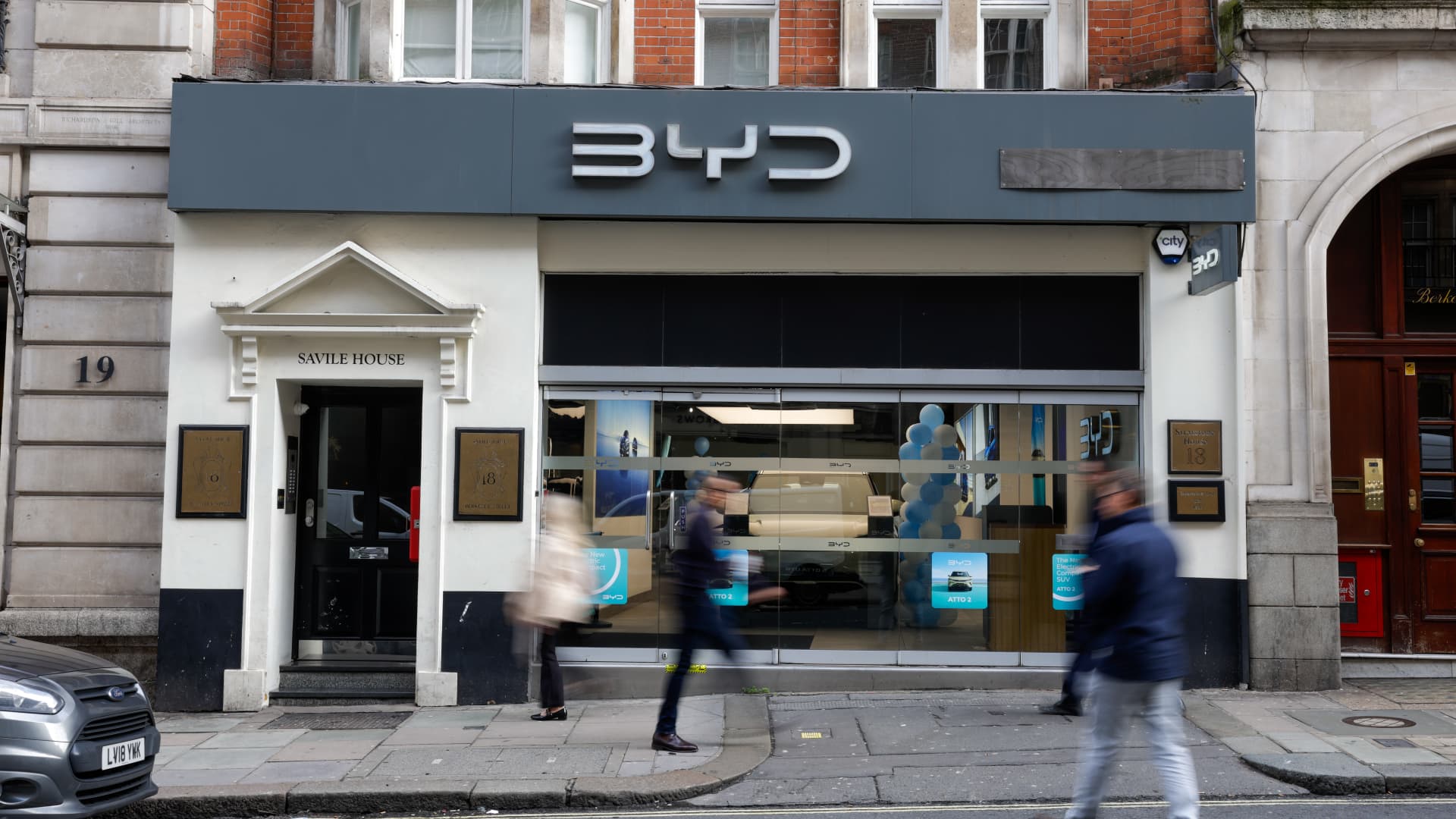
Chinese automakers are winning more UK drivers, and that raises the competitive pressure on established car brands fighting for electric and hybrid buyers. For everyday investors watching the auto sector, the shift shows how China’s export machine is moving from a factory story to a showroom story.
Sales of Chinese-built vehicles imported into the UK have climbed sharply over the past decade, according to Mobility Global, an automotive consulting firm cited by CNBC. British buyers purchased 384 such vehicles in 2015, 25,302 in 2020 and more than 285,000 last year, the firm said.
The appeal, according to buyers and analysts interviewed by CNBC, is a mix of price, equipment and technology. At Lipscomb Cars in Maidstone, England, a Geely dealership southeast of London that opened within the past year, recent buyer Izzy Woodrow said his new car is quiet, comfortable and well finished, with a technology setup he enjoys using.
Chris Smith, who visited the same dealer with Tracy Smith, told CNBC the attraction was value: the amount of equipment included compared with higher-priced models from more established brands.
Will Roberts, an analyst at automotive consulting firm Benchmark, told CNBC that brands such as BYD have moved beyond being a curiosity in the UK. Roberts said seeing a BYD on London Bridge a few years ago felt notable, while the brand’s presence now feels much more routine.
The UK has become a useful market for Chinese manufacturers for another reason: trade rules. CNBC reported that, unlike the European Union, the UK does not charge an extra tariff on plug-in hybrid electric vehicles. A tariff is a tax on imports. A plug-in hybrid combines a battery that can be charged from an outlet with a gasoline engine, giving drivers some electric range without relying only on charging infrastructure.
That difference gives Chinese brands a clearer path into a sizeable market where buyers are moving toward electrified vehicles and looking for cheaper options, Roberts told CNBC.
Price gaps are part of the story. CNBC reported that a Germany-built Volkswagen Tiguan plug-in hybrid sells in the UK for just over £43,000, or about $58,000, while a China-built BYD Seal U costs almost £10,000 less.
The export push comes as China’s domestic car market has cooled. In the first half of 2026, retail auto sales in China fell 26% from a year earlier, while auto exports rose 72%, according to the China Association of Automobile Manufacturers.
Executives at legacy automakers, including the so-called Big 3 in the United States, have said Chinese government subsidies help Chinese carmakers sell vehicles at lower prices in Asia, the U.S. and Europe, according to CNBC. Even with those complaints, China’s vehicle exports have continued to grow.
Jon McNeill, a former General Motors board member, told CNBC that Chinese companies are entering Europe with attractive cars, lower prices and technology that can outclass what buyers can get from European manufacturers.
At Lipscomb Cars, dealer John Panda-Noah told CNBC that competitive pricing can bring shoppers in, but he said the look, finish and technology of Geely models help persuade them once they see the cars in person.
This story draws on original reporting from CNBC.