Memphis data centers put SpaceXAI at center of AI backlash
Residents, lawsuits and state policy fights are turning Elon Musk’s Memphis AI buildout into a test case for the data center boom.
By Maya Okafor · Markets Writer
· 4 min read
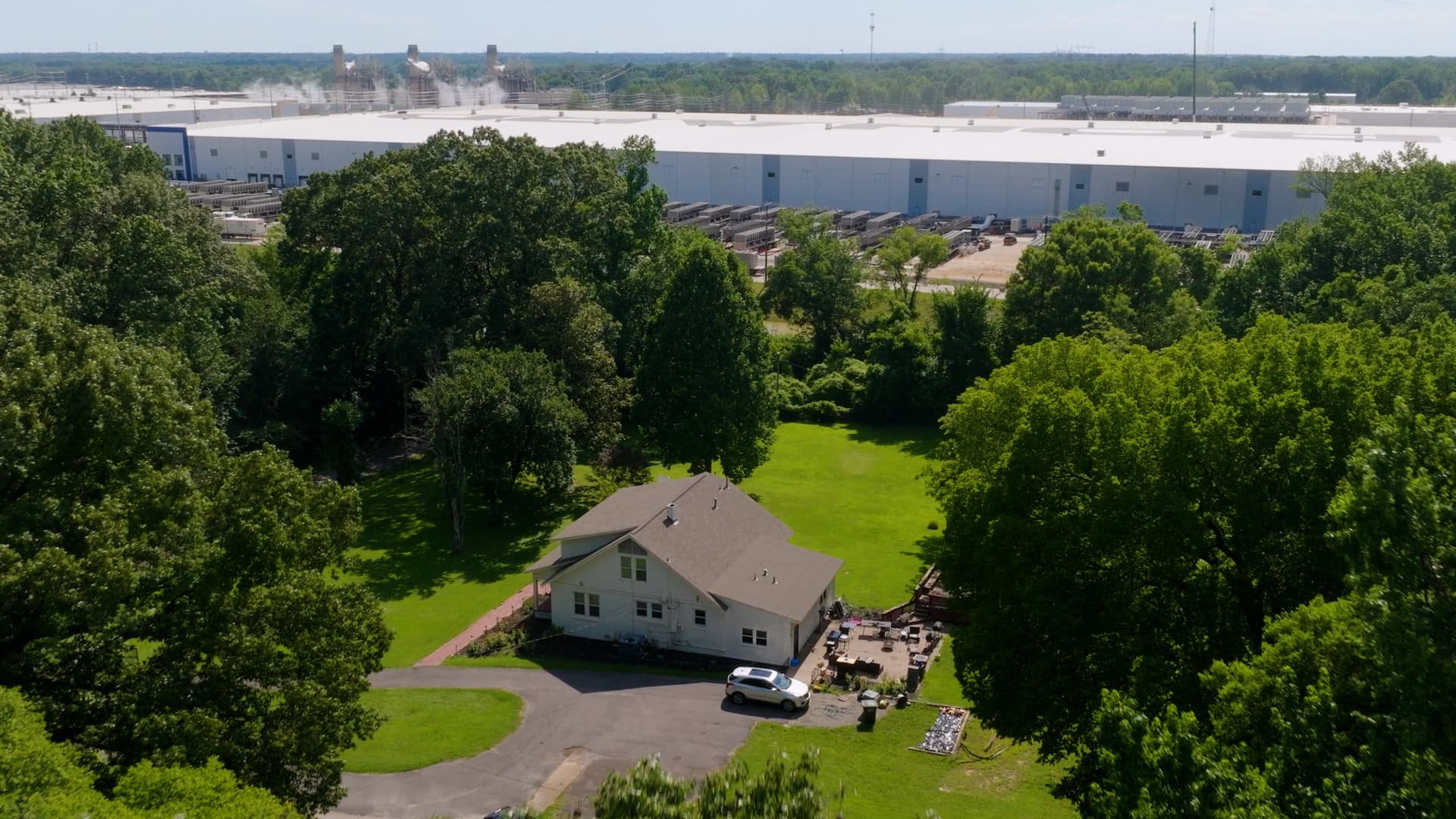
Elon Musk’s rapid AI buildout around Memphis is becoming a warning sign for investors watching the data center boom. The same facilities helping SpaceX sell its AI growth story are also drawing lawsuits, local pushback and new policy fights over power, noise and pollution.
CNBC reported that residents near the Colossus and Colossus II sites in the Greater Memphis area say they are dealing with unwanted noise and emissions tied to natural gas-burning turbines used to support the facilities. SpaceXAI, the AI business acquired by Musk’s SpaceX in February, has bought more than 1,100 acres in the region for data centers and a power plant, according to CNBC.
Data centers are the physical buildings that house servers and chips used to train and run artificial intelligence models. Generative AI has raised demand for those facilities because AI systems need heavy computing power, plus large amounts of electricity and water for cooling.
Why Memphis matters beyond Tennessee
The Memphis fight is now showing up in debates across the country. CNBC reported that New York Gov. Kathy Hochul enacted a one-year pause on AI data center construction this week, drawing criticism from President Donald Trump. In New Jersey, Gov. Mikie Sherrill signed legislation last week aimed at making data center operators pay what the state views as a fair share of electricity costs instead of shifting costs to residents and businesses.
Other communities are also reacting. CNBC reported that Olive Branch and Jackson updated zoning rules after citing a desire to avoid problems seen around Memphis. In Utah, state Senate President Stuart Adams lost a Republican primary after supporting a proposed data center backed by investor Kevin O’Leary, and two other local officials who supported the project also lost primary races, according to CNBC.
Public resistance is not limited to Musk’s companies. CNBC reported that projects from Microsoft, Meta, Google, OpenAI and other large cloud and AI operators, often called hyperscalers, are facing opposition. A Gallup poll in May found that seven in 10 Americans opposed AI data centers in their local area, with 48% saying they were strongly opposed.
The financial upside and the local cost
For SpaceX, the AI push has become part of its investor pitch. CNBC reported that SpaceX completed a record-setting initial public offering in June, with Colossus I and II central to its growth narrative. An initial public offering, or IPO, is when a company sells shares to public investors for the first time.
Google, Anthropic and Reflection AI have signed deals to rent excess computing capacity at Colossus and Colossus II worth up to $2.32 billion per month, according to CNBC. Memphis Mayor Paul Young told CNBC that SpaceXAI paid $25 million in taxes during its first year of operation, making it Shelby County’s second-largest tax-paying property after FedEx.
Young said officials had been trying to reduce negative effects while increasing benefits. He also acknowledged to CNBC that SpaceX has not yet delivered everything it promised, including a delayed water recycling plant intended to reduce the company’s need for water to cool equipment at Colossus.
Residents told CNBC their water and electric bills rose after SpaceXAI arrived. Memphis Light, Gas and Water told CNBC that rates “have not been impacted” by SpaceXAI and said a three-year 4% annual electric rate increase starting in 2024 was not caused by data center demand.
Lawsuits raise the stakes
Southaven, Mississippi, resident Jason Haley, whose home is within a mile of Colossus II, told CNBC the noise from the site and its turbines is “like a form of torture.” Haley and other Southaven residents sued SpaceX in June in a proposed class action, alleging the company created a public nuisance through noise from Colossus II.
The Southern Environmental Law Center and Earthjustice also sued Musk’s company in April on behalf of the NAACP in federal court in Mississippi. The lawsuit alleges violations of the Clean Air Act tied to the use of dozens of gas-burning turbines without required permits and pollution controls from the start. The U.S. Department of Justice asked the court to dismiss the case, saying SpaceXAI technology had been used in U.S. military operations in Iran and was important to national security, according to CNBC.
SpaceX is defending the case, arguing that the turbines currently on site are temporary and that permitted turbines with pollution controls are planned. Musk and SpaceX did not respond to CNBC’s requests for comment on the backlash.
This story draws on original reporting from CNBC.