Nadella questions Anthropic’s limits on its Fable AI model
Microsoft’s CEO criticized Anthropic’s request restrictions as AI buyers look for cheaper, more flexible model options.
By Dev Ramirez · Crypto Correspondent
· 4 min read
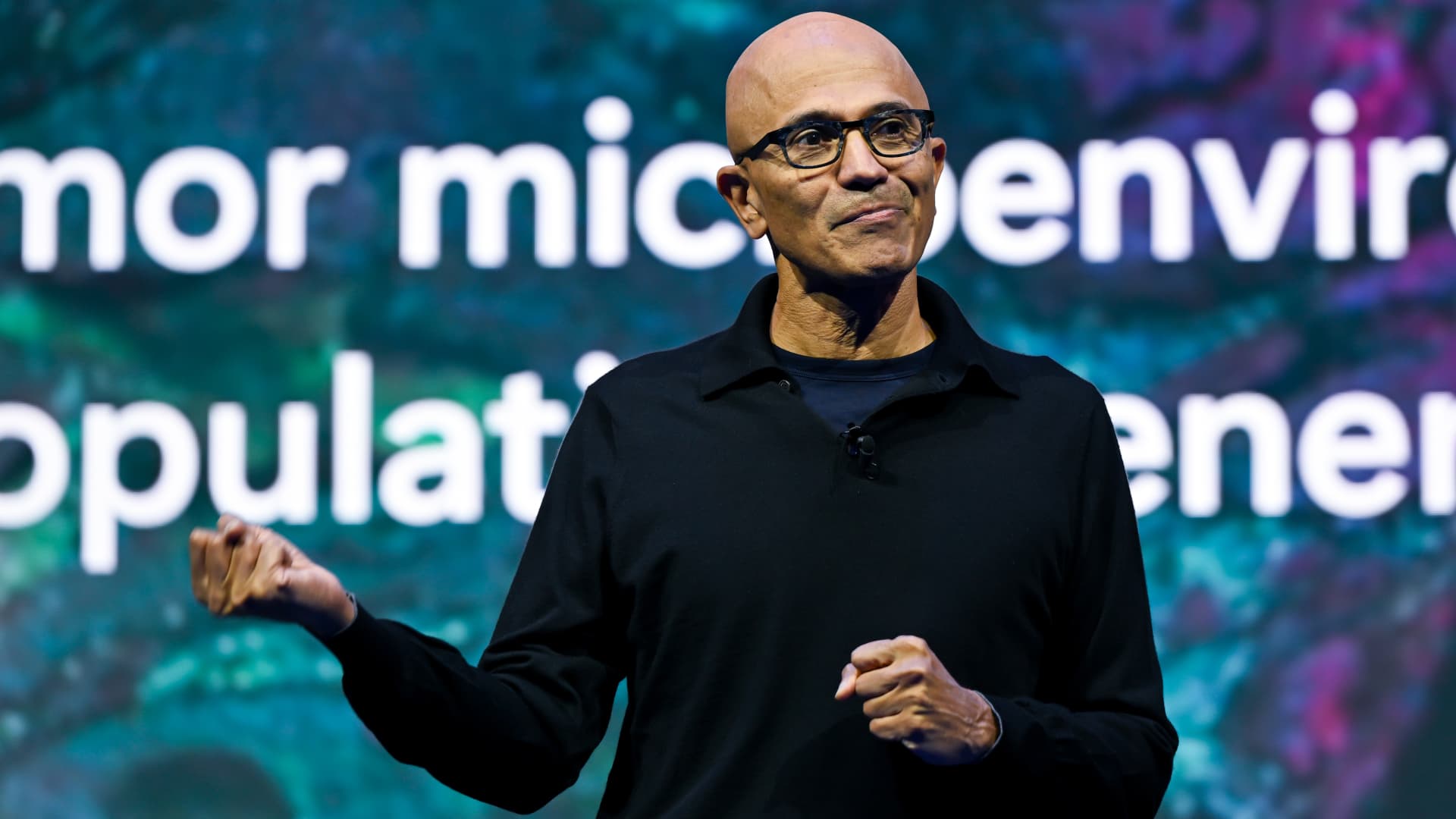
Microsoft CEO Satya Nadella criticized restrictions Anthropic places on its top Fable artificial intelligence model, according to remarks reviewed by CNBC. For investors, the comments put a spotlight on a key AI question: whether the most powerful models will stay controlled by a few labs, or whether big customers like Microsoft can push toward cheaper and more open choices.
Nadella made the comments Wednesday to engineers working on Microsoft’s Copilot AI products, CNBC reported. He questioned why a creation tool would be subject to what he described as heavy editorial control when users submit requests to Fable.
“If you use Fable, when it refuses for any random thing, it just is like, when was the last time you had a creation tool that was so editorially controlled?” Nadella said, according to CNBC. “It doesn’t make sense.”
Microsoft declined to comment to CNBC. Anthropic did not immediately respond to CNBC’s request for comment.
Why the Fable dispute matters
Anthropic’s support page says that when users ask Fable about certain topics, including some areas tied to building large-scale models, the company may answer using an older model. Some users have complained about refusals on social media, CNBC reported.
Anthropic introduced Fable 5 in early June and said at the time that it was working to reduce false positives, meaning cases where a system blocks a request that should have been allowed. Three days after launch, Anthropic cut off access to Fable to comply with a U.S. government export control directive, according to CNBC. The company restored the model on July 1 and said on X that new safeguards would catch a “slightly higher fraction of harmless requests” than earlier protections.
The criticism is notable because Microsoft and Anthropic are tied together financially and commercially. Microsoft said in November that it would invest $5 billion in Anthropic, while Anthropic agreed to spend $30 billion on Microsoft’s Azure cloud platform. Microsoft also introduced Copilot Cowork this year, a business assistant that uses Anthropic models.
Microsoft wants more control over AI economics
Nadella’s broader point was about AI costs and control. Tokens, the units used to measure how much computing an AI model consumes, have become a central part of AI pricing. If only a few companies control the most valuable token capacity, customers may have less leverage on cost and product flexibility.
“It can’t be that there are only two companies in the world with token capital, and everybody else is renting it,” Nadella told engineers, according to CNBC. “It makes no economic sense.”
Microsoft offers a Foundry service where developers can choose from more than 11,000 models, including models from Anthropic and OpenAI. Nadella has recently argued that companies should be able to build custom models efficiently and use their own internal data without sending that data to outside model builders, CNBC reported.
The comments come as some executives show more interest in lower-cost models outside the best-funded AI labs. Chinese startup Moonshot AI said Thursday that its open-source Kimi K3 model outperformed recent releases from Anthropic and OpenAI.
Microsoft has also been trying to reduce its reliance on OpenAI, despite a deep investment relationship. OpenAI said in April it would bring its models beyond Azure to Amazon Web Services, while Microsoft announced several in-house AI models in June, including one for coding. Microsoft’s stake in OpenAI’s for-profit business was valued at $135 billion as of October, CNBC reported.
Investors are watching the spending side closely. CNBC reported that Microsoft shares have fallen 17% this year, while the Nasdaq Composite has gained 11%, as the company continues to spend tens of billions of dollars per quarter on data center expansion.
Nadella also said Microsoft’s move to combine consumer and workplace Copilot products was positive, adding that the company “should have done maybe day one,” according to CNBC. Microsoft said in April that work-focused Copilot had more than 20 million paid seats, equal to 4% of its cloud-based Office customer base.
This story draws on original reporting from CNBC.