What is Zcash? ZEC privacy coin explained after Ironwood upgrade
Zcash uses zero-knowledge proofs to hide transaction details, with ZEC recently around $462 after a 2026 privacy-pool security overhaul.
By Dev Ramirez · Crypto Correspondent
· 4 min read
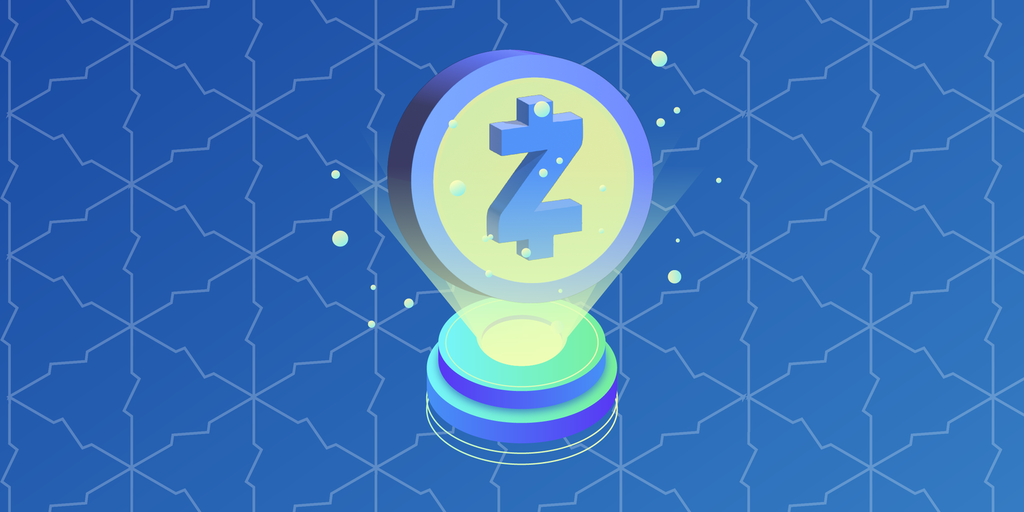
What is Zcash? Zcash, or ZEC, is a privacy-focused cryptocurrency built to let users choose between public blockchain transactions and shielded transfers that hide key details. For investors watching privacy coins, the point is straightforward: ZEC is tied to a technology bet on private digital cash, plus the security and governance risks that come with complex cryptography.
CoinGecko price data displayed by Decrypt showed ZEC trading around $462, down roughly 3% over 24 hours. That price snapshot sits inside a broader story about how Zcash works, why it differs from Bitcoin, and how the network responded after a disclosed weakness in one of its private transaction pools.
What is Zcash?
Zcash launched in October 2016 as a cryptocurrency focused on transaction privacy. The project was developed by the Electric Coin Company, led by Zooko Wilcox-O’Hearn, and drew on research associated with institutions including Johns Hopkins, MIT and Tel Aviv University, according to Decrypt.
Like Bitcoin, Zcash has a maximum supply of 21 million coins and uses a proof-of-work consensus system, the process by which network participants secure the chain and agree on valid transactions. Zcash also has block reward halvings every four years, a schedule that reduces new coin issuance at set intervals.
The major difference is privacy. Bitcoin transactions are public and can often be traced through blockchain analysis. Zcash was designed so users can send transactions that remain verifiable to the network while concealing the sender, recipient and amount.
How does Zcash privacy work?
Zcash uses zero-knowledge proofs called zk-SNARKs. In plain terms, a zero-knowledge proof lets one party prove something is true without revealing the underlying information. In Zcash’s case, the network can confirm that a transaction follows the rules without showing the transaction’s private details.
The network supports two kinds of addresses: transparent addresses, known as t-addrs, and shielded addresses, known as z-addrs. Transparent transactions look more like Bitcoin transactions because their history is visible. Shielded transactions use Zcash’s privacy technology to obscure transaction data.
Decrypt reported that Zcash is most fungible when coins are fully shielded. Fungible means each unit can be treated like any other unit, without being marked by its past transaction history. Decrypt also noted that most Zcash coins are in the transparent pool, where transaction histories remain visible.
Wallet design has pushed toward more privacy by default. Decrypt reported that ECC’s Zashi wallet now defaults to shielding funds, a choice intended to encourage greater private usage.
Who controls Zcash?
The Electric Coin Company started Zcash, but Decrypt reported that ECC does not own or control the blockchain. Network changes require community approval, which means upgrades are not decided by one company alone.
Zcash also has an unusual origin story. At launch, the project used a trusted setup ceremony, where six participants generated and destroyed pieces of a private key to help prevent counterfeiting. In April 2022, Edward Snowden was revealed as one participant in that ceremony, according to Decrypt. Josh Swihart, then a former CEO of ECC, told Decrypt that Snowden contributed as a public-good service because he believed in privacy.
What changed with Ironwood?
Zcash’s privacy system has gone through several upgrades. Sapling activated in October 2018 to improve shielded transaction performance. Blossom followed in December 2019 and increased block frequency. Network Upgrade 5 arrived in May 2022 with Orchard, which reduced reliance on earlier setup ceremonies and enabled private mobile payments through unified addresses, according to Decrypt.
The biggest recent security event came in 2026. Decrypt reported that security researcher Taylor Hornby found a critical counterfeiting vulnerability in Zcash’s Orchard shielded pool in May 2026 using Anthropic’s Claude Opus 4.8. After that disclosure, Zcash implemented the Ironwood upgrade in July 2026 to move to a new private pool.
Other 2026 events added to the project’s investor context. The Zcash Foundation announced in January 2026 that the SEC ended an investigation into the nonprofit without recommending enforcement action, according to Decrypt. That same month, Decrypt reported that the Electric Coin Company’s CEO said his team had been constructively discharged after a dispute with nonprofit board members.
This story draws on original reporting from Decrypt.